Kabul classroom bombing death toll at least 35: UN


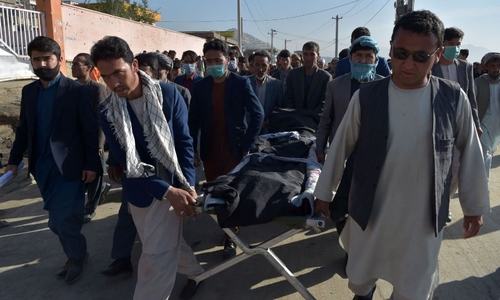
The death toll from a suicide bombing of a classroom in Kabul has risen to at least 35, the United Nations mission in Afghanistan told AFP on Saturday.
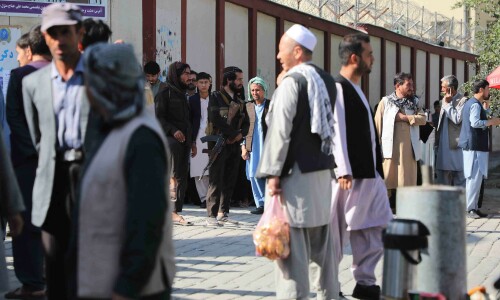
On Friday, a suicide bomber blew himself up at a study hall in the Afghan capital's western district of Dasht-e-Barchi as hundreds of pupils were taking tests in preparation for university entrance exams.
The neighbourhood is a predominantly Shiite Muslim enclave and home to the minority Hazara community -- a historically oppressed group that has been targeted in some of Afghanistan's most brutal attacks in recent years.
"The latest casualty figures from the attack number at least 35 fatalities, with an additional 82 wounded," the mission said in a statement.
Kabul police have so far said that 20 people were killed and 27 others wounded.
No group has claimed responsibility for the attack at the Kaaj Higher Educational Centre.
Frequently attacked neighbourhood
The Taliban's return to power in Afghanistan last year brought an end to the two-decade war and a significant reduction in violence, but security has begun to deteriorate in recent months.
Read more: Taliban's denial
Afghanistan's Shiite Hazaras have faced persecution for decades, with the Taliban accused of abuses against the group when they first ruled from 1996 to 2001.
Such accusations picked up again after they swept back to power.
Hazaras are also the frequent target of attacks by the Taliban's enemy, the Islamic State group. Both consider them heretics.
Many attacks have devastated the Dasht-e-Barchi neighbourhood, with several targeting women, children and schools.
Last year, before the Taliban returned to power, at least 85 people — mainly girl students — were killed and about 300 wounded when three bombs exploded near their school in the area.
No group claimed responsibility, but a year earlier IS claimed a suicide attack on an educational centre in the same neighbourhood that killed 24, including students.
In May 2020, the group was blamed for a bloody gun attack on a maternity ward of a hospital in Dasht-e-Barchi that killed 25 people, including new mothers.
And in April this year, two deadly bomb blasts at separate education centres in the area killed six people and wounded at least 20 others.
Education is a flashpoint issue in Afghanistan, with the Taliban blocking many girls from returning to secondary education, while the Islamic State also stands against the education of women and girls.