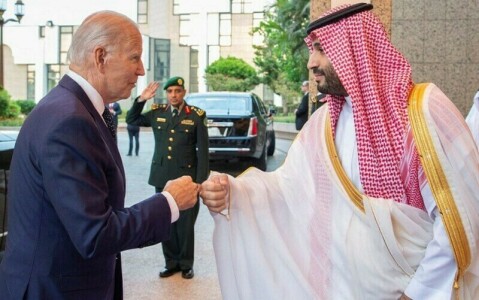
Saudi Arabia rejected as “not based on facts” criticism of an Opec+ decision last week to cut its oil production target despite United States objections and said Washington’s request to delay the cut by a month would have had negative economic consequences.
The Opec+ decision was adopted through consensus, took into account the balance of supply and demand and was aimed at curbing market volatility, the Saudi foreign ministry said in a statement on Thursday.
US President Joe Biden pledged earlier this week that “there will be consequences” for US relations with Saudi Arabia after Opec+ said last week it would cut its oil production target by two million barrels per day.
Opec+, the producer group comprising the Organisation of the Petroleum Exporting Countries (Opec) plus allies including Russia, announced its new production target after weeks of lobbying by US officials against such a move.
The Opec+ cut has raised concerns in Washington about the possibility of higher gasoline prices ahead of the November US midterm elections, with the Democrats trying to retain their control of the House of Representatives and Senate.
The Saudi foreign ministry statement on Thursday referred to consultations with the United States prior to the Oct 5 Opec+ meeting in which it was asked to delay the cuts by a month.
“The Kingdom clarified through its continuous consultations with the US administration that all economic analyses indicate that postponing the Opec+ decision for a month, according to what has been suggested would have had negative economic consequences,” the Saudi foreign ministry statement said.
The United States accused Saudi Arabia of kowtowing to Moscow, which objects to a Western cap on the price of Russian oil in response to its invasion of Ukraine.
The Saudi foreign ministry statement, quoting an unnamed official, stressed the “purely economic context” of the oil cut.
It also said the kingdom views its relationship with the United States as a “strategic one” and stressed the importance of mutual respect.
The Gulf Cooperation Council (GCC) issued a statement in support of Saudi Arabia’s comments praising the kingdom’s efforts to protect the market from volatility.
‘Higher prices may prove tipping point’
Meanwhile, the International Energy Agency (IEA) said Opec’s decision last week to rein in output has driven up prices and could push the global economy into recession.
“The relentless deterioration of the economy and higher prices sparked by an Opec+ plan to cut supply are slowing world oil demand,” the Paris-based agency, which includes the United States and other top consumer countries, said.
“With unrelenting inflationary pressures and interest rate hikes taking their toll, higher oil prices may prove the tipping point for a global economy already on the brink of recession,” it added in its monthly oil report.
Actual supply losses will likely be around 1m barrels per day and not the 2m barrels announced by the Opec+ bloc, the IEA said.
Capacity constraints plaguing output in other Opec members mean Saudi Arabia and the United Arab Emirates will deliver most of the reductions, the IEA said, while new G7 and European Union sanctions on Russia could further tighten global supply.