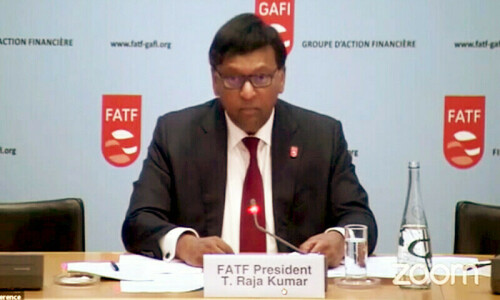
AFTER nearly four-and-a-half years of trials and tribulations, Pakistan has finally exited the FATF’s so-called grey list of countries. It is a victory that ought to be celebrated as an example of what it is possible for the country to achieve when the national leadership works together towards a common goal.
The exit had long been awaited, with the country hoping for a reprieve after each progress review held in the last couple of years. Islamabad had been prescribed two concurrent action plans by the FATF, which tracked compliance on a total of 34 action points. It is no mean feat that the country came through on them all, even though it seemed at times that the goalposts were being shifted to put it at a disadvantage. A FATF team had, towards the end of August this year, verified Pakistan’s progress on reforming its anti-money laundering regime as well as the measures taken to block terrorism financing and found them to be satisfactory.
Pakistan’s placement on the FATF’s enhanced monitoring list had been widely resented, but it has done considerable good for the country. As a result of the pressure from the international watchdog, Pakistani authorities worked together to overhaul the regulation of the domestic financial system to enhance monitoring of who has been using it and how. This not just helped satisfy the FATF’s conditions, but it has also made it much more difficult for nefarious elements to use the system to launder black funds or move them around. Oversight of the various channels of the financial system will greatly strengthen the state’s hand as it targets criminal activities and the proceeds from their crimes in the future.
Read: There and back again — A timeline of Pakistan's journey out of the FATF 'grey list'
Where we go from here is entirely up to Pakistan. So far, the authorities have been acting on a prescription handed to them by the FATF, but they should take the baton and continue strengthening the Pakistani financial system. Nobody understands its deficiencies better than the people who operate within it. They should use those insights to plug any remaining gaps and make sure no vulnerabilities are remaining that may be exploited.
The fact is, Pakistan would never have ended up on the FATF grey list in the first place had our regulatory agencies acted more responsibly and proactively in the past. Grey-listing scares both investors and lenders, hurts exports and creates a barrier for the global financial system from participating freely in the country. We should now do everything to make sure we are not exposed to those risks again. Pakistan is at a difficult juncture in its history, with global powers no longer averse to pointing fingers or even punishing it over transgressions, perceived or otherwise. It would be wise to cover our flanks, especially if any weak spots may create further sanction risks.
Published in Dawn, October 23rd, 2022