It may not have been so in the past — perhaps because of the well-rounded scholarship of the literary stalwarts leading both the Progressive Writers’ Association and the Halqa-i-Arbab-i-Zauq, our major literary movements of the last century — but it is rather unfortunate that, now, most contemporary creative writers in Pakistani languages constrain their interest to the literature of their own language, or even further constrict themselves by keeping their reading within the confines of their own genre of writing.
This is particularly the case with those who write Urdu poetry or literary prose across Pakistan and India. They are in large numbers in every part of Pakistan and in some parts of India. However, it seems that their awareness of developments in other disciplines in art and their wider knowledge of philosophy, anthropology, economy, history, psychology, global political affairs, issues of climate justice, social or physical sciences, etc remains grossly limited. This limited awareness and narrow understanding gets reflected in both their conversations and their work.
I am not at all suggesting that it is required of any writer to master all, or any, other disciplines, beyond literature. Besides, there is a specificity of language that comes with any theory or branch of knowledge which distinguishes specialists from non-specialists. All cannot be specialists.
Nevertheless, a genuine interest in what is happening around them across various disciplines, and the human condition in the world at large, may further enrich the quality of what our writers produce. For not only do writers discover and bring out complexities and layers from seemingly simple emotions, they also shape the intellect of their readers, both individually and collectively.
Art is an internal affair. But the distinction between what is internal to artists and what surrounds them externally gets diminished when major artists put their pen to paper, fingers on the keyboard or brush to the canvas.
When naming some exceptions among Urdu creative writers of my generation, whose interest goes beyond literature and the language they choose to write in, Irfan Javed, Akhtar Usman, Syed Kashif Raza and Farrukh Yar come to mind.
Irfan Javed’s Ajaaib Khaana [Museum] and Farrukh Yar’s Do Raahay: Muqamaat, Bhaasha, Asateer, Aqaaid [Crossroads: Locations, Language, Fables, Beliefs] are books that take us into other realms of anthropology, psychology and history. Of course, there are other writers who also fall in this category, but the idea is not to share a list. Only to highlight that most do not. Here, I am only looking at purely creative writers, because Ziaul Hasan, Najeeba Arif and Nasir Abbas Nayyar are essentially academics and scholars.
Also, while it is not required of them, it is certainly refreshing to find some of our creative writers venturing into other disciplines. Ghazanfar Hashmi’s A Nation Imprisoned in Myths: American Exceptionalism surprised me on many counts. My first introduction to Hashmi came some 20 years ago in Islamabad, and was as an exquisite ghazal poet. He also hosted a literary programme on Sundays on a private television channel.
I always found him to be a serious reader and someone who remained steeped in literature. Although his humble demeanour prevented him from dominating conversations, he would always make an insightful remark on the issue being discussed.
Hashmi moved to the United States some years ago and now divides his time between the US and Pakistan. His scholarship in public policy and public diplomacy certainly came through on some occasions earlier, but it was fascinating that he would write a thoroughly engaging and educative book on American exceptionalism. As someone who continuously negotiates two worlds — living in the most advanced country on the one hand, and one of the least developed on the other — offering his take on the subject was both critical and timely.
In order to make the book accessible to everyone interested in the subject, Hashmi has attempted to use simple language and crisp idiom to further his arguments on the nature of exceptionalism, its causes and effects, its social history and wide-ranging political consequences.
The book is methodically divided into four parts, with multiple chapters in each. Hashmi begins by establishing a metric for the concept of exceptionalism and assesses various countries before coming to his primary subject: American exceptionalism.
He traces its origin, history and legacy and then leads into discussing how it has modelled itself over the past couple of centuries, different from exceptionalism found in some other countries. While unravelling the myths that have kept the American mind entrapped, he critically analyses the exceptionalism around constitution, social justice and judicial activism, economy, foreign policy and overall wellness of the society.
Hashmi makes the same argument as made by those who subscribe to left-leaning ideologies. However, he provides a proper inquiry based on a framework to substantiate how Americans have become hostage to this myth of being exceptional, because of the unholy alliance between big corporations, the military-industrial complex, politicians and a certain part of media, which have continued to hammer these slogans of pride in the minds of people.
He concludes by wishing the US well, by laying out what can truly make it exceptional: a leader in bringing about peace in the world rather than imposing wars; a leader in freeing the oppressed from oppression, hunger and injustice; and a leader in supporting ideals of liberty and democracy without fail.
While reading Hashmi’s work, I also remembered Mubarak Haider’s Tehzeebi Nargissiyat [Civilisational Narcissism], in which the author deconstructs the misplaced pride among Muslims, particularly those of South Asian origin.
It is about time that we begin to introspect properly on Pakistani exceptionalism, marked by the glorification of an imagined past, elite capture and extortion, and a widespread insensitivity among common people that is misconstrued as resilience.
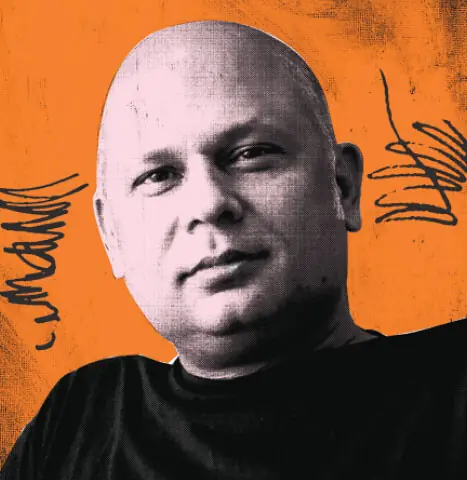
The columnist is a poet and essayist.
He has recently edited Pakistan Here and Now: Insights into Society, Culture, Identity and Diaspora. His latest collection of verse is Hairaan Sar-i-Bazaar
Published in Dawn, Books & Authors, January 1st, 2023