Better allocation of resources, talent a must for Pakistan’s economy to grow sustainably: World Bank

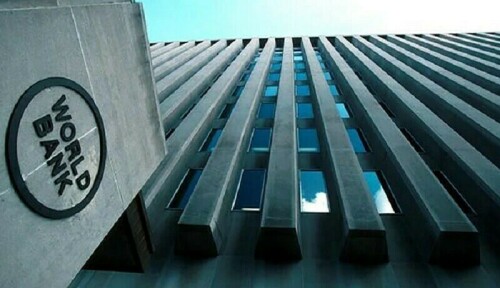
Pakistan’s economy can grow sustainably only if the country introduces “productivity-enhancing reforms that facilitate a better allocation of resources and talent”, a World Bank press release summarising its new report said on Friday.
The report, titled ‘From swimming in sand to high and sustainable growth’, asked for resources to be allocated to more dynamic activities and for talent to be allocated to more productive uses, according to the statement.
Summarising the report’s findings, a press release said the country’s inability to properly allocate these resources “stunted its economic growth and presented evidence of systematic productivity stagnation across firms and farms”.
Furthermore, it linked most of the productivity stagnation in manufacturing and services to firms losing efficiency over time.
The statement added there was a “systematic decline in agricultural productivity” and highlighted a “strong link between elevated temperatures and rainfall variations and productivity”.
Roadmap for reforms
Listing the needed reforms highlighted in the World Bank report, the press release said critical reforms such as harmonising direct taxes across sectors, reducing the anti-export bias of trade policy and reversing the anti-diversification bias of export incentives.
It said harmonising direct taxes would help more resources flow into dynamic tradable sectors, like manufacturing and tradable services instead of real estate and non-tradable.
The report further said the country not tapping into all of its talents further affected its productivity and urged Pakistan to “maximise positive impact on businesses and productivity across the board”.
It suggested doing so by reducing regulatory complexity, harmonising the general sales tax across provinces, reforming investment laws to attract more foreign direct investment and upgrading insolvency laws to reduce the costs of liquidating non-viable firms.
Furthermore, the statement said top and medium-term recommendations of the report included providing safe and affordable mobility, especially for women, along with “demonstrating the benefits of increased female labour force participation to positively shift entrenched norms”.
Other such suggestions included boosting digital connectivity and digitally enabled jobs, developing skills, and reducing sectoral gender bias.
Expert opinions in report
The press release cited World Bank Country Director Najy Benhassine saying, “Women in Pakistan have made progress in educational attainment, but this accumulated human capital is underused because of constraints they face to participate in the labour force.”
He highlighted that women’s labour force participation in this country is among the world’s lowest with only 22 per cent of women employed.
The World Bank official said by bridging the employment gap relative to peers, the country could accrue Gross Domestic Product gains of up to 23pc.
The press release also cited him estimating that about 7.3 million new jobs could be created for women by “successful implementation of policies to address the demand- and supply-side barriers to female labour force participation”.
Meanwhile, senior economist and co-author of the World Bank report, Gonzalo J. Varela, pointed out that the country’s economy was at a “critical stage”.
He warned it could be a “turning point” and that the long-term structural imbalances “ought to be addressed urgently”, adding that the report put forward a series of policy recommendations to achieve it.
The economist listed the recommendations: “First, reduce distortions that misallocate resources and talent. Second, support the growth of firms through smart interventions rather than through blanket subsidies. Third, create a positive, dynamic loop between evidence and policymaking, strengthening feasibility analysis of publicly funded projects or programmes.”
Zehra Aslam, also an economist and co-author of the report, mentioned the struggles faced by firms, the World Bank press release said.
“Firms in Pakistan struggle to grow large as they grow old. A young formal firm in Pakistan that has been in operation for 10 to 15 years is about the same size as a firm that has been in operation for more than 40 years.
“Similarly, an average Pakistani exporter is less than half the size of one in Bangladesh. This shows a lack of dynamism amongst Pakistani firms, compared to better-functioning markets, where firms either grow or exit,” Aslam said.