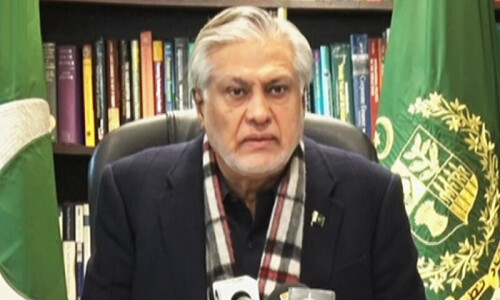
FINANCE Minister Ishaq Dar has blamed the delay in the conclusion of discussions with the IMF on the ‘trust deficit’ created by the previous government, accusing it of not meeting its commitments to the lender after signing the $6bn funding programme in 2019.
He is right to the extent that the present PML-N-led set-up inherited a fractured relationship with the Fund, because the PTI either dragged its feet on economic reforms it had pledged to carry out or reversed some of them soon after their implementation. But the problem didn’t start with the PTI government. Islamabad has a long history of breaking promises it made to the IMF over 23 programmes in seven decades.
Little wonder Pakistan was called a ‘one-tranche’ country until not very long ago. Mr Dar, too, has contributed his bit to enlarging the credibility gap by deviating from the programme his predecessor had helped revive after months of tough talks and execution of ‘prior actions’ that have become the hallmark of the bailouts the Fund has extended to Islamabad in recent years. Hence, a blame game will do no one any good.
While the ‘special’ dynamics of Pakistan’s ties with the IMF are a major impediment to the restoration of the stalled loan programme, a Reuters analysis explains that “Countries in debt distress turning to the [Fund] for financial help are facing unprecedented delays to secure bailouts as China and Western economies clash over how to provide debt relief”.
It points out that it took Zambia 271 days to strike a deal while Sri Lanka has been waiting for almost 200 days for a bailout after a staff-level agreement last year. According to the report: “This compares to a median of 55 days it took low- and middle-income countries over the last decade to go from preliminary deal to the board sign-off.”
With Pakistan struggling hard to keep its head above water as the dollars run out, the government’s frustration is understandable. The prime minister has often complained of being given a tough time by the IMF, while the finance ministry has accused the Fund of shifting the goalposts.
In a recent interview, Foreign Minister Bilawal Bhutto-Zardari, too, was critical of the IMF for delaying a lifeline, despite Pakistan’s crushing need for help due to the massive economic losses caused by last summer’s floods. Even friendly countries aren’t ready to help outside a multilateral framework.
China has stepped up to help stave off further erosion in foreign exchange reserves, but that is not enough. If we want to avoid such situations in future, we will have to restructure the economy like India did in the 1990s. Or we can prepare for more embarrassment and tougher terms set by creditors to bail us out the next time.
Published in Dawn, March 11th, 2023