ISLAMABAD: The PML-N government on Saturday again cut the Public Sector Development Programme (PSDP) by Rs79 billion to Rs566.85bn, reducing the budgeted allocation for the whole fiscal year by nearly a third, citing fiscal woes.
On the contrary, it raised financing for the parliamentarians of the coalition partners who got the largest chunk of development funds amounting to Rs90.035bn against the allocation of Rs87bn, which was fully utilised.
The PSDP, which supports development schemes nationwide, was projected at Rs800bn in the budget 2022-23 but ended up with Rs566.85bn a month before the fiscal year’s end.
First, it was brought down to Rs645.92bn and then to Rs566.85bn, making a total reduction of over Rs233bn.
A higher Rs91bn doled out to lawmakers
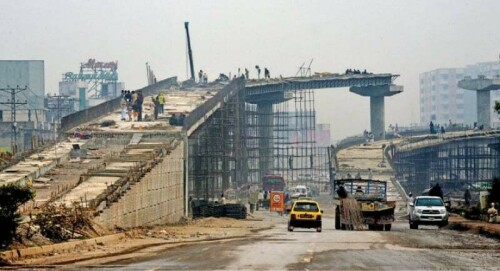
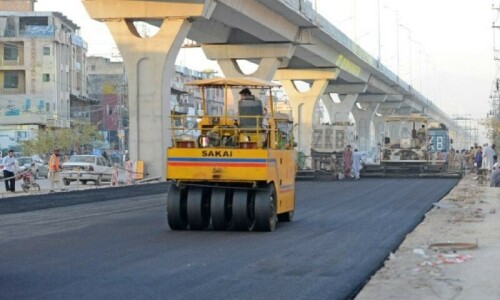
For the second consecutive year, the country’s under-resourced infrastructure development will face severe cuts in funds approved by the parliament. In FY22, the total PSDP authorisation was reduced to Rs516.31bn from Rs800bn.
The Ministry of Planning on Saturday announced that it had authorised Rs72bn for the last quarter (April-June) of FY23, which is Rs50bn more when compared with the same period of last year.
It is believed that the development expenditure is being curtailed to contain the rising fiscal deficit owing to the increase in current expenditures.
Despite facing serious revenue shortfalls, the PMLN-led coalition government has a fleet of over 74 ministers and special assistants, who are drawing huge salaries besides perks and privileges at a time when the country’s forex reserves have dwindled drastically and industries are cutting their production.
The total development spending by state-run corporations — power sector entities and National Highway Authority (NHA) — rose by over 17pc to Rs96.78bn in FY23 from Rs81.967bn in Fy22.
The breakdown showed that the utilisation of funds by state-run corporations stood on the higher side chiefly because of a more than 64.6pc surge in power sector projects which increased to Rs20.209bn in FY23 from Rs12.276bn in FY22.
NHA’s expenditure on the other hand increased to Rs76.575bn in FY23 against Rs69.690bn in the corresponding period last year, an increase of 9.87pc. The development spending in these two areas rose because most of the projects were aimed at winning votes in their constituencies — roads, transmission, and transformers in their political strongholds. This shows that the government has enough funds but lacks the intention to hold elections in Punjab and Khyber Pakhtunkhwa.
Excluding corporations and other special initiatives, the development expenditure by the federal ministries and divisions and their attached departments stood at Rs469.7bn in FY23 compared to Rs385.53bn last year, an increase of 21.82pc.
The Water Resources Division emerged as the best performer in terms of receiving funds with Rs89.295bn in FY 23 against Rs64.198bn over the last year, an increase of 39pc because of ongoing major development projects.
The second biggest share in development expenditures was made to provinces and special areas which stood at Rs91.845bn in FY23.
The Higher Education Commission HEC remained on the top among departments/ministries as Rs42.928bn was authorised for spending in FY23, followed by an allocation of Rs25.990bn for Pakistan Atomic Energy, another Rs25.818bn for railways, Rs19.528 for housing and Rs12.32bn for food security and another Rs11.774bn for national health services.
Planning Minister Ahsan Iqbal has always maintained that the federal government should not fund projects related to the provinces. He said the federal government should only support high-priority projects of the provinces on a 50-50 sharing basis, in the last meeting where he reviewed the PSDP projects, an official statement said.
Published in Dawn, May 21st, 2023