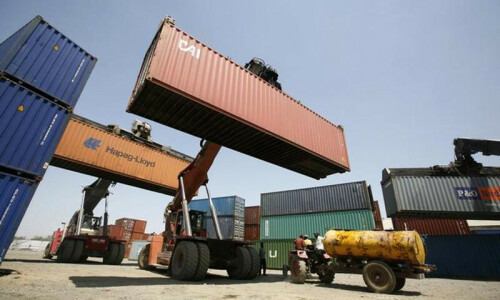
Pakistan’s development history has been in a state of crisis for decades. One major factor underlying this struggle is an imbalance in the balance of payments that can only be corrected through enhanced foreign exchange earnings via exports.
Currently, the economy relies on unsustainable sources such as remittances, foreign loans, and tariffs, along with indirect taxes, to support a heavily import-based economy.
Pakistan is among the seven most trade-averse countries in the world, with the highest average tariff among 70 countries, and there is a strong inclination toward import substitution in its economic policies. Industries such as automobiles, fertilisers, and capital inputs are protected with tariffs as high as 500 per cent on imports.
Pakistan’s adherence to this protectionist model has not provided solutions to the various macroeconomic crises, which include an unsustainable debt burden, high inflation, and increasing poverty.
As countries integrate into global supply chains, they gain access to advanced technologies and expertise from their trading partners
Export-led industrialisation is a development strategy that aims to expand trade in goods and develop export surpluses in sectors with a comparative advantage. An orientation towards exports has proven successful worldwide, from Singapore to Rwanda. Exports provide revenue that stabilises an economy, balances budgets, and funds structural transition toward industrialisation.
Pakistan stands to gain immensely from prioritising its export sector, as its expansion guarantees higher economic growth rates, greater employment, fiscal stability, and a range of positive externalities. The World Bank identified exports as a significant factor behind Pakistan’s recovery after the contraction of the economy in 2019 due to the pandemic. As a result, export growth, average incomes, and wages experienced a substantial increase ranging from 10pc to 20pc.
Trade has had a significant impact on the poorest 40pc of the global population. It has led to a 50pc increase in their incomes, with resources allocated more effectively when countries engage in trade.
According to a 2020 study by the World Bank, 45 out of 54 countries examined experienced a decrease in consumer prices as a result of trade, indicating the positive impact of trade on prices. This effect is particularly strong on food and agricultural products. This increase has coincided with a remarkable reduction in global extreme poverty by half.
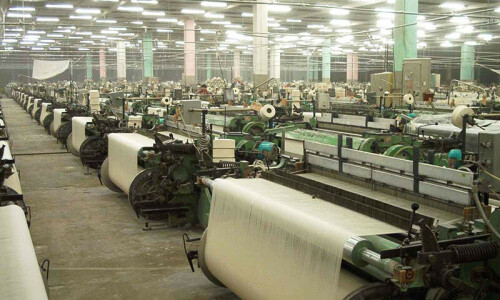
There is a strong connection between employment and export-led growth. Pakistan’s major exporting industry, textiles and garment production, is also its largest employer.
The presence of foreign competitors in the market drives local producers to adopt more advanced technologies and practices, ultimately boosting their competitiveness. As a result, increased competitiveness leads to higher productivity levels among local producers, benefiting both the domestic economy and consumers who receive better quality, lower prices, and greater variety.
Commitment to export-led growth and subsequent liberalisation of trade barriers generates an increase in foreign direct investment and other forms of investment. Liberalisation removes barriers such as tariffs and controls that hinder capital flows.
When these barriers are eliminated, countries become more attractive for investments, as investors are encouraged by the ease of doing business and the potential for market access.
Furthermore, supply chain integration plays a significant role in motivating technology transfers and investment. As countries integrate into the global supply chains, they gain access to advanced technologies and expertise from their trading partners.
Exports play a significant role in fostering fiscal stability for countries. Earnings generated through trade can be utilised to service foreign debt obligations and cover the costs of importing goods and services.
In the case of Pakistan, increasing exports can help address the current account deficit challenging the country. By expanding its export base and improving trade performance, Pakistan can earn foreign exchange that can be utilised to address the deficit, reduce dependency on external borrowing, and enhance fiscal stability.
Furthermore, trade provides incentives for innovation. When companies compete in global markets, they are motivated to innovate and develop new products, processes, and services to meet the evolving demands of customers worldwide. The pressure to stay competitive drives companies to invest in research and development, leading to technological advancements and innovation.
Trade has enabled the global dissemination of technologies important for ecological sustainability. It connects countries, facilitates knowledge sharing, and encourages innovation in the renewable energy sector. Technology that was prohibitively expensive or advanced has become available due to trade, promotes quality improvement and environmentally friendly practices among local producers by enforcing international sustainability standards.
Additionally, trade has enabled more women to transition from informal and domestic labour into the formal sector, providing better working conditions and greater economic empowerment.
For example, the government introduced the Regionally Competitive Energy Tariff (RCET) in 2018 and quickly reneged on it merely four years later. The textile sector’s investments in increased capacity, expansion, and over $5 billion in research and development were suddenly rendered moot. The four years of export growth could not be translated into development due to inconsistent implementation of policy.
Similarly, Pakistan has thrice attempted to reform its railways since 2018 and failed to follow through on any of its proposed acts. The issue of half-hearted implementation reduces investor confidence and prevents exports from being able to actualise their growth potential.
Published in Dawn, The Business and Finance Weekly, June 26th, 2023