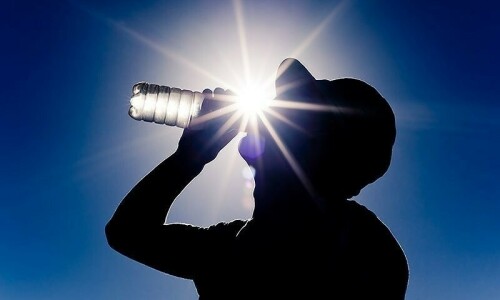
WMO warns of risk of heart attacks, deaths as heatwave intensifies


The heatwave engulfing the northern hemisphere is set to intensify this week, causing overnight temperatures to surge and leading to an increased risk of heart attacks and deaths, the World Meteorological Organisation (WMO) said on Tuesday.
The WMO warned that the heatwave was in its early phases, saying it expected temperatures in North America, Asia, North Africa and the Mediterranean to be above 40 degrees “for a prolonged number of days this week as the heatwave intensifies”.
This could mean midnight temperatures hovering in the high 30s in some areas this week, it said.
“Repeated high nighttime temperatures are particularly dangerous for human health, because the body is unable to recover from sustained heat. This leads to increased cases of heart attacks and death,” John Nairn, senior extreme heat adviser for WMO told reporters in Geneva.
Panu Saaristo from the International Federation of Red Cross and Red Crescent Societies (IFRC) said that infants, the elderly and people with chronic health conditions are at particular risk.
More than 60,000 Europeans may have died in last year’s heatwaves, according to experts, despite having some of the world’s best early warning systems.
The IFRC is phoning elderly people in Italy to check up on them, handing out drinking water in Greece and creating shelters for people affected by the wildfire on the Spanish island of La Palma, Saaristo said.
The United Nations weather agency said new records were possible in the coming days. The previous European high was 48.8 degrees Celsius reached in Sicily in August 2021 and the global record is 56.7 degrees Celsius from Death Valley, California in July 1913, according to the WMO.
“The Mediterranean heatwave is big but nothing like what’s been through North Africa,” said the WMO’s Nairn. “It’s developing into Europe at this stage. We’re in the early phases of this heatwave.”
Asked about whether the current heatwave was due to climate change, Nairn described the slow-moving “parked” weather systems as unusual. “These are not your normal weather systems of the past. You have to do climate repair to change it,” he said.