‘The fear is not going away’: Christians afraid to return to homes in Jaranwala


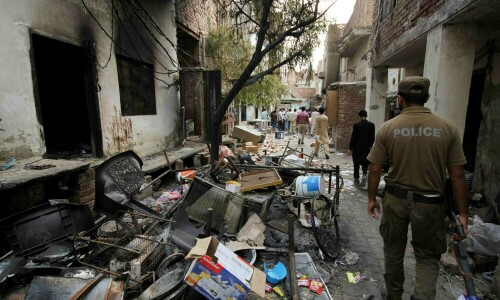
Eighteen-year-old Kanwal had just returned from the hospital with her newborn baby, Samuel, when a vigilante mob launched a violent attack on their home in a Christian area of Punjab’s Jaranwala.
Terrified, she swept up the baby and fled barefoot with the rest of her family, narrowly escaping the mob that torched their house last week, causing the loss of their pet birds and all their belongings.
“We are very scared of our neighbours … we don’t want them to destroy whatever little we have left,” said Kanwal, cradling Samuel as she sat in a school classroom converted into a makeshift dormitory in the bustling market town of Jaranwala.
“We should be shifted somewhere else,” she added. Her 11-year-old brother and sisters aged seven and 11 are too scared to return to school, where they are among a tiny minority of Christian students.
“Today was the first day of school after summer vacations but I did not send them because of fear,” said their mother, Kiran. “I told them, ‘You will get an education if you stay alive.’”

Nearly 160 people have been arrested over last week’s hours-long rampage by a mob that residents said consisted of people carrying iron rods, knives and sticks, and who set fire to churches and scores of homes.
Police and residents said the attack started after someone took allegedly desecrated pages of the Holy Quran to a mosque prayer leader, which was followed by announcements calling for punishment.
Police have arrested two Christian men accused of blasphemy and are investigating.
Blasphemy is punishable by death in Pakistan but no one has ever been executed, although numerous people accused of blasphemy have been lynched by outraged mobs in the past.
Former Punjab governor Salman Taseer and federal minister for minorities Shahbaz Bhatti were shot dead in 2011 for trying to reform the blasphemy law.
A large contingent of armed paramilitary troopers has fanned out to restore calm in Jaranwala.
Provincial and federal authorities have pledged financial help for the Christian community, which forms less than two per cent of the 241 million population, many of whom live in poverty, to help pick up their lives.
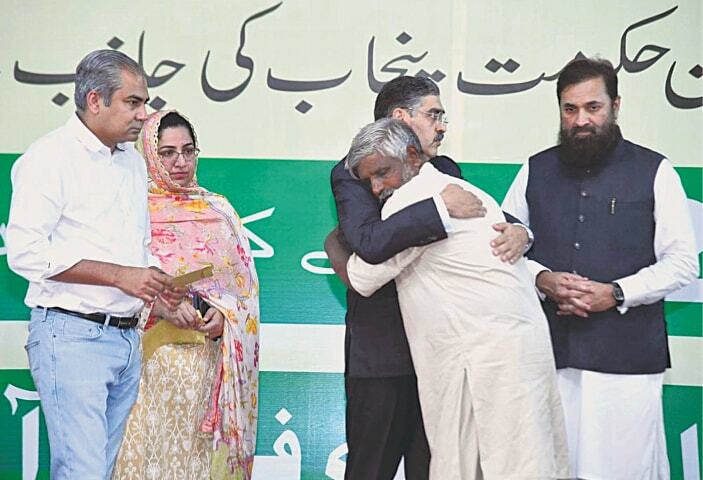
Caretaker Prime Minister Anwaarul Haq Kakar visited the area on Monday, announcing relief for affected families, calling the attack an atrocity and promising minority religious communities that the government would protect them.
But community members and advocates say the trauma and fear will be tough to heal and their safety is not assured. Many are afraid to return home but, still in shock, do not know where to rebuild their lives.
“Everyone is focusing on giving them food, giving them shelter, but what they are feeling, how they are broken from the inside, how they will accept that they are equal citizens, this is the [important] thing,” said Naseem Anthony, a member of a rights group, Awam.
“There is very serious concern from the civil society side about the psychological damage,” added Anthony, speaking outside a gathering of civil society organisations held near a salmon-pink church, its insides blackened with soot.
A few streets away about 240 people live in the makeshift shelter in the school along with Kanwal’s family.
String and wood cots have been set up among classroom walls still plastered with charts showing the alphabet and how to count.
Many here spent the first few days after the attack living outside, in fields and roads in the sweltering heat.

They described feelings of depression and anxiety, a fear of open spaces, trouble sleeping and frequent outbursts of weeping when they recall last week’s events.
“Most of the people from the Christian colony in Jaranwala are afraid of returning home because of the unrest and uncertainty about their protections,” said community leader Akmal Bhatti.
“All this is triggering a sense of fear,” he added. “The majority of children are suffering psychological issues … Now, children and girls are afraid of people, they don’t want to go out in markets and crowded places.”
Government officials at the heavily-guarded shelter said they would let people stay as long as needed, adding that it has been staffed with doctors and nurses to provide support.

Non-government organisations estimate hundreds of people have been physically displaced with thousands of Christians in the area affected by the violence. Some are staying in makeshift shelters nearby, and others are with relatives.
Kanwal and her mother, Kiran, are not sure how long the family will stay.
“My greatest wish now is that I want security,” said Kiran. “I want a safe place for my family to live in. The fear that has got embedded in my heart and my children’s minds is just not going away.”