THE government has issued new debt of over Rs2.5tr during the first three months of the current financial year to finance its burgeoning fiscal deficit — the gap between its revenues and expenditures — according to new estimates of a Karachi-based brokerage firm.
The new borrowing is nearly 57pc of the total debt of Rs4.4tr it had auctioned during FY23. The issuance of additional debt underlines the government’s shrinking tax and other revenues, increased spending and growing reliance on domestic sources to fund its budgeted expenditures as external financing dries up.
External financing shrank to its seven-month low of $316m in August. Cumulatively, Islamabad secured external financing of $3.2bn in July and August, which also includes Saudi deposits of $2bn and a guaranteed loan of $508m for the PAF.
This shows that expectations that multilateral and bilateral partners would allow their coffers to flow to help Pakistan’s distressed economy, following the IMF’s nod to the Stand-by Arrangement, were very exaggerated.
The government is also facing difficulties in securing $6bn through commercial loans and has dollar bond issues. Chances of achieving the budgeted external financing target of $17.6bn for its expenditures and of meeting its foreign debt and other payments are slim.
Last year, the government was able to obtain $10.8bn in external financing and had to impose strict restrictions on imports and even on legitimate dollar outflows to avoid defaulting.
The centre has been running a large, unsustainable fiscal deficit of around 7pc of GDP for the last many years, which is the main reason for the accumulation of its huge domestic and foreign public debt, external sector fragility and inflation.
The pace of debt accumulation has picked up in recent years. This is especially true for domestic public debt, which has grown to around Rs39tr from over Rs30tr a year ago, because of reduced external inflows. Successive governments have tried to justify the worsening fiscal imbalance on the basis of economic development targets.
But these excuses are used only to mask the reality. The fact is that we are in the midst of the worst and longest economic crisis in our history because of the lavish lifestyles of powerful interests at the expense of the people and the well-being of the economy.
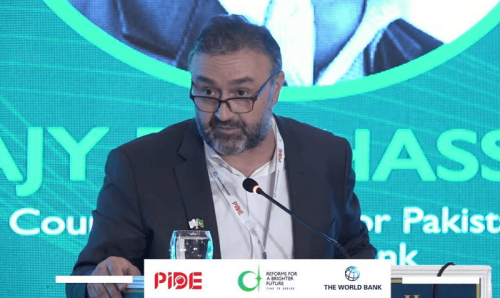
The World Bank’s country chief had alluded to this a few days back when he pointed fingers at the country’s military, business and political elites for the economic mess we are struggling to resolve today.
Pakistan is facing an existential crisis that has severely impacted the majority of its citizens, especially the low- and middle-income segments and small businesses.
Mounting debt and dwindling foreign exchange reserves are two of our biggest challenges, which, without immediate fiscal reform, could lead to total economic collapse.
Published in Dawn, September 28th, 2023