Easy access to affordable energy is pivotal for fostering economic growth and enhancing the social prosperity of the nation. However, it has remained a distant dream for many in our country due to inflated energy costs.
As is well known, the roots of soaring power prices lie in poor governance, policy lapses, volatile global energy prices, and rupee devaluation. Currently, a substantial segment of the country’s population is trying to grapple with exorbitant energy prices, which calls for deep introspection into major loopholes in the current policy framework and devising better consumer-centric policies.
The recent surge in electricity prices directly results from expensive power production, capacity payments against surplus power, circular debt, and indirect taxes.
Pakistan’s power generation heavily relies on conventional energy sources (eg imported fossil fuels), which are vulnerable to international market price volatility and foreign exchange rates, resulting in a high cost of electricity generation.
The country can generate excess power but can’t dispatch it to consumers, thus its generation capacity is underutilised
Successive governments prioritised boosting power generation (eg mostly independent power producers), reaching over 41,000MW, surpassing both peak demand (ie 31,000MW) and transmission capacity, causing bottlenecks in the power sector today.
A case in point is excess power generation and the transmission system’s constrained capacity. The country can generate excess power but can’t dispatch it to consumers, underutilising its generation capacity.
Consumers are paying more for electricity but still experience power cuts due to inadequate transmission and distribution systems. In addition, energy demand fluctuations, fuel supply issues, weak power grid and policy and regulatory challenges are causing underutilised generation capacity, leading to high capacity charges. Therefore, rising generation capacities will likely maintain high electricity tariffs as capacity charges remain payable for the plants.
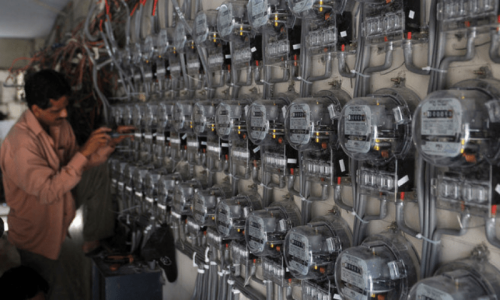
A significant portion of electricity is lost, stolen and unpaid balloons circular debt arising from technical losses due to ageing power networks and commercial losses due to power theft and laxity in bill recovery. In addition, indirect taxes due to fiscal deficits and additional surcharges are the dominant reasons behind the staggering electricity prices. Hence, the country has recently witnessed an unprecedented hike in electricity tariffs.
All these challenges warrant policy overhaul, and the government should resolve to take serious and sustained actions while considering a holistic view of the economy to ensure affordable electricity to consumers. A multifaceted strategy to enhance energy affordability based on expert opinions and various studies is proposed, encompassing long, medium, and short-term solutions, spanning from supply-side reforms to consumer-driven initiatives.
The government must prioritise substituting expensive imported fossil fuels with local indigenous and renewable energy resources (Hydel, Thar Coal, Solar, Wind etc) and establish healthy discussions with IPPs to meet halfway on the capacity costs.
Government must invest in upgrading and modernising the power supply network to minimise technical losses as well as controlling non-technical losses by preventing and detecting power theft through smart metering and digitalisation. Technical solutions alone won’t stop electricity theft until additional actions like taking strict action against staff involved in illegal connections and educating people regarding the religious and socio-economic implications of power theft.
In addition, the government must fix chronic governance issues in distribution companies and ensure proper recovery of billing payments, like engaging in a public-private partnership to lower commercial losses.
The government must promote energy efficiency, conservation measures, and awareness campaigns. Energy efficiency can lower high energy burdens. It helps households to save energy with measures such as utilising efficient appliances, insulation, heating and cooling system upgrades, and behaviour change (e.g. by shifting power-intensive tasks to off-peak hours).
Commercial consumers also need to change their behaviour to start their day earlier to make the most of natural light and utilise less energy at peak rates.
The domestic sector consumes 46.6 per cent of the total energy in the country. Government and non-governmental organisations should offer small interest-free loans or microfinance schemes to low-income households for solarisation and upgradation to efficient appliances (eg fans, lights). This can cut bills by 30-40pc.
If fiscal space permits, the government should subsidise rates for low-income households (ie low-usage slabs up to 200 units) while preventing high-income users from cheating with multiple meters and getting benefits during low winter consumption. Alternatively, the government can offer easy bill instalment options to help low-income consumers.
The government should provide subsidies and tax exemptions for renewable energy technologies to promote distributed generation and net metering. Also, the government should encourage local production to lower technology costs.
All such measures have the potential to substantially enhance energy affordability and offset the rising cost of electricity. The government needs to develop a strong will and commitment to resolve our energy sector’s complex issues. Governance reforms, strong and well-managed institutions and policy continuity across successive governments are essential recipes for a better Pakistan.
The writer is a faculty member and PhD Research Scholar at Mehran University of Engineering & Technology.
Email: hussainshafqat.memon@gmail.com
Published in Dawn, The Business and Finance Weekly, October 2nd, 2023