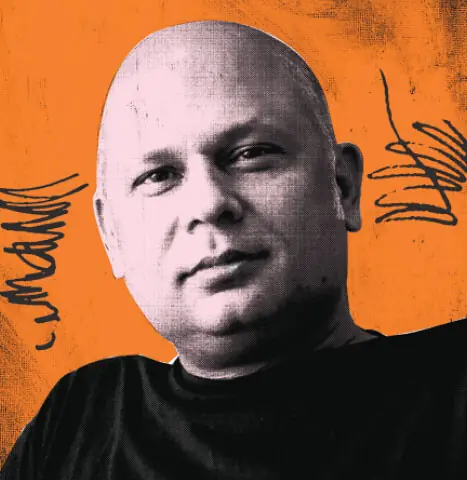
Karachi-born Farah Ali is the author of the short story collection People Want to Live (McSweeney’s, 2021). That book is being followed this month by the publication of her debut novel The River, The Town by Dzanc, another American indie press.
In unadorned prose that interconnects stark realism with a suggestion of the mythic, Ali’s novel is a meditation on poverty, sick bodies, and love in the era of climate catastrophe.
The River, The Town highlights the often ignored and excluded spaces of towns. Town spaces encroach upon nature, even as their denizens lack the support of urban infrastructure. This is a salutary approach, for South Asian writing is obsessed with the timeless Gandhian space of the village or the teeming Rushdiean metropolis.
Ali limns the town’s landscape as a dynamic mix of urban modernity and the enduring resistance of rural culture. She rejects simplistic notions of the town merely as a small city. Her portrayal of this in-between space unveils the pervasive oppression and suffering entrenched in rural settings, while also shedding light on the city’s prejudiced views and saviour complex.
Furthermore, Ali questions idealised perceptions of the rural as an unspoiled national emblem. This is especially pressing today, as villages are suffering desertification, floods and extreme weather events.
In the novel, Baadal, who lives in “the Town,” says townsfolk are a self-sufficient lot: “we can do almost everything ourselves. There is a primary school here and a secondary school, a hospital, a pharmacy.”
There is pride in his words, but he goes on to grudgingly admit that these amenities are diminishing and, more seriously, that “the only thing we really need from outside is water.” When the City does help with this vital resource, it is hyper-aware of its own salvific magnanimity.
Baadal is named after a water-giving cloud, just as many children in the Town are given monikers that recall nature. It is apt that people experiencing such hardscrabble lives would bestow names upon their children with positive, natural connotations.
The older Town residents make do in an environment where a reliable water supply is a luxury. They aspire to provide their children with better lives, free from the anxieties they had experienced. Naming their children in this manner is one way to pursue this goal even if, deep down, they harbour doubts about the transformative power of such a gesture.
The mother Raheela, for example, named her son Baadal because she genuinely wished, during the early stages of their mother-son bond, for him to have a better life. Readers are told that “she had thought a name which means cloud would keep all of us in cool shade and fresh water.”
However, a bitterness rooted in her past, as well as grief from the deaths of Baadal’s sisters Gulaab (Rose) and Kanwal (Lotus), eventually overwhelms any sentimentality she initially felt. If she once held out hope associated with this naming practice, it quickly fades within her.
In an interview, I asked Ali to elaborate on how she crafted the Town’s relationship with the environment. She told me that no solution is really sought to the problem of the drying river in the Town. It was partly this forced dependency on water from the City that she wanted to write about.
She and her novel give the impression that the rural-urban divide is becoming increasingly blurred as urbanisation spreads steadily across Pakistan. “Highways, houses, retail centres stand where once there was a forest or a swatch of grass or a beach,” Ali told me. Yet people tend not to think about what used to be there, where small towns and shops now stand, wreathed in car-fume smoke.
People have always settled further and further away from city centres. However, out of sight is out of mind. Such townspeople are thus deemed “less important in terms of basic care — water, transport, and so on — and become marginalised.”
Climate change, water shortage and environmental degradation play a significant role in shaping the conditions of the novel’s story world. The River in particular functions as a symbol of pollution, scarcity and illness. As the River incrementally loses volume, the effects of water insecurity play out in the desperate behaviour and appearances of the people of the Town. Not since reading Kamala Markandaya or Mahasweta Devi have I encountered such fine-grained South Asian writing about hunger, thirst and precarity.
Ali explained that she didn’t set out to consciously give a broader picture of climate change. She was more interested in the characters and how they wade through their lives, dragging along old worries or carving out new possibilities, while the climate acts as a stressor upon them.
“I do think,” she insisted, “that when a simple necessity can’t be taken for granted, it will, over time, change some people. I always want to try to see how people behave, and creating stories about them is, for me, the way to do that.”
Although Ali didn’t think she was writing a climate novel, over time during the writing process, she became aware that what is troubling the characters most is the lack of water. “That probably stemmed from growing up in a city where the water mafia plays such a big role,” she observed.
That interested me because, while reading, I had regularly thought about hydropolitics. I had been especially reminded of the docudrama Into Dust, about Karachi’s water crisis and the 2013 murder of anti-mafia campaigner Perween Rahman.
Ali’s The River, The Town offers a profound exploration of humanity’s struggles amid environmental upheaval. Through its vivid portrayal of peripheral spaces and the relentless pursuit of survival, Ali’s storytelling transcends traditional literary concerns.
The novel functions as an urgent reminder that water scarcity and climate change reshape not only the characters’ lives, but also our world.
The columnist is Professor of Global Literature at the University of York and author of three books.
Published in Dawn, Books & Authors, October 29th, 2023