ISLAMABAD: More than 27 million children were driven into hunger and malnutrition by extreme weather events in countries heavily impacted by the climate crisis in 2022, which was a 135 per cent jump from the previous year, according to a new data analysis released by Save the Children, an international non-governmental organisation, ahead of COP28.
Save the Children found that children made up nearly half of the 57 million people pushed into crisis levels of acute food insecurity or worse across 12 countries because of the extreme weather events in 2022. This was based on data from the Integrated Food Security Phase Classification (IPC) scale, a monitoring system for assessing hunger emergencies in 58 countries.
The IPC has estimated that the number of people facing hunger in countries where extreme weather events were the main driver of food crisis has nearly doubled in five years — soaring to 57 million in 2022 from about 29 million people in 2018.
The majority of countries where weather extremes were the main driver of hunger last year were concentrated in the Horn of Africa, with Ethiopia and Somalia accounting for about half of the 27 million children.
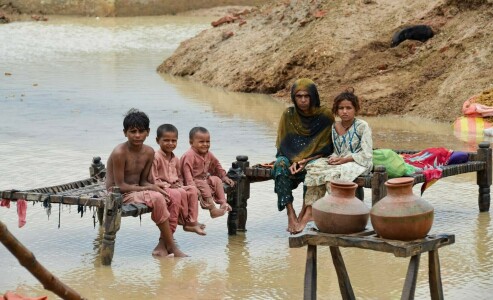
Last year, Pakistan was one of the 12 countries where extreme weather was primary driver of hunger, says Save the Children
Pakistan was one of the 12 countries where extreme weather events were the primary driver of hunger last year after devastating flooding submerged one third of the country, affecting 33 million people, half of whom were children. One year on, more than 2 million flood-affected children are acutely malnourished, with almost 600,000 children suffering from the deadliest form of malnutrition.
Annually, conflicts and economic shocks push even more children into hunger than weather extremes. Conflict was the primary driver of hunger for 117 million people in 19 countries last year. The IPC data also revealed an eight-fold increase in the number of people facing hunger because of economic shocks in five years, jumping to about 84 million people in 2022 from 10 million in 2018.
Globally, an estimated 774 million children — or one third of the world’s child population — are living with the dual impacts of poverty and high climate risk, according to Save the Children’s report.
Save the Children’s Chief Executive Officer Inger Ashing said: “In a world where wildfires, floods, droughts and hurricanes are becoming the frightening new normal, children today not only face a climate emergency but a landscape of heightened inequalities, where hunger is an unwelcome guest at an already crowded table.
“Prioritising investment in children’s health, nutrition, education, protection and safety nets must be at the forefront of global efforts. To truly protect children now and in the future, robust support for the new Loss and Damage Fund is non-negotiable.
“At COP28, world leaders must listen to the demands of children and invite them to be part of proposing solutions. Without tackling the climate crisis, the global hunger crisis will only deteriorate further, pushing millions more to the brink.”
Last year, Save the Children found that 83 per cent of children in 15 countries reported witnessing climate change or inequality, or both, affecting the world around them. Yet, children’s rights are neglected in climate finance. Currently 2.4 per cent of climate finance from four key global climate funds can be classified as sufficiently considering children, although some funders like the Green Climate Fund are actively working to bridge these gaps.
Save the Children is calling on world leaders at COP28, particularly those from high-income countries and historical emitters, to take action on the climate crisis by recognising children as key agents of change. Climate finance must be increased, providing funding for losses and damages and climate adaptation. Governments must work to urgently limit warming temperatures to 1.5C above pre-industrial levels.
Published in Dawn, November 29th, 2023