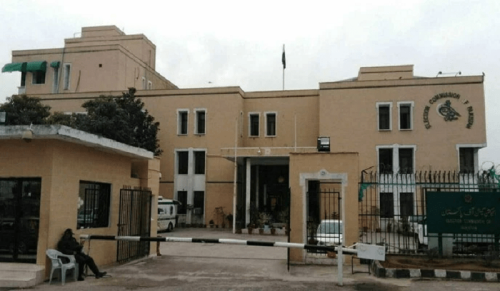
A FEW weeks after the ECP announced the date for general elections in the country — settling the issue, one would have thought — speculation has again gripped the imagination of many ‘on-camera journalists’ who, in their vlogs and TV programmes, cast doubts about polls being held in February next year.
Some have quoted (unnamed, of course) members of the caretaker cabinet, some senators from one particular province and others diplomats in the capital. The one common denominator was that the ‘delayed election’ news was coming from sources taking refuge behind anonymity.
Even then, a country which was once promised party-based elections within 90 days but had to wait 8 years for that exercise to happen on a partyless basis, and a nation that has seen its collective will being undermined by the machinations of one unelected institution or the other on multiple occasions over the years, could not have been blamed for finding such speculation credible if they did.
When such speculation — or rather rumours — start circulating and acquires a life of its own, most poorly informed ‘analysts’, such as this columnist, are asked by readers, friends and family if what is being speculated by usually well-informed journalists is true.
Elections, no matter how far from ideal, serve as a release valve for the have-nots in particular.
Frankly, I have no friends in high places or sources among the decision-making echelons of our beloved and, to borrow from Ardeshir Cowasjee, blighted land. All I have to rely on is asking the obvious questions to try and reach some sort of a conclusion myself.
So what questions would I ask to see if there is a likelihood of another delay in the already delayed elections? The first and foremost was addressed rather masterfully by my friend and colleague Khurram Husain this last Thursday in this very column space.
He explained at length the pitfalls of a postponement and its undesirable consequences for the economy. At a time when even the establishment has understood the meaning of ‘it’s the economy, stupid’, which was used in the 1992 US presidential election, who would think of derailing the electoral process?
Ask a student of elementary economics and politics, and they will tell you that economic development, ie, growth will be severely curtailed in times of political uncertainty and upheaval. Given the importance being attached to economic revival, it would be nothing but utterly foolhardy to delay the elections.
It would be useful to keep in focus the world beyond the elite bubble in our society, and understand that out of the 240.4 million Pakistanis, just under 40 per cent live below the poverty line. That is 95m people.
This staggering number of people, more than a third of the country, struggles to put food on the table and a roof over its head; it can only dream about a decent education for their children and healthcare for themselves and their family. Can you imagine how you’d be seething with anger and despair if your reality mirrored theirs, despite working all day long.
The impact of this anger, which envelops a third of our country, is a recipe for the kind of political strife and instability many of us, who lead a relatively smug existence, cannot imagine. I shudder to think of the turmoil if this sustained deprivation brings the shirtless multitudes onto the streets.
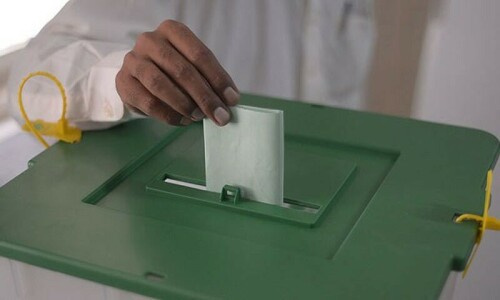
Elections, no matter how far from ideal, serve as a release valve for the have-nots in particular as they feel empowered, even if only for a day, and think they are being heard and sought after. For those who have very little, to feel wanted must be a special feeling.
Even a somewhat flawed electoral exercise brings to the fore elected leaders who have more credibility than the establishment’s capital-hopping, jet-setting ‘middle class’ poster boy. This credibility is significant both in enabling the office-holder to steer the ship at home and in strengthening their hands in negotiating externally.
Frankly, the only reason why some journalists have cited, in support of their insistence that a postponement of the election is on the cards, is what is perceived to be the popularity of PTI leader Imran Khan. This despite the systematic degradation of his party and the engineered disarray among the PTI’s second- and third-tier leaders and those likely to run on the party’s ticket in the election.
But very few of these leading pundits address one small point. By postponing the election for six months or even a year, in the unlikely event that the apex court approves such a move, what change in the country’s objective conditions would occur that facilitates elections?
If the election is at all postponed, it will create more political uncertainty, which would be a killer for the economy. The state of the economy will also dictate the political and social climate. If hardship increases, can we rule out upheaval? Probably not.
Simultaneous with these factors is the return of PML-N leader Nawaz Sharif. His return, facilitated as it is seen to be by the establishment, doesn’t seem to have happened for him to be kept waiting for an indefinite period. For now, he is an ally, but if the promised reset to 2016 doesn’t happen soon, how long will he stay quiet?
The PPP has already started its campaign. Its footprint may be receding but it remains a strong voice that can’t be shrugged aside. Even if over the short term some political parties think a postponement may be beneficial for them, it would be short-sighted to back it. Their credibility and, therefore, their chances will likely nosedive and not improve.
Admittedly, we are talking of Pakistan, a land of glorious uncertainties. Luck is said to favour the brave but I could end up with egg on my face. C’est la vie.
The writer is a former editor of Dawn.
abbas.nasir@hotmail.com
Published in Dawn, December 3rd, 2023