KARACHI: A socially driven movement to boycott western products in protest against their alleged support for Israeli atrocities in Gaza has dealt a serious blow to businesses of the world’s renowned brands in Pakistan. Simultaneously, it has boosted prospects for local alternatives, which are still struggling to fill the gap due to their own loopholes, a study and industrialists said.
“This also emerges as an opportunity for local companies, which have seen sudden jumps in their sales as an alternative to multinational products,” said Kashif Hafeez of Pulse Consultant, a nationwide social research organisation that recently carried out the study.
“The study, in fact, helps our local companies capitalise on the opportunity and fill the gaps where they are lacking. They are as good in quality as the multinationals, but they face serious challenges of distribution, marketing, and availability of their products.”
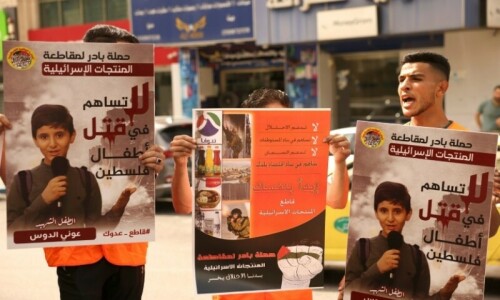
The fresh data from the study, which asked hundreds of people across Pakistan about their reaction to the recent call to boycott western products in protest after Israel started bombing civilians following the Oct 7 attacks, killing thousands of civilians, with more than half of them being children. In response, close to 80 per cent of consumers agreed with the motive of the campaign and supported the boycott call, while almost 70pc have practically started participating in the campaign, quitting the use of several multinational and western brands.
There are some products, according to Mr Hafeez, where local brands aren’t available and due to their non-production at the domestic level nothing has changed in their sales.
“Like we lack good brands of toothpaste and some other FMCGs [fast-moving consumer goods],” he said. “But at the same time, there are dozens of products where our brands are much higher in quality and they already pose tough competition to multinational brands. Tea is one thing where we are much better in local brands compared to multinationals. Another interesting phenomenon, we have witnessed this time, is that boycott call is more zealously followed by the upper social class, which usually consumes multinational brands. This is another factor that has dented multinationals’ businesses.”
According to the study, conducted in 12 major cities of Pakistan, eight out of 10 respondents were in favour of boycotting the multinational and western brands and seven out of 10 claimed they had already started that practice.
“Interestingly, the sentiments to boycott are relatively high among females, who are seen as decision-makers for household brands, compared to males,” says the study, conducted among individuals aged 16 to 55 years.
Among female responders, 78pc not only agreed with the boycott call but also claimed to have actively participated in the campaign, compared to 66pc of male respondents.
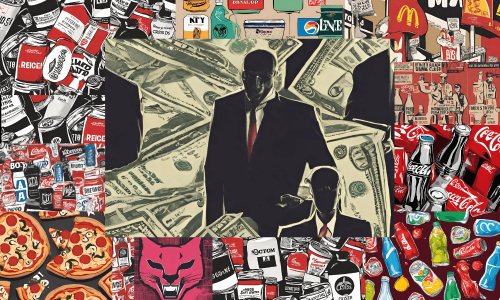
The most robust and effective boycott reaction was observed against carbonated soft drinks, followed by confectionary items, packaged dairy products, soaps, shampoos, edible items, cooking oil, toothpaste, and others.
However, experts disagree with the argument presented by boycott supporters that using local products would benefit the economy. They argue that local products generally lack quality due to the absence of certification and standards regimes in production.
Dr Adil Nakhoda, an economist and associate professor at the Institute of Business Administration (IBA), recently speaking to Dawn.com highlighted that Pakistan already has import restrictions in place that should encourage local producers. But, such restrictions have often failed to create local alternatives to meet the needs of the population.
However, those, who are doing business on the ground, are witnessing the windfall. When asked about the impact of the boycott on local businesses, Zubair Motiwala, a prominent industrialist and chief of the Trade Development Authority of Pakistan (TDAP), called it “phenomenal and extraordinary.”
“Our manufacturers are witnessing a phenomenal increase in their businesses [due to the boycott],” he said. “There are indeed challenges, but the impact is so huge and sudden that many weren’t prepared for it and lack a few things to handle it. But there’s an opportunity hidden in all these phenomena. We need to make it sustainable. For that, we have to learn from such events, fill gaps, and move towards local manufacturing.”
Published in Dawn, December 3rd, 2023