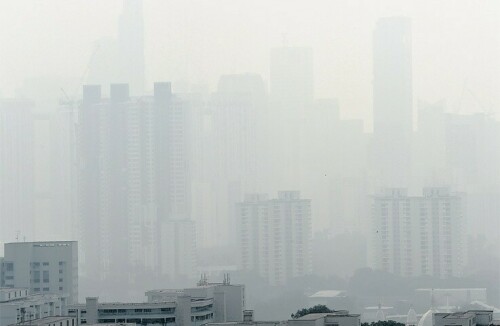
South Asia’s smog


AIR pollution is a major environmental threat of our time, affecting our well-being and posing health hazards to the most vulnerable members of our communities. South Asia, home to a quarter of the global population, has the worst urban air pollution in the world. Most South Asians live in areas where air pollution levels significantly exceed the WHO guidelines, exposing people to unhealthy air year-round and shortening life expectancy.
At the start of winter, air pollution increases to extremely dangerous levels. The toxic mix of smoke and dust is trapped by cold and heavy air, converting it into thick layers of smog over long periods of dry weather. In addition to health hazards, reduced visibility endangers lives on roads and motorways. Only occasional spells of rain provide temporary relief from the smog, even as highly dangerous levels of pollution remain in the air.
The air quality in Pakistan, Bangladesh, India and Nepal is counted as the worst. Lahore, Peshawar, Gujranwala, New Delhi, and Kolkata rank among the world’s most polluted urban centres.
A recent news report labelled South Asia as the ‘epicentre’ of air pollution. This year, the situation is alarming. The impact of living under such hazardous conditions is particularly calamitous for children, the elderly and those with respiratory and cardiac health conditions.
In Pakistan, due to air pollution, life expectancy has been reduced by four years compared to the global average reduction of 2.3 years. In the worst-affected urban areas, such as Peshawar and Lahore, residents are expected to lose as many as five years of their lives as a result of unhealthy air.
Air pollution has reduced life expectancy.
The drivers of air pollution are well known, as are the solutions to control it. Toxic emissions from industry, transport, waste burning and seasonal crop residue burning are major sources of air pollution in Pakistan.
In some parts of Pakistan, health advisories have been issued and educational institutes and offices closed for short periods, with the expectation that less human activity would reduce the smog and protect the vulnerable. This is no lasting solution.
A ban on crop residue burning will also not be effective until farmers are provided with an alternative system to clean their land of crop residue in an environmentally friendly way. Meanwhile, court cases against polluters often fall by the wayside, either due to the inability of prosecuting agencies to produce timely evidence, or law enforcement agencies’ lack of capacity.
Land use management regulations are another area warranting immediate attention. Pakistan’s urbanisation rate is the highest in the region. Half of the country’s population will be living in cities by 2025. In the process, unsustainable and often unregulated urban sprawl is taking place, mostly at the expense of green cover, depriving the cities of natural air filters. This exacerbates air pollution significantly.
Conversion of agricultural land or forested areas into housing schemes must be regulated to ensure the provision of sufficient green spaces around cities. This is also important to safeguard natural habitats for wildlife and biodiversity, and thus essential for a balanced ecosystem.
The United Nations Environment Programme has identified implementation and policy gaps and compiled actions that governments can take to address air pollution. The costs of inaction are high. The burden of disease and economic costs keep rising. Urgent and bold measures are needed to tackle the problem on a permanent basis. Strengthening the implementation arm of law enforcement agencies will enable the courts to penalise polluters.
Other steps to help reduce pollution include expanding the network of electric transport and restricting vehicular movement in urban centres by levying a congestion toll on smoke-emitting transport. Introducing pedestrian zones is useful to protect citizens from air and noise pollution.
Temporary closure of traffic in recent roadworks in Peshawar cantonment provided a pleasant peek into how pedestrians could enjoy smoke-free air in an otherwise polluted and noisy part of the city. The provision of pedestrian zones should be a compulsory requirement of urban designing and restructuring. Through a cross-sectoral approach, Pakistan’s National Clean Air Policy should be implemented in synergy with climate change policies through a bottom-up approach.
Engaging communities and local bodies will be helpful to monitor air quality in a systemic manner and propel swift and sustained action at ground level through stringent regulatory frameworks.
Citizens all over are increasingly raising concerns about the impact of air pollution on their lives. Their calls for clean air must be heard and answered.
The writer is director of intergovernmental affairs, United Nations Environment Programme.
Published in Dawn, December 20th, 2023