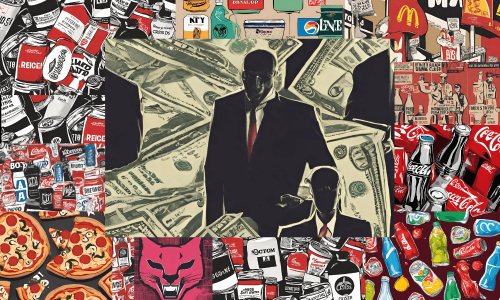
‘By us, for us’ — West Bank boycotts Israeli products


RAMALLAH: Since the Israeli aggression began in Gaza, plenty of posters, stickers and leaflets in the occupied West Bank have urged Palestinians to boycott the country’s products and buy local.
“By us, for us,” reads the slogan of the new campaign that has spread across towns in recent weeks, as calls to ban Israeli goods also grow in other countries.
The slogan is everywhere at one well-known supermarket chain in the West Bank, where “Made in Palestine” fare like water, milk and toilet paper take pride of place.
“It’s all about highlighting Palestinian products,” said Omar Bawatneh, manager of a branch in Ramallah.
The chain estimates that sales of Israeli products at its stores have dropped by 30 per cent since the Israeli brutality in Gaza.At supermarkets across the occupied territory, young people in particular have “developed a political conscience and are consuming more and more Palestinian products”, Bawatneh said.
“They look at the labels, go online to see the list of products to boycott,” he added, referring to the international Boycott, Divestment and Sanctions (BDS) movement.
Global momentum
Launched by Palestinian civil society organisations in 2005, BDS advocates political and economic action against Israel over its treatment of Palestinians.
The movement is regularly accused of anti-Semitism by Israel and its key backer the United States.
But co-founder Omar Barghouti said “the BDS movement categorically opposes all forms of racism, including Islamophobia and anti-Semitism”. He said it drew inspiration from South Africa’s anti-apartheid movement.
The founders have three demands: “Ending Israel’s 1967 military occupation, dismantling its system of apartheid, and respecting the right of Palestinian refugees to return to their lands and receive reparations.” BDS also advocates a boycott of Israeli sports, cultural and academic events, and calls for pressure on foreign companies that “collaborate” with Israel.
Eighteen years after its emergence, the campaign has gained global momentum, with branches in 40 countries. “I support this movement because we can only change things here through international pressure,” said Ofer Neiman, an Israeli member of the group.
“This is a very good campaign that uses the principles of non-violence and human rights to bring about change,” the left-wing activist said. In his daily life, he “tries to boycott products from settlements”.
‘Zero Israeli products’
But others say a boycott is just not practical. The owner of a shop selling sanitary and heating equipment in downtown Ramallah said it would be “impossible” to run his business without Israeli goods.
It’s extremely difficult to get hold of top-quality bathtubs and plumbing that is not made in Israel, he said. “My customers want the best product for their home,” said the Palestinian shopkeeper, who asked not to be named for fear of reprisals.
“You can eat Palestinian food, but we haven’t been able to develop our industry.” In a report this year, the United Nations Conference on Trade and Development said Palestinian households were struggling under the “severe economic impact of Israeli restrictions” in much of the West Bank. In annexed east Jerusalem, stores are full of Israeli items.
Traders use a wholesale system overseen by an Israeli official who “makes sure there’s a balance” between Israeli and Palestinian products, Bawatneh said.
In El-Bireh, near Ramallah, Mohamed Ali said his grocery shop has been stocked with “zero Israeli products for 10 years”.
Instead, he mainly buys Turkish, Jordanian and Chinese products, as well as French canned goods.
On one occasion, he said, soldiers had tried to “intimidate” him and shut down his shop. But, he explained: “I refuse to give money that will go to the Israeli military who will kill Palestinians.”
Published in Dawn, December 27th, 2023