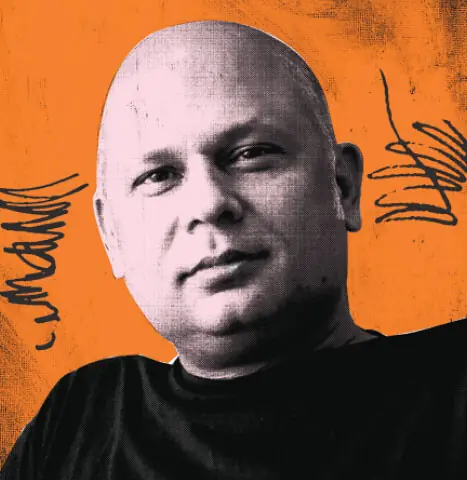
In a literary marketplace saturated with Eurocentric accounts of motherhood, Suma Din’s creative non-fiction work, Dear Mother: Letters from the Heart, is a refreshing collection. Made up of imagined letters, the book explores the challenges and rewards of motherhood from within an Islamic framework. In terms of its genre, Dear Mother is a blend of self-help, life writing and fiction.
As a Bengali British Muslim academic and author, Din brings an important lens to the topic, highlighting the experiences of Muslim mothers and their intersectional identities. She has a vivid imagination, and so sometimes I longed for fewer letters and greater character development in order to give the letters a more sustained feel. The correspondences really amount to a peg on which to hang various concerns about giving birth, raising children within the faith, and mothers’ selfcare.
The epistolary format of Dear Mother is not only a peg and a stylistic choice, though, but a reflection of Din’s own communication preferences. In an interview with me, she spoke of letters as a means of communication, harking back to her pre-internet youth, when this was the primary mode for connecting across distances. The letters in her book, she told me, “allowed for intimate and honest dialogue, and each one stands alone. This gave me the freedom to write them from varying stages of life, perspectives and experiences.”
Din acknowledges influences on her choice of format, citing iconic letters such as Mr Darcy’s missive to Elizabeth in Jane Austen’s Pride and Prejudice, and those written by Mrs Ruddock, the “Lady of Letters” from Alan Bennett’s Talking Heads. While not directly inspired by specific works, Din’s letters carry these forebears’ essence, forming a narrative that is both personal and universal.
I asked Din about the distinctive feature of Dear Mother in focusing on motherhood within the parameters of a religious minority. In response, she stressed the importance of diversifying the narrative on parenting. She holds that sharing a kaleidoscope of motherhood experiences is essential for widening the discourse and making it more realistic.
Din contends that diasporic second- and third-generation immigrant mothers in the UK might identify themselves as “British Muslim mothers” or as mothers from particular cultural backgrounds who happen to be in Britain. A common thread, though, is the way they prioritise faith in their parenting.
In addition to the usual sleepless nights and worries about children’s education, having a Muslim identity brings parental struggles such as dealing with racism, media bias and widespread stereotypes about Islam. Din writes powerfully on “school letters framed in a troubling narrative about the susceptibility of our children to extremism. Social media threads about the difficulty of defining ‘Islamophobia’.” Yet she knows precisely how to define anti-Muslim hatred as she walks around “minding [her] own business” while culture wars “play […] out on the streets.”
The letters in Dear Mother cover a spectrum of topics related to motherhood, from pregnancy and postpartum blues; to bringing up boys, girls and teens; to arranging marriages and coping with an empty nest.
In one of the liveliest epistles, ‘Dear Mother with the Radio On’, Din’s narrator speaks of switching between Urdu, Hindi and Bengali channels, finding that the sound of these languages is a balm to her troubled spirit. “The programmes don’t interest me,” she notes, “but the languages do, other phrases, intonations, expressions, constructions. I want my ears to drown in these languages, in all of them at the same time.”
The varied letters recall a diversity of experiences that Din has encountered in her professional, community and personal life. Tapping into her teaching background and decades-long engagement with the Muslim supplementary sector, this book encapsulates a laundry list of issues that resonate with mothers from diasporic communities.
Other dilemmas discussed include the provision of halal and tayyib (wholesome) food for kids; chasing perfection versus being the “good enough” mother described by psychoanalyst D.W. Winnicott; Unani medicine; and parenting through the Covid-19 pandemic. “I’m a mum too!” Din reminded me. “I have three adult children and having been through the primary, secondary and university years, there’s no end of subject matter for me to draw on.”
The thematic inclusivity required thought, especially in areas such as mental health. Letters addressing mental illness draw on Din’s interest in the subject, augmented by a recent course on Islamic psychology and counselling. To ensure accuracy, she sought feedback from a professional counsellor working with a mental health charity.
Having been hospitalised myself 17 years ago for postnatal depression after the birth of our second child, I appreciate Din’s research and open-mindedness. When I was still recovering, I interviewed the brilliant Muslim novelist Leila Aboulela. Aboulela told me “modern life can be quick to categorise sadness, grief and sheer exhaustion as mental illness.”
In Sudan, where the novelist comes from, she said she never came across postnatal depression. Aboulela put this down to new mothers staying in bed for forty days being pampered after the baby’s birth. Din takes mental illness more seriously, not merely putting it down to overzealous Western categorisation and a rush to return to work. She too thinks the forty days of rest for new mums is helpful. However, in Dear Mother she observes that postpartum depression is “a health condition and we have to start treating it as such rather than thinking it’s because the mother’s weak or neglectful.”
As a writer and researcher, Din hopes Dear Mother serves as a vehicle to acknowledge and appreciate the labour of motherhood, a contribution often overlooked. The book aims to provide insight and empathy for readers who may not be directly involved in “mother-work” (African American scholar Patricia Hill Collins’ term). For Muslim mothers, Din wants them to feel understood and valued in a world that often fails to recognise their complexity.
Dear Mother is an episodic but nonetheless affecting exploration of motherhood, which transcends cultural boundaries. Din’s commitment to diversity and empathy gives this collection significant input into the unfolding narrative on parenting. She ensures that Muslim mothers are heard in a broader conversation that often ignores or belittles their voices.
The columnist is Professor of Global Literature at the University of York and author of three books.
Published in Dawn, Books & Authors, December 31st, 2023