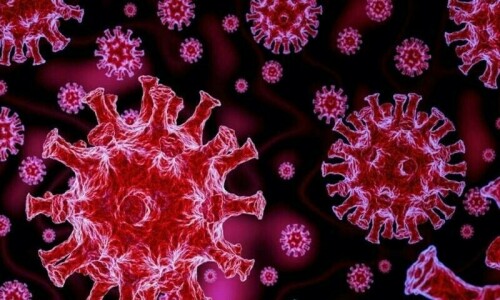
The National Institute of Health’s (NIH) National Command and Operations Centre (NCOC) has confirmed 15 cases of Covid-19’s JN.1 variant, the health ministry said on Tuesday.
Sajid Shah, the health ministry’s spokesperson, quoted caretaker Health Minister Dr Nadeem Jan as saying that the situation was “being monitored strictly, with border health services, national and provincial health authorities, and labs fully functional and alert”.
Classified as a variant of interest (VOI) by the World Health Organisation (WHO), JN.1 is a sub-lineage of the Omicron variant and is more transmissible than other circulating variants. It has spread to over 40 countries.
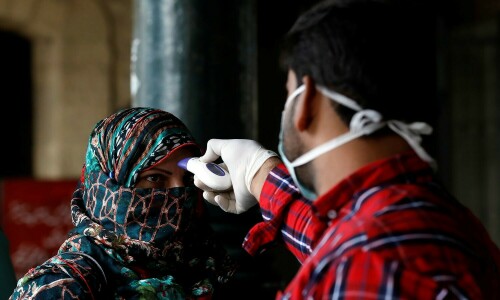
The spokesperson further quoted Dr Jan as stating that an “effective screening system” was in place at all entry and exit points of international airports in the country.
Among the 15 reported cases, eight were detected by the lab at the NIH, five by Karachi’s Aga Khan University Hospital and two by Karachi’s Dow University of Health Sciences, Shah said.
The health minister was quoted as saying that the ministry was monitoring the situation on a special basis and was ensuring that all necessary steps were being taken to protect the public from the new variant. The federal government was in contact with its provincial counterparts, he added.
Measures against new variant
To prevent the spread of JN.1, the same strategies as those to prevent Covid-19 are advised, such as social distancing, wearing masks, proper sanitation and hygiene.
The NIH and the Islamabad Healthcare Regulatory Authority (IHRA) have issued advisories regarding the new sub-variant to ensure timely preventive and control measures.
As per the NIH advisory, JN.1 has been classified by the WHO as a VOI with genetic changes predicted or known to affect virus characteristics such as transmissibility, disease severity, immune escape, and diagnostic or therapeutic escape.
NIH officials said the advisory has been issued to alert and facilitate the health authorities and other stakeholders for timely preventive and control measures and ensure preparedness to deal with increased patient influx during the next few weeks.
Screening at the international borders had been increased at the beginning of January while the federal government has also decided to procure 500,000 doses of Covid-19 vaccine.
Sindh’s health department has planned to set up a task force soon to tackle the emerging threat from JN.1 while Peshawar’s district health authorities have been directed to enhance screening of influenza-like illnesses and random testing for Covid-19.