ECC okays Rs10bn more for cybersecurity


• Allows increase in gas price for two fertiliser plants
• Cnergyico Petroleum told to clear Rs50bn unpaid petroleum levy
ISLAMABAD: The Economic Coordination Committee (ECC) of the cabinet on Wednesday approved Rs10 billion additional funds for cybersecurity and an increase in gas price for two Punjab-based fertiliser plants.
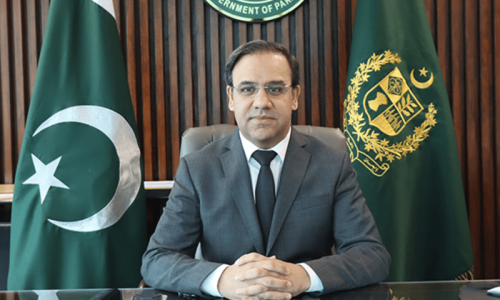
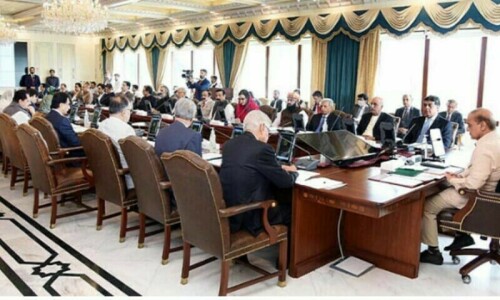
A meeting of the ECC, presided over by caretaker Finance Minister Dr Shamshad Akhtar, also asked the defaulting Cnergyico Petroleum Limited (CPL) to clear around Rs50bn unpaid petroleum levy in three years with interest through bank guarantee or else it would not qualify for incentives under the new brownfield petroleum policy, ultimately leading to closure of operations.
An official statement said the ECC approved a request for allocation of Rs10bn grant during the current fiscal year for “Digital Information Infrastructure Initiative (DIII)”. The funds will be utilised for requisite technical capabilities to proactively identify potential cyberthreats on the national critical information infrastructure, besides preventing cybersecurity breaches.
The ECC had in November 2023 also allowed diversion of Rs5bn from information technology research to cybersecurity.
The meeting was informed that the country’s digital information infrastructure required to be strengthened due to repeated cyberattacks on Pakistan’s ICT infrastructure and cyberspace by international enemies, posing security threats.
Therefore, the DIII was prepared by the IT ministry, telecom authority, and relevant law enforcement agencies to mitigate the challenges of cyberattacks and block such attacks in real time.
The meeting approved the increase in gas price for two Punjab-based fertiliser plants — Fatima Fertiliser and Agritech — on a “no-subsidy basis” as they have already raised the urea prices.
Both the manufacturers had increased the urea prices from Rs2,791 to Rs3,277 per 50kg bag with effect from July 2023, which actually now ranged between Rs3,210 and Rs3,595 per 50kg bag, whereas the gas price for Mari Petroleum-based urea plants (40 per cent share) has not changed for three years.
Rs50bn unpaid dues
The meeting also took up non-payment of about Rs50bn that CPL had collected from consumers through sale of petroleum products. Under the new policy for upgrade of old refineries, a refinery defaulting on any government dues or petroleum levy on petroleum products is not eligible to avail healthy incentives. The failure to settle the matter entails closure of business operations in the local market.
The ministries of petroleum and finance had been negotiating with the CPL to avoid the logical closure through signing of a legally binding and enforceable recourse/settlement. Once a settlement is reached, the refinery will become eligible to open a joint escrow account with Ogra and start depositing the incremental incentives on a prospective basis. The funds available in the joint escrow account can only be drawn and used by the respective refinery on the upgrade project after payment of all outstanding government dues/petroleum levy on petroleum products.
At the level of Special Investment and Facilitation Council (SIFC), the CPL offered a deed of settlement (DOS) for payment of “defaulted petroleum levy” in five years in equal instalments to avail the incentives under the new policy. It offered to pay Rs255.22 million upfront on signing of DOS and Rs790m each month in 60 installments (five years) and also provided six postdated cheques of Rs790m each (Rs4.74bn).
It also agreed to deposit incremental incentives in the joint escrow account, which will not be used as recourse against the outstanding petroleum levy. It also agreed not withdraw any incentives from the escrow account until outstanding levy is cleared.
The finance ministry, however, called for the CPL to provide bank guarantee instead of postdated cheques to ensure timely petroleum levy payments and the duration of payment should be three years at the rate of Rs1.32bn per month (36 months) along with late payment surcharge as required under the Public Finance Management Act.
The ECC asked the petroleum division to implement the finance ministry’s demand. The petroleum division reported that the CPL had expressed financial constraints.
The ECC also approved the continuation of Sui Development and Production Lease with Pakistan Petroleum Limited until July 2025 as the “provincial government of Balochistan indicated its endorsement”, the official statement said.
It also approved the revised fee of issuance of certificate of quality and origin and other certificates for fish and fishery products under Pakistan Fish Inspection and Quality Control Rules, 1998.
Published in Dawn, February 8th, 2024