ISLAMABAD: Floods and heat stress have globally widened the income gap between rural poor and non-poor households by up to $21 billion a year, reveals a new report published by the Food and Agriculture Organisation (FAO) .
These estimates, according to the FAO report, ‘The Unjust Climate’, highlight the massive challenge that extreme weather events pose for global efforts to reduce poverty and inequality. This challenge will only become more acute as the frequency and intensity of these events increase because of climate change.
The report says extreme weather events disproportionately affect poor rural households, leading to significant reductions in their incomes and widening income inequality. With every day of extreme heat, poor rural households lose 2.4 per cent of their on-farm incomes, 1.1pc of the value of the crops they produce, and 1.5pc of their off-farm income relative to non-poor households.
The exposure to heat stress adversely affects all dimensions of the income portfolios of the rural poor. Not only are the agricultural systems of the poor more impacted by extreme temperatures, but their off-farm income-earning strategies are also affected.
Adversely affect both agricultural systems and off-farm strategies
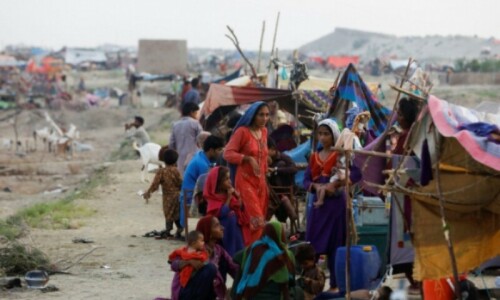
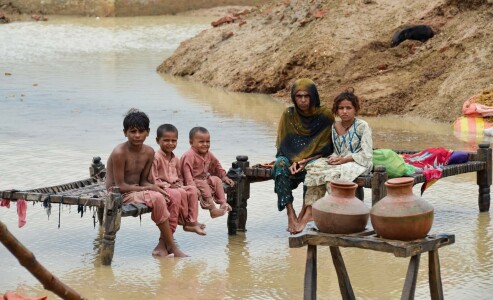
Poor rural households are also acutely sensitive to floods. With each additional day of exposure to extreme precipitation, poor households lose 0.8pc of their total income, relative to non-poor households. When exposed to droughts, poor households lose relatively more of their farm incomes and value of crop production compared to non-poor households.
Similarly, every day of extreme precipitation causes poor households to lose 0.8pc of their incomes relative to non-poor households, mostly driven by losses in off-farm incomes.
Extreme weather events push poor rural households to adopt maladaptive coping strategies, including reducing income sources, liquidating livestock, and redirecting expenditures away from their farms. Poor households tend to reduce the diversity of their income sources when exposed to heat stresses, relative to better-off households.
Meanwhile, floods and heat stress cause poor households to lose livestock holdings relative to non-poor households, either through distress sales of animals or higher levels of livestock mortality. Poor households reduce their investments in agriculture relative to non-poor households when faced with floods and droughts, as they redirect their scare resources away from agricultural production towards immediate consumption needs. These coping strategies are likely to make them more vulnerable to future climate stressors than non-poor rural households.
In addition, long-term increases in temperatures push poor rural households to rely more on weather-dependent agriculture for their livelihoods, thereby increasing their climate vulnerability. A one-degree Celsius increase in average temperatures is associated with a 53pc increase in the farm incomes of poor households and a 33pc decrease in their off-farm incomes, relative to non-poor households.
Female-headed households lose significantly more of their incomes than male-headed households when extreme weather events occur. A day of extreme temperature or extreme precipitation is associated with a 1.3pc and 0.5pc reduction, respectively, in the total incomes of female-headed households, relative to that of male-headed households.
Across low- and middle-income countries, heat stresses widen the income gap between rural female-headed households and male-headed households by $37bn annually, and floods by $16bn.
An additional day of drought or extreme temperatures reduces the farm incomes of female-headed households by 0.4 and 1.1pc, respectively, relative to male-headed households.
Published in Dawn, March 10th, 2024