ISLAMABAD: Pakistan’s inaugural lunar satellite, ICUBE-Q, has achieved a significant milestone by successfully entering the moon’s orbit on Wednesday afternoon, as confirmed by Institute of Space Technology.
ICUBE-Qamar was successfully deployed in lunar orbit on May 8, at 1:14pm.
According to the Institute of Space Technology, the pivotal development highlights its importance in potentially unlocking larger-scale space missions for Pakistan in the future.
“Satellite after deployment is performing as per design specifications. All sub-systems’ health data is excellent. The imaging payload is fully functional,” IST said, adding, “The next two days will be spent conducting thorough in-orbit testing. Images will be shared after in-orbit testing.”
Last Friday, Pakistan became the sixth country to launch its first-ever moon satellite.
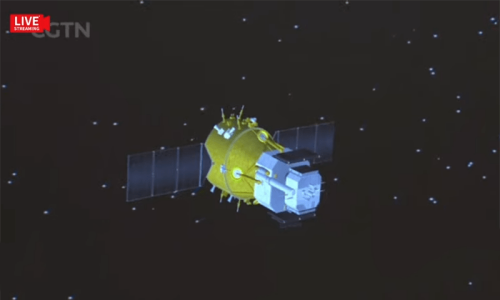
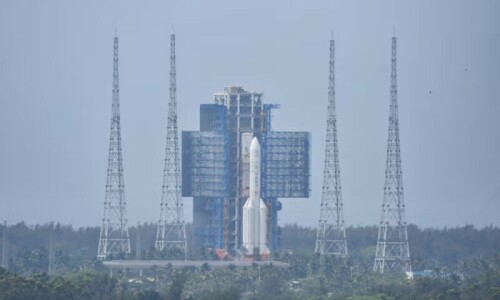
Riding on the Chinese rocket Chang’e 6 lunar probe, the ICUBE-Q satellite marked a historic collaboration between Pakistan and China in lunar exploration. The Chinese mission aimed to land on the moon’s far side, perpetually hidden from Earth, and subsequently collect and return samples.
The Chinese embassy expressed its enthusiasm for the milestone, highlighting that this marked the first-ever China-Pakistan cooperation on lunar exploration.
According to Dr Khurram Khursheed, head of the department of electrical and computer science at the institute, the satellite would play a critical role in deep space missions.
Operating in extreme temperatures as low as minus 100 degrees Celsius, the satellite features a 7kg one-megapixel camera tailored for missions with power constraints. “Its surface-level analysis capabilities, transmitting images at a modest 1-kbps, will provide crucial data on crater locations, water, and traces of ice on the moon’s surface. These findings, obtained through various techniques, hold promise for global utilisation,” he said.
As the Chinese lander collects rock and soil samples, ICUBE-Q will spend three to six months orbiting the moon, capturing and transmitting images of the moon back to Earth. By May 15, according to the institute, Pakistan anticipates sharing images captured by the satellite.
Published in Dawn, May 9th, 2024