Opposition leaders slam military involvement in politics


• Omar Ayub questions who has given DG ISPR right to negotiate
• Mahmood Achakzai insists each institution should stay within its limits
• Hamid Khan says rejection of public mandate led to creation of Bangladesh
ISLAMABAD: Prominent opposition leaders collectively called for the full implementation of the Constitution and criticised the military’s interference in political affairs.
The leaders were speaking at a seminar titled “Tahafuz-i-Aain-i-Pakistan: Kaise aur Kyun”, organised by the joint opposition on Wednesday, on the eve of last year’s May 9 violent protests erupted after the arrest of PTI founder Imran Khan.
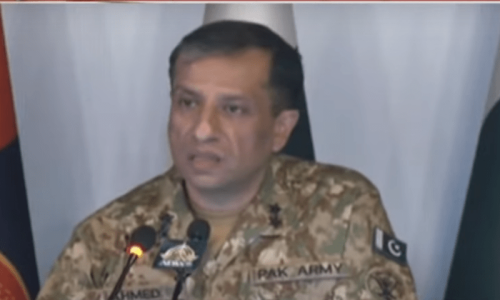
The seminar also came a day after the military said that those involved in the May 9 protests need to regret their acts with sincerity and shun the “politics of anarchy and hate” before any talks could be initiated with them.
However, speaking at Wednesday’s event, PTI Secretary General Omar Ayub, the leader of the opposition in the National Assembly, openly rejected the press conference of the director general of Inter-Services Public Relations (ISPR), questioning the DG’s right to negotiate on political matters. He also alleged that the DG was confused and lacked narrative.
“DG ISPR, you are a protector, not the owner of the state,” Mr Ayub declared, emphasising that real power resides with the people and their elected representatives.
He also called for public access to several sensitive reports, including those on the Army Public School and the Abbottabad Commission, as well as the investigation into journalist Arshad Sharif’s death.
Mahmood Khan Achakzai, who presided over the seminar, said that people have started their struggle for “Haqiqi Azadi” (real freedom). He said Pakistan’s issues couldn’t be addressed unless each institution stayed within its prescribed limits.
He warned that the day anyone tried to enforce martial law or amend the Constitution, the workers of the joint opposition would be on the roads.
PTI leader Asad Qaiser, former speaker of the National Assembly, spoke about the severe disillusionment prevailing in the country and urged all institutions to adhere strictly to their roles to ensure peace in the country. He announced plans to conduct similar seminars in other cities to continue advocating for constitutional governance.
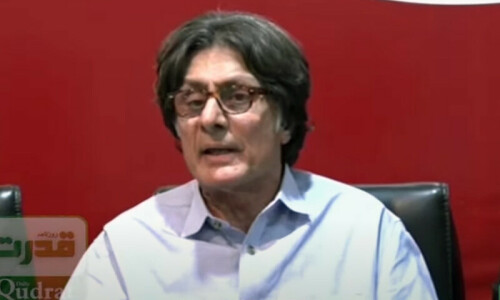
Another PTI leader, Advocate Hamid Khan, said the Constitution of 1956 was democratic and if it had not been suspended, East Pakistan (now Bangladesh) would still be part of Pakistan. The country was divided because “we did not accept their (East Pakistan’s) mandate”, he said.
Advocate Khan noted that the DG ISPR said everything regarding the May 9 incident was clear. “It means that he has made a decision. Who has given him the power to make decisions?” he added.
Liaqat Baloch, the deputy head of Jamaat-i-Islami, suggested that there should be no role of the establishment in politics and democracy.
“No one will accept it even if someone holds a press conference in the Faisal Mosque (saying there is no role of establishment in politics). We will accept the result of the elections, which will be held without the establishment’s interference,” he said.
Allama Raja Nasir Abbas Jaffari, the head of Majlis Wahdat-i-Muslimeen, said that steps against the Constitution should be stopped and those who won through “bogus” Forms-47 should not sit in the parliament.
Leader of the Opposition in Senate Shibli Faraz said the Constitution should be followed in letter and spirit.
PTI Chairman Barrister Gohar Khan said the Constitution was practically suspended and suggested making government with the vote and support of the people.
Advocate Sardar Latif Khosa said that the state consisted of only people and others were employees. “You are employees; you are not even an institution. Everyone must follow the Constitution, even if they are the chief justice or army chief,” he added.
Published in Dawn, May 9th, 2024