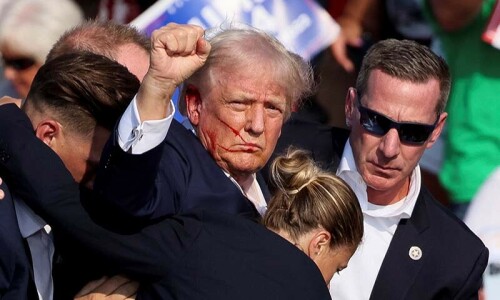
AS FOOTAGE of the attack on Donald Trump was aired by US media on Saturday, participants in a Muslim religious gathering in Virginia waited for more information with bated breath.
The gunshots rang out in Butler, a small town in Pennsylvania, yet their reverberations were felt across the United States and beyond.
Nearly everyone in the crowd had cell phones, ensuring that every aspect not captured by mainstream media — such as the shooting of the gunman — was documented by these ‘citizen journalists’.
Fear gripped the participants of the Quran Khwani as the media coverage of this failed assassination attempt unfolded. “Oh God, please don’t let the shooter be a Muslim,” was a prayer uttered aloud by many of those in attendance.
This anxiety persisted for almost two hours, until the FBI announced that the shooter was a White Caucasian and a registered Republican voter.
“Hey, don’t go out. Stay inside,” urged one of the participants, anxiously. “Trump supporters won’t spare us if the gunman turns out to be a Muslim.”
Media outlets drew parallels to decades of political violence, invoking the assassinations of Lincoln and Kennedy, as well as the attempt on Reagan’s life.
Some speculated that the 2024 presidential election may be an unprecedented event in US history, given fears that this incident might spark violent clashes between Republicans and Democrats.
However, those concerns were assuaged when it was confirmed that the gunman was a registered Republican voter. But even after the gunman’s identity soothed many concerns, media outlets continued to emphasise the deepening political polarisation in the US over the past decade.
They highlighted the intense ‘Us and Them’ rhetoric between Trump and Biden supporters, which has significantly shaped American politics. The role of social media was also underscored, with outlets noting its inability to filter and edit live broadcasts, further exacerbating political divisions.
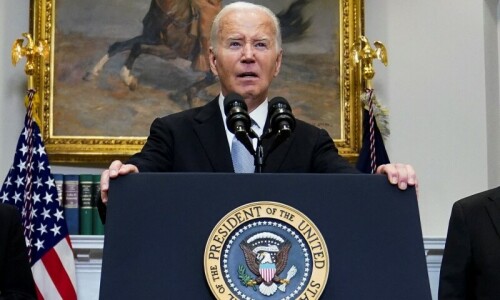
The shooting has also led to a surge in Trump’s support. Even pro-Democratic media outlets admitted that President Joe Biden might find it challenging, if not impossible, to defeat Trump.
Before the shooting, pollsters forecast that Trump and the Republican Party were entering their convention week with a narrow, yet consistent, advantage in battleground states.
Post-assassination attempt polls and estimates have yet to be published, but early indications suggest that Republicans could potentially control both the White House and Congress in 2025.
On Sunday, The New York Times highlighted the results of an opinion survey conducted last month, which showed an alarming increase in support for political violence in the United States.
The nationwide poll found that 10 per cent of those surveyed said the “use of force is justified to prevent Trump from becoming president.”
Out of those who provided this response, one-third also reported owning a gun. Additionally, 7pc of respondents expressed support for using force to reinstate Trump as president, with half of these individuals indicating they are firearm owners.
The aftermath of the failed assassination attempt has sparked intense debate, yet, conspicuously absent from this discourse is any substantial discussion on the perceived root cause of such violence: the widespread availability of firearms, particularly assault rifles, across the US.
This underscores the considerable influence wielded by the powerful gun lobby in American politics and highlights perceived shortcomings in American democratic processes.
According to political scientist Robert Pape from the University of Chicago, who conducted this survey, addressing these internal challenges is crucial for the future of US democracy, rather than exclusively focusing on external strategic rivals.
In a nation that regularly holds presidential elections every four years, a preference for anything other than democracy is alarming. This system empowers voters to resolve disagreements with candidates by choosing alternatives through voting.
Published in Dawn, July 16th, 2024