KARACHI: Almost a year after the Council of Common Interests (CCI) “unanimously” approved the results of the 2023 digital census, the country’s top data body has released detailed results of the enumeration exercise.
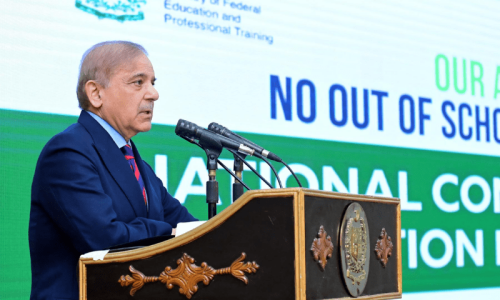
The Pakistan Bureau of Statistics (PBS) released data for the 7th Population and Housing Census 2023 at an event in Islamabad on Thursday.
The district-level data included information on various demographics and metrics, including population, gender, age, religion, language, urbanisation, access to electricity and water, etc.
However, detailed data on some important indicators like employment, literacy, migration, access to toilets, etc., was not published on the website.
Population growing at 2.55pc; number of cities with over 0.5m people rises from 14 to 22; over 25m children aged 5-16 are ‘out of school’
The country’s population increased from 207.68 million in 2017 to 241.49m in 2023 at a growth rate of 2.55 per cent. At this rate, the data showed that Pakistan’s population is expected to double by 2050.
Federal Minister for Planning Ahsan Iqbal also expressed concern at the growth rate which was highest in the region as well as among the top 30 countries in the world having high growth rate, majority of them being Sub-Saharan African countries.
At the unveiling event, he said the population growth was putting immense pressure on scare resources of the country and adversely affect per capita income and living conditions of the citizens.
“There is need to devise the strategy to de incentivise population for resource allocations for effective population control.”
According to the population breakdown, the total number of males stood at 124.32m, compared to 117.15m, with a gender ratio of 1.06. The population of transgender has been reported at 20,331.
Data showed that 67pc of the total population in 2023 was below the age of 30 and 80pc below 40.
Those of 67 years or above constituted only 3.55pc of the total population.
In 2017, 66.12pc of the total population was married, compared to 64.79 in 2023.
The percentage of the divorced population has reduced from 0.42pc in 2017 to 0.35pc in 2023.
Massive rural-to-urban migration
The data has also revealed a stark difference in the growth of rural and urban populations, with the former going up at the rate of 1.88pc and the latter 3.67pc.
This has also resulted in a spurt in the growth of densely populated urban centres. In 2017, there were 14 cities with a population of 500,000 or above. Six years later, the number increased to 22, with Kasur, Rahim Yar Khan, Okara, Sahiwal, Larkana, Gujrat, Sheikhupura and Jhang being the new additions.
The data also revealed that the size of a traditional household is also shrinking — from 6.39 in 2017 to 6.33 in 2023.
The literacy rate among those over 10 years of age went up from 58.91pc to 60.65pc. The criteria for considering a person literate was not mentioned in the results.
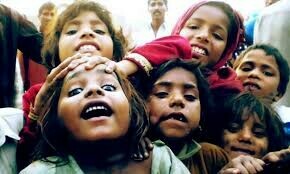
A glaring indication of the education crisis was revealed by the fact that 25m children between ages five and 16 were out of school — either they never went to school or dropped out.
Punjab had the lowest out of school children with 27pc, followed by KP 37pc, Sindh 46pc and Balochistan 58pc.
Religious groups
The census showed that as share of the total population, the percentage of those identifying as Muslims, reduced slightly from 96.47pc in 2017 to 96.35pc in 2023.
While the population of all major religious minorities increased in the past six years, their share in the percentage of total population gives a mixed picture.
The population of Hindus went up from 35.95m n 2017 to 38.67m in 2024, but their share in total population went down from 1.73pc to 1.61pc.
The population of Christians, also increase from 26.42m to 33m, with their share in total population also going up from 1.27pc to 1.37pc.
Ahmadis, on the other hand, witnessed a decline in their real population as well as their share in the total population.
The size of their community reduced by 29,053 — from 191,737 (0.09pc) in 2017 to 162,684 (0.07pc)
Moving away from grid electricity
The data also showed more households moving away from grid electricity and opting for renewable sources.
In 2017, 87.87pc of all households — 28.04m — reported grid electricity as the source of power for their homes.
In 2023, the percentage reduced to 84.03pc or 32.17m households.
In 2023, 2.96m households reported to have solar panels installed at their home. The comparison from last census data could have given a clearer trend about the shift to solar power, but the data on solar-powered households was not collected in the last census.
Published in Dawn, July 19th, 2024