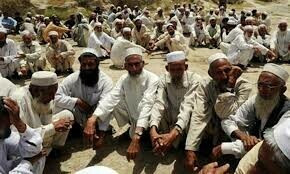
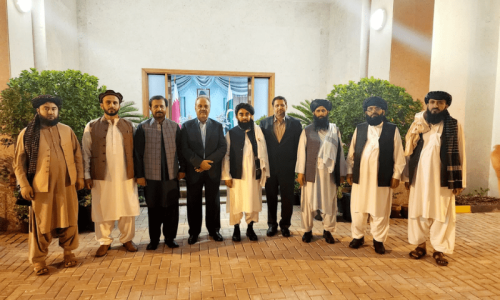
A MAJOR question confronting the state concerns those militants who have laid down their arms — euphemistically referred to as the ‘good’ Taliban. Ask the people of areas badly hit by militancy, and they want nothing to do with these individuals.
For example, at the recently concluded Bannu Amn Jirga, participants wanted the ‘good’ Taliban out of their area, while calling for an end to pickets set up and patrols by such fighters. This is a dilemma for the state: what to do with those who are willing to forgo violence? The matter is complicated, and a solution should be found by consulting the people’s representatives, security experts and academics.
By all means those terrorist ideologues and facilitators responsible for the killing of thousands of Pakistani civilians and security men over the years cannot be welcomed with open arms, and must face the courts. Similarly, militants — good or bad — cannot be allowed to roam around freely and create a parallel structure, even if they have surrendered to the state: only the government has the authority to maintain law and order across the country.
But the question of the thousands of foot soldiers, particularly child fighters groomed by terrorist groups and juveniles, is more complex. Pakistan is not alone in facing this dilemma; for example, around 40,000 wives and children of IS fighters are currently being held in a Syrian camp run by Kurdish armed groups, as in most cases their countries of origin refuse to take them back.
Instead of giving militants — who surrender to the state and promise to renounce violence — complete liberty, they can be put through deradicalisation programmes.
Such initiatives have been tried before, in Swat for instance, at centres run by the military as well as NGOs. Initially, hard-core militants should be separated from low-level cadres not involved in gratuitous violent activity, with the former punished as per the law.
The deradicalisation process should involve psychological help as well as education and vocational training, so that the reformed militants can contribute to society. Even after completion of the programme, security forces need to keep an eye on the ertswhile militants so that they do not ‘relapse’ and return to the path of terrorism.
Of course, this is not easy, and will require funds and consistent effort. Moreover, the successes and failures of previous deradicalisation programmes need to be scientifically analysed so that the same mistakes are not repeated.
Deradicalisation should be seen as one component of countering violent extremism, which is part of the revised National Action Plan. Along with religiously inspired militants, it can also be extended to Baloch fighters who wish to renounce violence, and reintegrate into society.
Published in Dawn, July 24th, 2024