• Elections (2nd amendment) Act 2024 gets presidential assent
• Legal experts believe SC will definitely examine vires of latest law as it ‘reverses direction’ of July 12 short order
• Say smart move would’ve been to enact law while seats case was still pending in court
CHANGES to the elections law — seemingly aimed at shutting the doors of parliament on PTI’s ‘independent’ lawmakers — are set to become the latest legal battleground between the government, opposition and the judiciary.
But legal experts say the ramifications of this wrangling could even extend to and redefine the scheme of separation of powers between the legislature, executive and the judiciary, which in itself is quite a thorny issue.
On Thursday, sources in the Senate Secretariat said President Asif Ali Zardari had signed the bill restricting independent candidates from joining parties of their choice after the stipulated time period had expired.
This was the government’s second move to amend the Elections Act 2017 after the Feb 8 polls — the first being an amendment to appoint retired judges to election tribunals without the input of high court chief justices.
Even that matter is yet to be settled. Initially passed as an ordinance, the government gave the move legal cover in July after the amendment was assailed in court.
Although the chief election commissioner and the Lahore High Court chief justice have held a meeting in this regard, the matter is still pending before the Supreme Court. As of now, most election tribunals are also not taking up cases, rather, are kicking the can down the road by issuing a new date in most (if not all) scheduled hearings.
Legislating on a sub judice matter
The latest piece of legislation, moved by a PML-N lawmaker and passed by both houses of parliament amid protests from the opposition, does not contain much that isn’t already part of parliamentary convention.
The primary bone of contention is that it seeks to have retrospective effect from 2017 — the date of the passage of the original Elections Act, under which the Feb 8 elections were held.
As per the fresh amendment, candidates cannot change their party after joining one within three days of their victory being notified.
Furthermore, reserved seats cannot be allotted to a party that did not win a single seat in the election.
The amendment also says that candidates should be considered independents if they do not file declarations with the relevant returning officer (RO) about their affiliation with a particular political party, before seeking the allotment of a poll symbol.
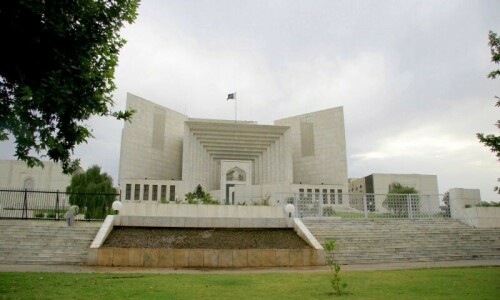
Although parliament is well within its rights to make changes to any law, the timing of these amendments — coming after the Supreme Court’s July 12 judgement in the reserved seats case —muddies the intent behind the passage of this particular amendment.
As the government has been at pains to point out, a detailed order in the reserved seats case is still awaited. In addition, both the ECP and members of the ruling coalition (PML-N and PPP) have already moved review petitions against the verdict.
This means that, technically, the matter is still sub judice.
Shutting door on PTI?
Kashif Ali Malik, a lawyer well-versed in election laws, told Dawn that while parliament is empowered to legislate, enacting retrospective legislation in a matter where the Supreme Court has already interpreted the law, is tantamount to ‘defeating the judgement’.
In his opinion, the government would have been better served if it had promulgated the law while the reserved seats case was still pending before the SC. The fact that the law was enacted in the wake of the short order makes it obvious that it is meant to target one particular political party — the PTI. Therefore, in Mr Malik’s view, the apex court has all the rights to look at the vires of the law.
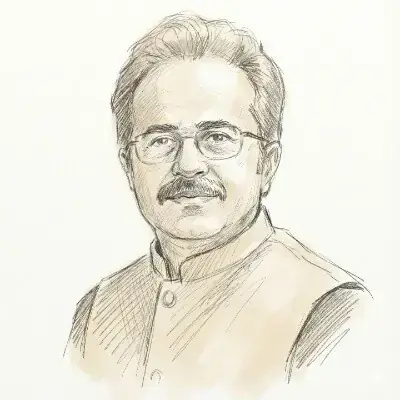
Leading constitutional expert and PTI Senator Hamid Khan agrees that this was not the appropriate time to amend the Elections Act.
In his view, since the court had already interpreted the law, these amendments were obviously introduced to circumvent the judgement.
Moreover, Mr Khan said, the amendments cannot be given retrospective effect as the July 12 judgement deals with the rights of the PTI, and giving a law retrospective effect would deprive the party of its constitutional rights.
Trichotomy of powers
Irrespective of the outcome of this courtroom battle, legal experts believe the time has come to redefine the trichotomy of powers.
Farooq H. Naek — who pleaded the PPP’s case in the matter of reserved seats — told Dawn that in two cases, the apex court had exercised the power of the legislature: the reserved seats and the matter of Punjab chief minister’s election in 2022.
Mr Naek, who is also vice chairman of the Pakistan Bar Council (PBC), opined that the apex court went beyond its jurisdiction in the reserved seats case, issuing directions for the allocation of seats to PTI on a petition filed by a separate political party, the Sunni Ittehad Council (SIC), and effectively amended the procedure laid down in the Elections Act.
Previously, he said, this was done in the Punjab chief minister’s election case, when the apex court effectively amended Article 63 of the Constitution.
In contrast, Hamid Khan believes that the Supreme Court is the appropriate forum to define how the trichotomy of powers plays out.
Another senior lawyer, Raja Inam Ameen Minhas, said that this particular round of litigation would redefine the distribution of powers among the three pillars of the state.
The Supreme Court’s short order identified a vacuum in the election law and issued certain directions, he said, adding that the detailed judgement would expound on what those gaps were and why the court arrived at this conclusion. However, the legislature amended the law “almost in the opposite direction,” he said.
In his view, legislation cannot be altered merely through a short order and a detailed verdict — which is expected once judges of the superior judiciary return from their annual vacations — would have clarified many things.
However, he said, the government took advantage of this delay and introduced amendments, which may complicate matters further.
Published in Dawn, August 9th, 2024