Bangladesh chief justice, central bank head quit amid protests


DHAKA: Bangladesh’s chief justice and central bank governor have resigned, officials said on Saturday, as student protests that forced Prime Minister Sheikh Hasina to flee have widened to target more officials appointed during her time in office.
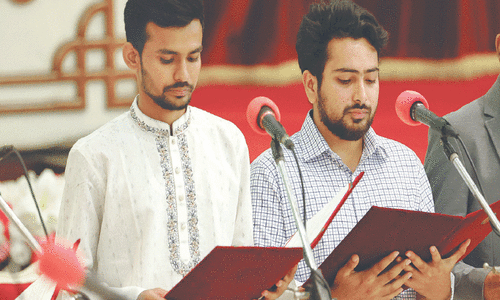
Chief Justice Obaidul Hassan resigned, law ministry’s adviser Asif Nazrul said in a Facebook video post, after students warned him of “dire consequences” if he did not.
“It’s not possible anymore for me to perform the duty,” Obaidul Hassan said in a statement. “Therefore, I have decided to resign.”
Appointed last year, Hassan earlier oversaw a much-criticised war crimes tribunal that ordered the execution of Hasina’s opponents, and his brother was her longtime secretary.
Interim leader Yunus hails slain student in appeal for religious unity
His announcement came after hundreds of protesters gathered outside the court to demand he and other judges step down by the early afternoon.
“No one should do anything that pits the Supreme Court against the mass uprising of the students and the people,” Asif Nazrul told reporters.
Nazrul, who is a student protest leader, urged protesters to remain peaceful. “Don’t damage any public property,” he said in the post.
Bangladesh Bank Governor Abdur Rouf Talukder has also resigned but his resignation has not been accepted given the importance of the position, finance ministry adviser Salehuddin Ahmed told reporters. Reuters could not contact Talukder.
Days earlier, four deputy governors were forced to resign after about 300 to 400 bank officials protested against what they said was corruption by top officials.
The vice chancellor of Dhaka University, A.S.M. Maksud Kamal, has also resigned, the university said. Reuters was unable to contact Kamal.
The university has been the epicentre of deadly protests that escalated in July against quotas in government jobs before morphing into an oust-Hasina campaign.
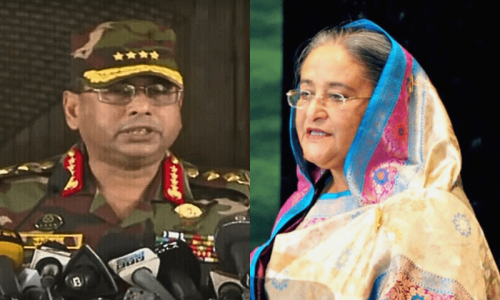
Hasina has been sheltering in New Delhi since Monday following the uprising that killed about 300 people, many of them students, ending her uninterrupted rule of 15 years in the South Asian nation of 170 million people.
Since her departure, the country has also seen the appointment of a new police chief as part of a shake-up of the security top brass that also included a new head of the technical intelligence monitoring agency and changes among senior army officials.
Religious unity
Meanwhile, Bangladesh’s interim leader Muhammad Yunus appealed for religious unity on Saturday after embracing the weeping mother of a student shot dead by police, a flashpoint in mass protests that ended Sheikh Hasina’s 15-year rule.
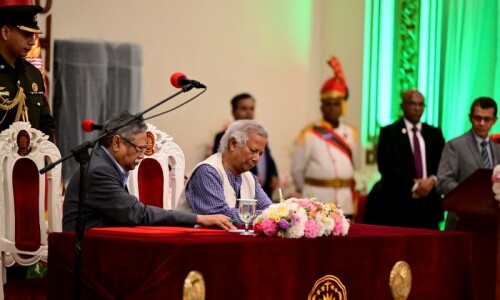
Nobel laureate Yunus, 84, returned from Europe this week to helm a temporary administration facing the monumental challenge of ending disorder and enacting democratic reforms.
“Our responsibility is to build a new Bangladesh,” he told reporters.
Several reprisal attacks against the country’s Hindu minority since autocratic ex-premier Hasina’s toppling have caused alarm in neighbouring India as well as fear at home.
Yunus called for calm during a visit to the northern city of Rangpur by invoking the memory of Abu Sayeed, the first student slain during last month’s unrest.
“Don’t differentiate by religion,” he said.
“Abu Sayeed is now in every home. The way he stood, we have to do the same,” he added. “There are no differences in Abu Sayeed’s Bangladesh.”
Sayeed, 25, was shot dead by police at close range on July 16 at the start of a police crackdown on student-led protests against Hasina’s government.
His mother sobbed as she clung to a visibly emotional Yunus, who had come to pay his respects alongside members of the “advisory” cabinet now administering the country.
Fellow cabinet member Nahid Islam, a 26-year-old sociology graduate who led the protests that culminated in Hasina’s ouster, wept by the leader’s side.
Published in Dawn, August 11th, 2024