Bangladesh ex-PM should ‘keep quiet’ until trial: Muhammad Yunus


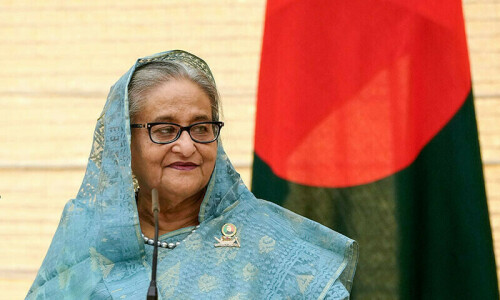
Bangladesh’s ousted premier Sheikh Hasina should “keep quiet” while exiled in India until she is brought home for trial, interim leader Muhammad Yunus told Indian media on Thursday.
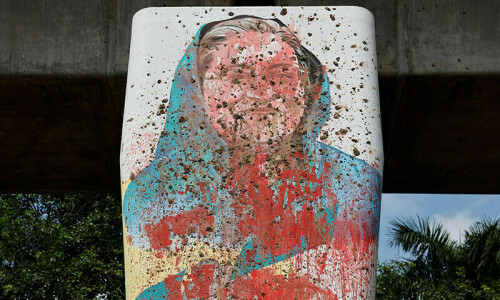
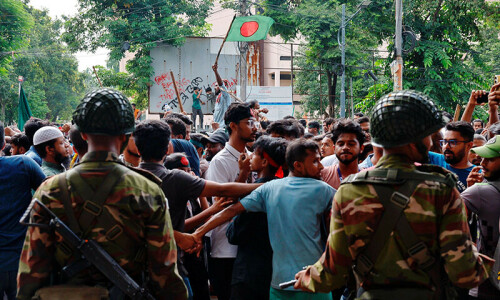
Hasina, 76, fled to India by helicopter one month ago as protesters marched on her palace in a dramatic end to her iron-fisted rule of 15 years.
An interim government led by Nobel laureate Yunus has been under public pressure to demand her extradition and trial over the hundreds of demonstrators killed during the weeks of unrest that ultimately toppled her.
“If India wants to keep her until the time Bangladesh wants her back, the condition would be that she has to keep quiet,” Yunus, 84, told the Press Trust of India news agency.
“Sitting in India, she is speaking and giving instructions. No one likes it. It’s not good for us or for India.”
Hasina has remained in India, her former government’s biggest patron and benefactor, since her August 5 overthrow, inflaming tensions between the two South Asian neighbours.
She made a public statement the week after her arrival calling for Bangladeshis to gather in Dhaka to mark the 1975 assassination of her father, independence hero Sheikh Mujibur Rahman.
Hasina’s comments were seen as a provocative effort to galvanise members of her Awami League party and undermine law and order in the fragile first days after Yunus took office.
The gathering was prevented by a counter-demonstration outside her childhood home in the capital by a mob that beat suspected Awami League supporters with sticks and rods.
Yunus did not say whether a formal extradition request had been made to India. His government has avoided committing itself to demanding her return.
‘Killer Hasina’
Hasina’s government was accused of widespread human rights abuses, including the mass detention and extrajudicial killing of her political opponents.
Numerous criminal cases have been lodged against Hasina and senior Awami League figures over the deaths of protesters in a police crackdown on the student-led uprising that ultimately ousted her.
Thousands attended a demonstration in Dhaka to mark one month since Hasina’s toppling and to remember those killed during the unrest, with some chanting demands for the hanging of the “killer Hasina”.

“We could topple the dictator because we stood together,” university student Tahera Akter, 24, told AFP.
“We want to demonstrate once again that we are still together. No one can divide us.” Yunus returned from Europe three days after Hasina’s departure to head a temporary administration that faces the monumental challenge of steering democratic reforms.
He won the Nobel Peace Prize in 2006 for his pioneering work in microfinance, credited with helping millions of Bangladeshis out of grinding poverty.
Yunus’s caretaker government has promised fresh elections but has given no firm commitment on when they will be held.
Bangladesh’s elections chief resigned on Thursday, the latest of several Hasina-appointed officials to quit their posts in the past month.
Kazi Habibul Awal presided over January polls in which Hasina was re-elected for a fourth term in the absence of genuine opposition parties, who boycotted the vote after a crackdown that saw thousands of their members arrested.
Awal said the “changed scenario” in Bangladesh merited his resignation but denied his tenure had been marred by political interference.
“As it was a one-party election, there was no necessity to influence the election,” he told reporters.