Tax filers doubled during current fiscal year: finance minister


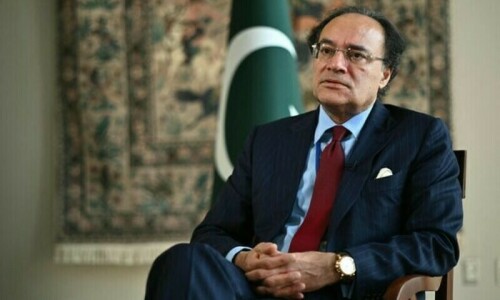
Finance Minister Muhammad Aurangzeb on Sunday said that tax filers for the current fiscal year had nearly doubled as compared to last year, stating that around 723,000 new filers have registered themselves.
On September 20, Prime Minister Shehbaz Sharif approved drastic measures for tax enforcement and compliance, including a ban on all banking and financial transactions for non-filers of tax returns.
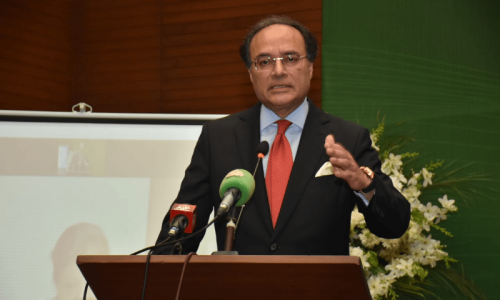
“I think it is important that we, as a government, are walking the talk,” he said during a press conference held in Islamabad along with the Federal Board of Revenue (FBR) chairman.
“This also shows our resolve as we go forward.”
The finance minister said that the FBR chairman had presented a report to the prime minister on non-filers and underfilers. On this, he stated that the estimated tax evasion of individuals who underfile amounted to Rs1.3 trillion.
“I think I’ve already talked about that we have to declare war on cash in this country,” he said. “When we talk about [going] in G20, we will only go in the G20 if all this goes in documented economy.”
He said that since the estimated amount for cash-in-circulation was around Rs9 trillion and the FBR budget was Rs9.3 trillion, one could estimate that the actual size of the country’s economy stood at more than $700 billion.
As for non-filers, the finance minister emphasised that “they will not be able to, going forward, buy vehicles, properties, mutual funds, and [open] current bank accounts — they will have difficulties in cash withdrawals and deposits”.
For under filers, he stressed the government will reduce human intervention by creating a digital interface. Through digital algorithm, he said, the government will gauge the difference between what people have declared and the actual value of their assets.
He added that such measures were important for citizens’ rights so that tax collectors would not go and “harass them”.
“Look, this data was always there with us,” he said. “On me, there was always a lifestyle [data] on how many cars [and] houses I have and how many foreign trips I go on in a year.”
“All we are doing, ladies and gentlemen, is now making sure that we use this data the correct way to get our tax-to-GDP ratio up,” he highlighted.
Regarding inflation and its downward trajectory, he said that it was down to single digits and was going to “subside more”, adding that happened on the back of the successful completion of the stand-by agreement with the International Monetary Fund (IMF).
Aurangzeb noted that a new and extended IMF programme was critical to bring permanence to the macroeconomic stability in the country and execute structural reforms.
The IMF Executive Board’s formally approved the 37-month $7billion Extended Fund Facility agreed in July — its 24th IMF payout since 1958 — in exchange for unpopular reforms, including widening its chronically low tax base.
The prime minister and the finance minister have in the past stressed that this will be the last IMF programme the country takes on.
During today’s presser, the finance minister reiterated that claim, stating that the need to bring macroeconomic stability to be critical if this if “we are going to have this as a last programme”.
“Because this isn’t a theory anymore, we are seeing the results of this macroeconomic stability,” he said, adding that reforms in the energy and privatisation side were taking place.
On rightsizing, which the finance minister heads, he highlighted that six ministries were currently being ratified with the aim to reduce federal expenditures.
“And they have been ratified by the cabinet and the prime minister,” he added, “Out of six there is one ministry [Capital Authority] that is being abolished”.