Anger in Nepal over relief delays as flood toll hits 218


Survivors of the monsoon floods that ravaged Nepal over the weekend criticised the government on Tuesday for inadequate relief efforts during a disaster that killed at least 218 people.
Deadly floods and landslides are common across South Asia during the monsoon season from June to September but experts say climate change is making them worse.
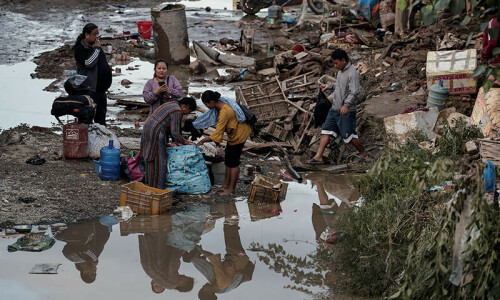
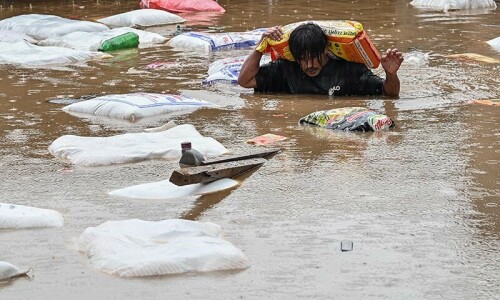
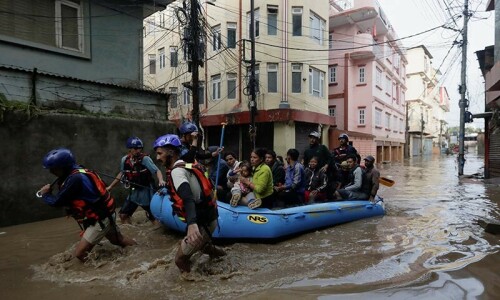
Entire neighbourhoods in the capital Kathmandu were inundated at the weekend, along with villages in remote pockets of the Himalayan country that were still awaiting relief efforts.
“There is no road, so no one has come,” Mira KC, who lives in a village in Kavre district to Kathmandu’s east, told AFP.
“Even if they do, those who died are dead already and the damage is done. All they will do is offer condolences, what will they do?”
The floods disproportionately hit Kathmandu’s poorest residents living in haphazard slums along the banks of the Bagmati river and its tributaries, which run through the city.
Slum resident Man Kumar Rana Magar, 49, told AFP that authorities had provided shelter for him and his neighbours at a school after their homes were inundated.
However, he said they had been forced to leave before they were ready to return to their homes when the school reopened for classes.
“We are so close to the seat of the government. If they cannot take care of the poor this close, what will they do about others?” he said.
At least 218 people were killed in the floods, with another 27 still missing, according to Nepal’s home ministry. More than 4,000 others were rescued.
Nepal’s weather bureau said preliminary data showed 240 millimetres (9.4 inches) of rain fell in the 24 hours to Saturday morning, the biggest single-day downpour in more than two decades.
Experts said authorities did not prepare adequately for the disaster despite forecasts of intense storms.
“Precautions that should have been taken were ignored,” climate expert Arun Bhakta Shrestha, of Kathmandu-based think tank International Centre for Integrated Mountain Development, told AFP.
Nepali disaster management expert Man Bahadur Thapa said gaps in coordination and resources had also hindered the rescue process.
“We could have saved a lot more lives if we prepared and built the capacity of our responders,” he told AFP.
Home ministry spokesman Rishi Ram Tiwari said authorities had been “working relentlessly since the disaster began and all our resources are at work”.
Monsoon rains bring widespread death and destruction in the form of floods and landslides across South Asia every year.
Experts say climate change has worsened their frequency and intensity.
More than 300 people have been killed in rain-related disasters in Nepal this year.