FINANCE Minister Muhammad Aurangzeb was correct in saying that not trading with your neighbours makes little sense.
In Pakistan’s context, trade with regional states is negligible, and South Asia remains one of the least integrated regions in the world. Mr Aurangzeb was replying to a question at an event in Washington, and observed that while “political” and “geopolitical” issues were beyond his purview, Pakistan sought to expand its trade relations. He pointed out that this was one of the key reasons for joining the SCO, and seeking membership to BRICS.
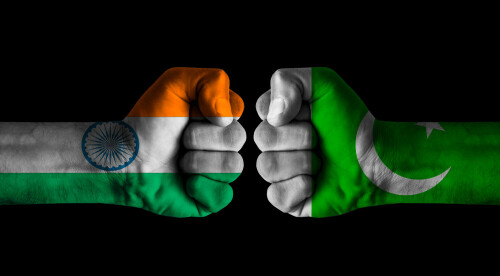
Indeed, trade can be a key conduit to bring states closer and reduce tensions and conflict. But in Pakistan’s case, the biggest obstacle standing in the way of greater regional commerce is its long-time strained relationship with India. Yet it is also true that if Pakistan and India were to improve trade ties, better bilateral ties could develop across the spectrum.
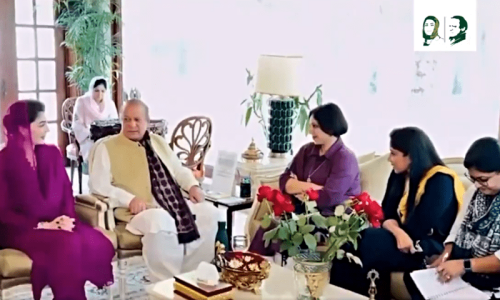
The ruling PML-N, with its ‘pro-business’ outlook, has historically always argued for better trade ties with India. Both the prime minister and the foreign minister have earlier expressed the desire to improve trade ties with our eastern neighbour, hence there is nothing novel in what the finance minister suggested in Washington. The issue is that important stakeholders within the state must be on board if there is to be a normalisation of trade ties.
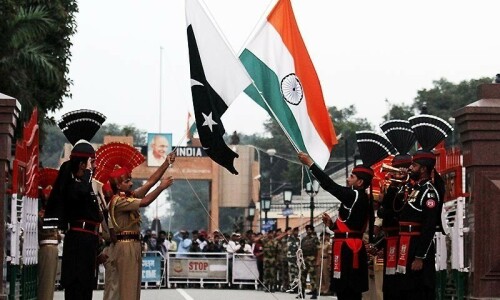
For example, despite the elected leadership’s enthusiasm for trade with India, the Foreign Office had clarified in August that normalisation of commercial ties with Delhi was not on the agenda. This indicated that influential quarters were not overly enthused with the idea of trading with India. Cross-border commerce was suspended in 2019, after the abrogation of held Kashmir’s limited autonomy by India, though it has resumed slightly, while smuggling and indirect trade through the UAE continue.
For its own economic interests, Pakistan should trade with India, Afghanistan, Iran and all other regional states. With reference to India, though it is the larger economy, cross-border trade can offer Pakistani businesses new markets in India, while Delhi can tap Central Asian markets by transiting through Pakistan. If done right, restored trade relations can also open the door to better bilateral ties. But for proper commercial ties to flourish, other ancillary facilities — a friendlier visa regime, direct flights, and banking channels — will be essential.
It remains to be seen whether hardliners in the Indian capital would be willing to resume trade with Pakistan, while powerful quarters in this country must also be on board for cross-border trade to succeed. A blueprint for normalising trade finalised in 2012 can be used as a reference point to start the process afresh. As witnessed in other regions, economic interdependence can significantly help reduce chances of conflict.
Published in Dawn, October 29th, 2024