Public companies incur Rs6tr losses in 10 years: Aurangzeb


KARACHI: Finance Minister Muhammad Aurangzeb said on Saturday that the growing burden of state-owned entities (SOEs) has cost the country Rs6 trillion in the last 10 years, making it extremely difficult to live with.
Speaking at the Overseas Investors Chambers of Commerce and Industry (OICCI), the minister insisted on privatising these SOEs but did not explain why the government could not move in this direction and privatise these SOEs.
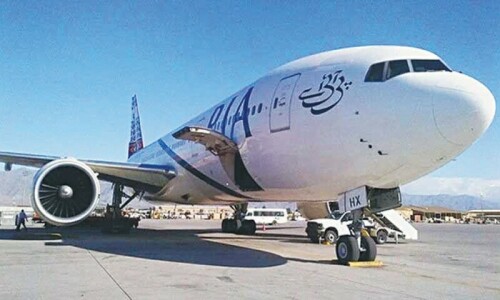
The privatisation attempt of Pakistan International Airlines failed because the government could not attract any viable buyer despite generating excitement about its potential success. Similarly, it has dropped the idea of divesting Pakistan Steel Mills (PSM).
The government has been vocal about the massive burden of the SOEs on the national exchequer but could not privatise a single loss-making public entity like PIA, Pakistan Railways, etc.
He said the Rs6tr loss was around half the revenue collection target set at Rs12.9tr for FY25.
Eyes record inflow of over $35bn remittances in FY25
The minister said the only way to control these losses is to privatise public companies as soon as possible. He said that per day loss due to these SOEs is about Rs2.2bn, hurting efforts to contain fiscal deficit.
The minister said the privatisation, liberalisation and deregulation are the way forward. However, Mr Aurangzeb did not elaborate how much time is needed to get rid of these loss-making entities.
Surging remittances
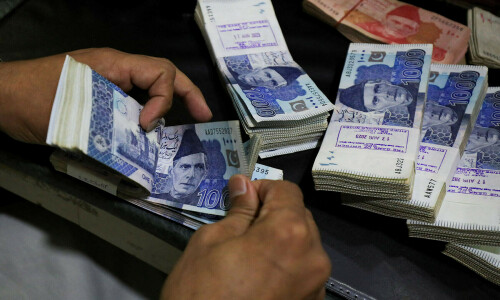
The minister was in high spirits while talking about increasing remittances. He said the country expects about $35bn inflows through remittances during the current fiscal year.
Pakistan received $11.85bn remittances during July-Oct, making an average of $2.962bn per month. The country received $3.052bn in October and $2.859bn in September, showing a higher trend of remittances.
The country received $30.25bn in FY24, witnessing a decline of 13.3pc compared to the preceding year.
Financial experts believe the higher remittances result from exchange rate stability and a crackdown against illegal trading of currencies. The minister said there is no government influence on the exchange rate. During the current fiscal year, the exchange rate remained stable with slight fluctuations, which boosted the confidence of trade and industry while exporters felt comfortable with the situation. He said the exchange rate depends on the demand and supply of the dollars.
He said there is no restriction on sending out profit and dividends from the country as the previous backlog has been cleared by sending out $2.2bn from Pakistan during July-May FY24. The outflow of profits and dividends on foreign investments has been a serious concern for the companies operating in Pakistan. The government gradually allowed repatriation of the profit, particularly in the second half of FY24. The outflow of profit in FY23 was just $331m.
The minister said that banks are now free to facilitate foreign companies’ repatriation of their profits and dividends.
The minister said the government is willing to bring foreign investment in the export-led sector, which would help reduce the trade deficit.
However, he said the current account deficit rises when the economic growth goes up to 4pc. The average growth rate in three years is 1.7pc, and the current account is in surplus in the first four months of FY25.
SBP Governor Jameel Ahmed highlighted how the central bank has been transparently working with OICCI to address the concerns of foreign investors, especially the remitting of dividends, to boost investor confidence.
OICCI President Yousaf Hussain said that members have invested $22.6bn over the past decade, exceeding the country’s total FDI of $19bn, contributing one-third of Pakistan’s tax revenue.
OICCI Secretary General M. Abdul Aleem said the outstanding tax refunds of OICCI members exceed Rs100bn, hampering operations, adding that the reclassification of petroleum products as tax-exempt was identified as a risk to the Brownfield Refining Policy, potentially jeopardising $6bn in investments.
Published in Dawn, December 8th, 2024