ISLAMABAD has reached out to Beijing to expedite a visit of China’s technical and finance teams to Pakistan to conclude agreements on the implementation of the first phase of the upgradation of the ML-I rail project from Peshawar to Karachi.
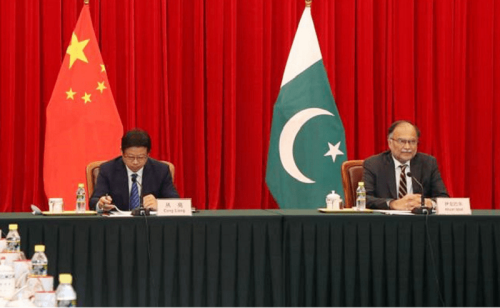
It has also been asked to convert Islamabad and Karachi SEZs into model industrial estates, which can be replicated by the authorities here in the remaining seven SEZs. The request was made by Planning Minister Ahsan Iqbal during a meeting with the Chinese ambassador in Islamabad recently. On the margins of the SCO summit in Islamabad in October, the Chinese premier had agreed to send a technical team of railway experts to study and finalise the first phase of ML-1, costing $1.1bn, between Karachi and Hyderabad.
During Prime Minister Shehbaz Sharif’s visit to Beijing earlier this year, China had agreed to expedite work on the second leg of the upgraded multi-billion-dollar CPEC initiative for what the finance minister calls the “monetisation phase” of the project. Months after the meeting, the promised Chinese investments are yet to arrive in Pakistan.
It is not surprising that the slowing CPEC momentum, particularly the delays in the start of work on ML-I upgradation and relocation of Chinese factories here, is being questioned in Pakistan. The reasons for the slowdown of the CPEC projects are obvious: Beijing is concerned for the safety of its nationals working on CPEC schemes here, as they have been targeted by terrorists. Besides, it is worried about its investments in the first phase of the work on account of the criticism of the projects, which are seen as a big reason for Pakistan’s high debt.
Moreover, it is not surprising that, like other lenders, China, which is Pakistan’s biggest creditor, is worried about regular requests from Islamabad for more loans, and the rescheduling and rollover of existing ones. Beijing has more than its share of troubles on other fronts too, especially growing trade tensions with the US, which is keeping it from making any new investments in the CPEC scheme.
Although the chances of China resuming its CPEC investments anytime soon remain slim, the current pause does not mean that it has lost interest in the connectivity project or in Pakistan for that matter. As soon as conditions improve and firm steps towards foolproof security for its nationals are taken, fresh investments can be expected.
Meanwhile, Pakistan must put its own house in order and do its part of the work rather than wait for the resumption of Chinese financing. The expected dissolution of the dysfunctional CPEC Authority should also settle the issue of dichotomy of power in CPEC-related decision-making, making it easier for the planning ministry to fast-track the implementation of its decisions.
Published in Dawn, December 9th, 2024