TTP could become Al Qaeda’s arm to destabilise Afghanistan’s neighbours, Pakistan warns UNSC


Pakistan has warned the international community that the banned Tehreek-i-Taliban Pakistan (TTP), which is “the largest terrorist group” operating in Afghanistan, could emerge as Al Qaeda’s arm with a regional and global terrorist agenda.
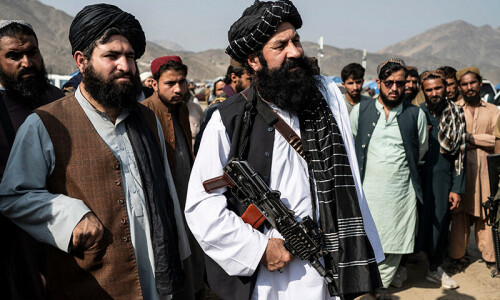
Pakistan’s relationship with the Taliban administration has been strained due to frequent attacks by the banned TTP militants against targets within Pakistan.
Islamabad has repeatedly urged the Afghan Taliban to take action against the outlawed TTP, but the Taliban leadership in Kabul has appeared to ignore these demands, denying that the group uses Afghan soil to launch attacks in Pakistan.
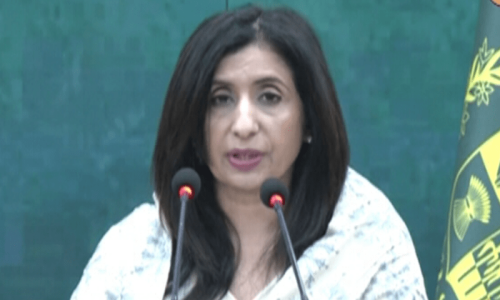
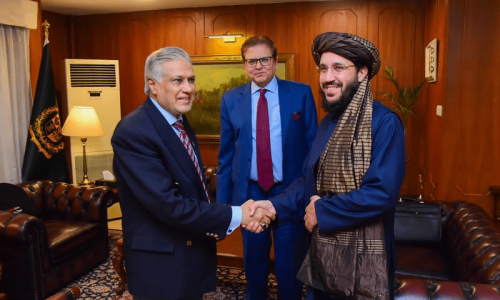
Earlier, the Foreign Office stated that Pakistan was committed to dialogue with Afghanistan underscoring the desire for the resolution of outstanding issues.
Speaking at the UN Security Council on Thursday, Ambassador Usman Jadoon, permanent representative of Pakistan to the United Nations, said, “Terrorism within and from Afghanistan poses the single most serious threat to the country, to the region, and the world.”
“While the Afghan Interim Government (AIG) is fighting ISIL-K (Daesh), the threat from various other terrorist groups such as Al Qaeda, TTP, and others has yet to be addressed,” he said during a debate on the situation in Afghanistan.
He highlighted TTP’s ranking as the largest, listed terrorist organisation and said, “With safe havens close to our border, it poses a direct and daily threat to Pakistan’s security.
“In countering the TTP’s cross-border operations, our security and border officials have confiscated some of the modern weapons acquired by the AIG from stocks left behind by foreign forces,” the Pakistani envoy said, adding that the terrorist group also receives external support and financing “from our adversary” — referring to India.
He further said that TTP was fast emerging as an umbrella organisation for other terrorist groups, aimed at destabilising Afghanistan’s neighbours.
“We have evidence of its collaboration with other terrorist groups like the Majeed Brigade that is utilising terrorism to disrupt Pakistan’s economic cooperation with China, especially CPEC,” Jadoon stated.
“Given its long association with Al Qaeda, the TTP could emerge as Al Qaeda’s arm with a regional and global terrorist agenda.”
Pakistan, he declared would take all necessary national measures to eliminate these threats, cooperating with regional and international efforts to root out the menace of terrorism.
Jadoon also discussed the Afghan Taliban’s new directive prohibiting women and girls from attending public and private medical institutes in Afghanistan, saying that the international community expects the interim government to fulfil its declared commitments on human rights and political inclusion.
“Instead of easing earlier restrictions, the AIG has intensified the restrictions on women and girls. These restrictions are contrary to Islamic precepts, jurisprudence and the Sharia,” he said.
The Pakistani envoy called for the Doha Process framework to go beyond counter-narcotics and the private sector. Afghanistan’s challenges, including terrorism, human rights and widespread poverty, are also affecting the region.
He said the international community is obliged to help the 23.7 million Afghans who need urgent aid and to take adequate measures to bolster Afghanistan’s economy — including reviving the national banking system and restoring commercial activity.
The ambassador said Pakistan enjoys close bonds of ethnicity, history, faith, language and culture with Afghanistan adding, “The suffering of our Afghan brothers and sisters affects the Pakistani people deeply. There is no country that is more eager than Pakistan to see Afghanistan return to the international community’s fold.”
Roza Otunbayeva, Special Representative of the Secretary-General and Head of the United Nations Assistance Mission in Afghanistan (UNAMA), opened the debate by saying she has “strongly urged the de facto authorities to reconsider” the latest female-related restriction, which would have deadly implications for women and girls.
She said that the implementation of the “Propagation of Virtue and Prevention of Vice Law “ has led to people choosing to self-regulate rather than risk punishment.
The law also imposed other repressive measures, including greater enforcement of requirements regarding men’s beards and Western-style haircuts that have led to the closures of barbershops.
Citing a November report on widening media restrictions, Otunbayeva noted that political decision-making by the de facto authorities is increasingly opaque, due to threats to the country’s stability, such as this week’s suicide attack on its Ministry of Refugees and Repatriation.
Outlining her office’s engagement with the Taliban on issues such as human rights norms and detainee access, as well as on counter-narcotics, she emphasised, “Engagement is not normalisation or recognition.“
Engagement serves to prevent Afghanistan’s isolation or — worse — a return to conflict, the UN envoy said, underscoring the need to build trust for the benefit of the Afghan people.