Pentagon treads cautiously after official’s missile claims


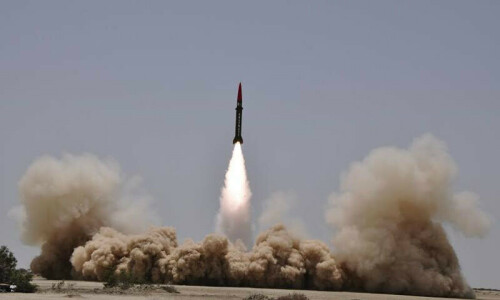
WASHINGTON: The US adopted a cautious tone on Pakistan’s ballistic missile programme on Thursday, a day after a top White House official claimed the country could acquire capabilities to “strike targets in the United States”.
In a press briefing, the Pentagon press secretary, Maj Gen Pat Ryder, refrained from direct criticism when asked about the US sanctions on Pakistan’s state-owned missile development agency and three of its private vendors.
“We value Pakistan as a partner in the region and have worked closely with Pakistan on counterterrorism efforts in the past,” Ryder said, emphasising the Pentagon’s long-standing relationship with Pakistan’s military.
He declined to comment further on Pakistan’s missile development or the sanctions, deflecting such queries to other US agencies.
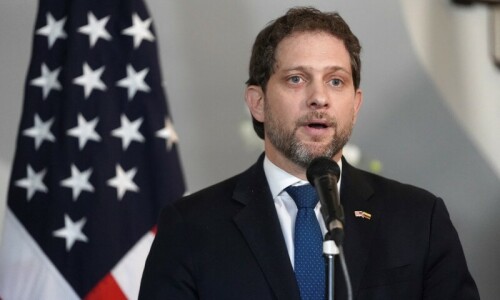
This tempered response from the Pentagon stands in sharp contrast to the statements made by Deputy National Security Adviser Jon Finer, who on Thursday accused Pakistan of developing long-range ballistic missile capabilities that could pose an “emerging threat” to the US.
Speaking at the Carnegie Endowment for International Peace, Finer expressed “real concerns” about Pakistan’s ballistic missile program, noting that advancements in its technology could enable Islamabad to strike targets far beyond South Asia.
“It’s hard for us to see Pakistan’s actions as anything other than an emerging threat,” Mr Finer said.
The terse tone from US officials came after the State Department sanctioned four Pakistani entities, accusing them of playing a role in the country’s missile development programme.
Military ties
The Pentagon’s careful positioning highlights its intent to preserve ties with the Pakistani military, a key regional partner in past US-led operations.
Analysts believe this stance reflects a deliberate effort to avoid alienating Islamabad, particularly at a time when the US seeks to enhance its influence in the Middle East and South Asia as Pakistan borders both regions.
Diplomatic sources suggest that the Pentagon’s muted response aligns with its history of maintaining military-to-military relations with Pakistan, even during periods of strained political ties between the two nations.
In contrast, the White House’s more confrontational rhetoric appears to reflect growing frustration within the Biden administration over Islamabad’s strategic direction.
Experts warn that the US approach to Pakistan’s missile programme could further strain relations between the two countries.
As Washington grapples with balancing its strategic interests in South Asia, the contrasting tones from different branches of the US government underscore the complexity of its relationship with Pakistan.
Published in Dawn, December 21st, 2024