Gwadar ‘paralysed’ as protests over border trade continue


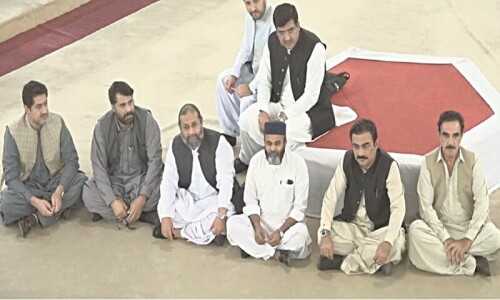
GWADAR: Normal life in Gwadar remains severely disrupted as workers and supporters of the All Parties Alliance continue their sit-in at Marine Drive for over a week. The protesters are demanding the reopening of the border with Iran for trade in oil and other commodities, which has been closed for months.
The protest leaders stressed that border trade is the primary source of livelihood for Gwadar’s residents, many of whom have been rendered jobless due to the prolonged closure.
They criticised the introduction of a token system at the Kantani Hor border, describing it as a major barrier to trade that has exacerbated unemployment in the region. The protesters have called for the immediate abolition of the token system and unrestricted trade along the border.
Protest leaders also highlighted the dire state of basic services in Gwadar, a city considered pivotal to the China-Pakistan Economic Corridor (CPEC) project. They condemned the lack of electricity and drinking water, describing the situation as a grave injustice to the local population.
The protesters accused the Pakistan Coast Guard of blocking oil trade vehicles owned by residents at the Talaar checkpoint, leaving them stranded on highways for weeks. They claimed that such restrictions are worsening the economic and social conditions in the area, forcing many into extreme hardship.
National Party central leader Mir Rehmat Saleh Baloch expressed support for the sit-in and criticised government policies for depriving the people of the Makran division — comprising Turbat, Gwadar, Panjgur and other areas — of their livelihoods. He accused the authorities of creating a financial crisis by imposing restrictions on border trade and limiting the movement of goods and vehicles.
“Restrictions on trade with Iran have plunged the region into economic turmoil,” Mr Baloch said, adding that loaded vehicles from Panjgur were not being allowed to enter Turbat and Gwadar. He called on the government to reopen the border and lift restrictions on trade, enabling locals to resume earning a livelihood.
Mr Baloch urged all political parties and citizens to support the demands of the All Parties Alliance and join the sit-in.
The protesters have vowed to continue their sit-in until their demands are met, including the reopening of the border with Iran, the removal of the token system and solutions to Gwadar’s chronic issues of electricity shortages and lack of drinking water.
Published in Dawn, December 23rd, 2024