Our ace poet Ahmed Mushtaq writes: “Yeh hain naey loagon ke ghar, sach hai ab inn ko kya khabar/ Dil bhi kisi ka naam tha, gham bhi kisi ki zaat thi [These are the dwellings of new people, understandable that they won’t know/ There was something named heart, there was sorrow that defined a being].”
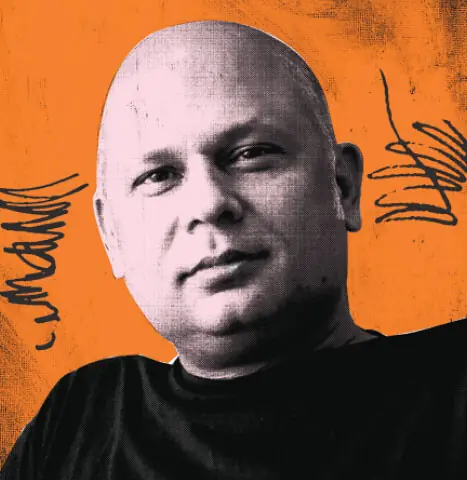
With the inscription of this verse begins the 12th short story collection of Dr Shershah Syed (widely known as Shershah), titled Dil Bhi Kisi Ka Naam Tha. Overall, Shershah has published more than two dozen books, including an original novel and many translations of fiction, non-fiction and science writing from English into Urdu.
During my years spent in Karachi, we lived for the longest in the southern city neighbourhood called Garden. We were a stone’s throw away from Gandhi Gardens, which also housed the city’s oldest zoo. Our place was on Garden Road (later renamed Aga Khan III Road). The road had some old and historic establishments, including the police headquarters — where they have now also instituted the Sindh Police Museum — the Anklesaria hospital, the Makki Masjid, the Habib Girls’ School and the Pakistan Medical Association (PMA) House.
The PMA House not only served as the headquarters of the association, it provided a space for dissent, free speech, resistance literature, cultural performances, labour movements and enlightened political organisation during the long-drawn martial rules and short-lived quasi-democratic governments we have witnessed in Pakistan.
When the streets of Karachi were bloodstained by the monster hunting people with poisonous spears of ethnicity and sharp tridents of religion, there was a sustained and not-so-quiet battle waged against mindless brutality and gut-wrenching horror by people who remain largely unsung today.
It was the late 1980s and early 1990s. As a young person, I started going quite regularly to conferences and events at the PMA House, the Karachi Press Club, the Idara-i-Amn-o-Insaf [Committee for Peace and Justice), then situated in Rimpa Plaza on M.A. Jinnah Road, and the Theosophical Hall, further down on the same road. When trying to make sense of what Karachi witnessed during that period and its aftermath, Charles Dickens’ oft-quoted lines from A Tale of Two Cities come to mind.
Like any universal piece of art, these lines resonate with the reader beyond time and place. Dickens writes: “It was the best of times, it was the worst of times, it was the age of wisdom, it was the age of foolishness, it was the epoch of belief, it was the epoch of incredulity, it was the season of light, it was the season of darkness, it was the spring of hope, it was the winter of despair.”
When the streets of Karachi were bloodstained by the monster hunting people with poisonous spears of ethnicity and sharp tridents of religion, there was a sustained and not-so-quiet battle waged against mindless brutality and gut-wrenching horror by people who remain largely unsung today. They were unarmed but fearless cultural rights activists, human rights defenders and progressive political workers of the city.
But besides living rooms and small neighbourhood parks, cafes and tea stalls, they needed relatively bigger public spaces to converge and reflect. That is where the Karachi Press Club, the PMA House, the meeting hall at Idara-i-Amn-o-Insaf and the Theosophical Hall came to their rescue.
Although I was an ordinary visitor to literary and political events for a couple of years, in 1989 I assisted in organising a conference at the PMA House under the auspices of the Irtiqa Institute of Social Sciences, which I have already mentioned in an earlier column. However, I did not know any of the people who ran the place. In 1991, my close association began with people who managed both the PMA and the PMA House. A like-minded friend took me to a meeting of Amnesty International’s local group. There I met Shershah, trained as a specialist obstetrician and gynaecologist, for the first time.
With his incomparable organising capacity, coupled with a quiet compassion for humanity, he roped me in immediately to work with Amnesty International as a volunteer. Thus began a long association with both Shershah and the PMA House — where Shershah spent most of his time during and after his clinics — along with some remarkable and selfless doctors and a few other professionals who were fully committed to the wellbeing of this country and its people.
With his friends and comrades, Shershah made effective use of the PMA platform to organise health campaigns with a focus on women, start a series of publications, organise marathons and other activities, and help rights groups by providing them a safe space. He voluntarily operated upon tens of thousands of poor rural and urban women across Pakistan for free to repair their fistulas. Many years after his retirement from government and private hospitals, he is running the charity women’s hospital in Kohi Goth in rural Karachi.
Shershah started writing a little late in his career but has turned out to be one of the most prolific fiction and non-fiction writers and translators. Being a medical doctor with an extensive pro-bono experience of working with needy girl and women patients across Pakistan, compounded with significant international exposure, he has had a plethora of tales to tell. There is an even blend of reality and fiction. His observations remain laconic and piercing. More power to both — Shershah and the PMA House.
The columnist is a poet and essayist. His latest collections of verse are Hairaa’n Sar-i-Bazaar and No Fortunes to Tell
Published in Dawn, Books & Authors, January 5th, 2025