Israeli forces kill 3 people in south Lebanon as residents try to return, Lebanese ministry says


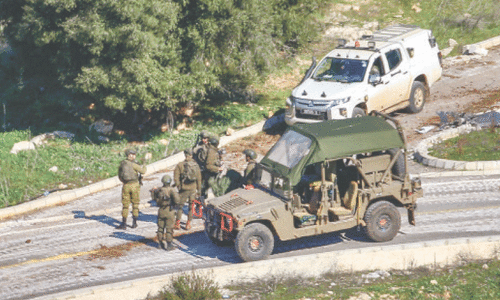
Israeli forces killed three people and wounded 31 others trying to return to homes in south Lebanon where Israeli troops remained on the ground after a deadline for their withdrawal passed on Sunday, Lebanon’s health ministry said.
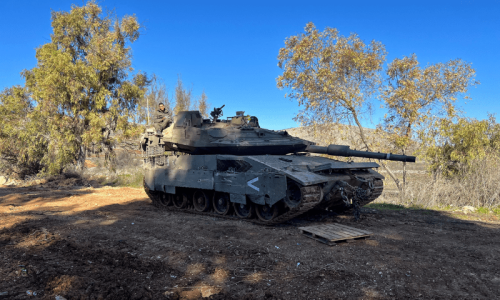
Israel has said it intended to keep troops in the south beyond the Sunday deadline stipulated in the US-brokered ceasefire that halted last year’s conflict with Hezbollah, and on Saturday ordered residents not to return until further notice.
The deal stipulated that Israeli forces should withdraw from the south as Hezbollah’s weapons and fighters were removed from the area and the Lebanese army deployed, within a 60-day period which ended on Sunday morning.
Israel has, however, claimed the terms have not been fully enforced by the Lebanese state, while Lebanon’s US-backed military on Saturday accused Israel of procrastinating in its withdrawal.
Hezbollah’s Al-Manar television, broadcasting from several locations in the south, showed footage of residents moving towards villages in defiance of Israeli orders, some holding the group’s flag and images of Hezbollah fighters killed in the conflict.
The Lebanese health ministry said one person was killed in the village of Houla, another in Aitaroun, and a third in Blida as a result of what it described as Israeli attacks on citizens while they were trying to enter their still-occupied towns.
The Israeli military had no immediate comment on the reported casualties.
An Israeli military spokesperson, in a post on X addressed to the people of south Lebanon, accused Hezbollah of trying to “heat up the situation” and said the Israeli army would “in the near future” inform them of places to which they can return.
Hezbollah, badly weakened by Israel during the conflict, has put the onus on the Lebanese state to ensure Israel’s withdrawal, describing Israel’s failure to withdraw on time as a violation of the agreement.
“We are in our land and the enemy is the one who turned against the agreement and violated the agreement, and thus the people are the ones who are liberating their land with their own hands and blood,” Hezbollah lawmaker Hassan Fadlallah, speaking to the group’s Al-Manar television, said.
“We want the state to play its role,” he added.
The White House said on Friday that a short, temporary ceasefire extension was urgently needed.
Lebanese President Joseph Aoun, who was head of the US-backed Lebanese army until parliament elected him head of state on January 9, called on the people of the south to exercise self-restraint and trust in the Lebanese military.
“Lebanon’s sovereignty and territorial integrity are non-negotiable, and I am following up on this issue at the highest levels to ensure your rights and dignity,” he said in a statement.
Israel has not said how long its forces would remain in the south, where the Israeli military says it has been seizing Hezbollah weapons and dismantling its infrastructure.
The Hezbollah-Israel conflict was fought in parallel with the Gaza conflict, and peaked in a major Israeli offensive against Hezbollah that uprooted more than a million people in Lebanon and left the group badly weakened.