China promises Latin America ‘trustworthy’ ties as Trump lays out demands


China will always be Latin America’s “trustworthy” friend and partner, its foreign minister told his Bolivian counterpart, as Beijing looks to improve its foothold in a region historically under the US sphere of influence.
“Latin America is the home of the Latin American people, and is not any country’s ‘backyard’,” Chinese Foreign Minister Wang Yi said during a meeting at the United Nations on Tuesday, according to a statement from his ministry.
China wants to “continuously elevate the China-Bolivia strategic partnership”, Wang told Bolivia’s FM Celinda Sosa.
Bolivia, which established diplomatic ties with Beijing in 1985, is among many countries in South America that have bonded economically with China through debt and investment.
The resource-rich country owes China, the world’s biggest bilateral lender, over $1.7 billion according to World Bank data.
Chinese firms have invested a further $6bn, statistics from the American Enterprise Institute think tank show, mostly in Bolivia’s metals, energy and transport sectors.
US foreign direct investment in Bolivia stands at around $430 million, US State Department data shows, predominantly in the oil and gas and manufacturing sectors.
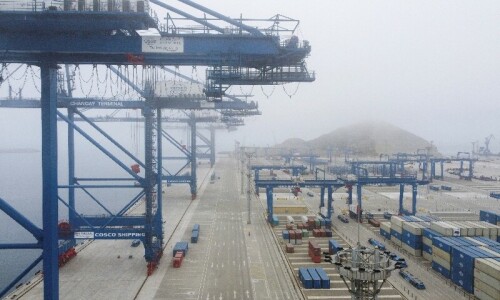
The US and China look set to go toe-to-toe in Central and South America over US President Donald Trump’s second term, with Chinese investments in the region, particularly in energy and infrastructure, challenging US influence.
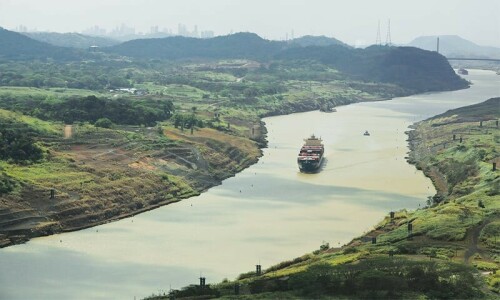
Trump took little time in taking Panama to task over the Central American state’s ties to China after taking office, dispatching Secretary of State Marco Rubio with a message to end China’s influence over the Panama Canal or face US action.
Panama’s President Jose Raul Mulino later said his country would not renew its membership of Chinese President Xi Jinping’s flagship Belt and Road Initiative, to Beijing’s chagrin.
Trump had refused to rule out the use of military force to take back the Panama Canal in the run-up to Rubio’s visit.
“China supports Latin American countries in defending their sovereignty, independence and national dignity,” Wang said.
He also congratulated Bolivia on becoming a member of Brics — a group of developing nations founded by Brazil, Russia, India and China to rival a Western-dominated world order. The group has since grown to also include South Africa, Egypt, Ethiopia, Indonesia, Iran, Saudi Arabia and the United Arab Emirates.
Trump has repeatedly warned the Brics not to challenge the dominance of “the mighty US dollar”, and threatened members with a 100 per cent tariff “if they want to play games with the dollar”.
But Brazil last week joined the ranks of Latin American states to back down to one of Trump’s demands — nixing plans to advance a common currency while it holds the Brics presidency, lest it triggers a backlash from Trump.
China, Brazil’s largest export market, buys almost $70bn more from Latin America’s biggest economy than the US does, according to UN Comtrade data, but still does not want to put the $37bn worth of goods it does sell to the American market on the line.
Trump has not held back on threatening to up-end trade ties with the region while China looks to cultivate deeper strategic partnerships with individual Latin American nations, offering the region an alternative pole of economic support.
He has also threatened Mexico and Colombia with punitive trade remedies if they did not take stronger action to curb illegal immigration into the US.
Mexico agreed to reinforce its northern border with 10,000 National Guard members to stem the flow of illegal migrants and drugs.
Colombian President Gustavo Petro backed down from a decision to turn away US military planes carrying deported migrants, pulling it back from the brink of a trade war with its biggest export market.