PESHAWAR: A study has found that working mothers in Peshawar are three times more opposed to vaccination of their children compared to housewives.
It also revealed that the parents who are hesitant about jabs are less convinced that the vaccination safeguards their children against childhood diseases because of misconceptions about vaccine safety.
According to the study, which was published by BioMed Central, a UK-based journal, with the support of Integral Global Health under a subcontractor agreement, only 77 per cent acknowledged vaccine importance, compared to 98 per cent among those who accepted immunisation.
It also said misinformation and concerns about vaccine safety were prevalent among parents, with 43 per cent of vaccine-refusing people voicing doubts about the necessity of vaccines.
Says misinformation, safety concerns causing vaccine hesitancy
Also, 40pc of respondents cited logistical challenges, such as long travel distances and financial constraints, as barriers to immunisation.
The study revealed that 41pc of parents refused their children’s vaccination in Shaheen Muslim Town of Peshawar.
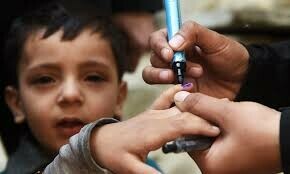
The country recorded 74 polio cases last year, with 27 reported in Balochistan, 23 in Sindh, 22 in Khyber Pakhtunkhwa, and one each in Punjab and Islamabad.
In the current year, two cases have been reported nationwide, one from Khyber Pakhtunkhwa and Sindh each.
The study pinpointed several factors, including maternal employment, logistical challenges such as distance to vaccination centres, associated costs, and parental concerns about the need and safety of vaccines.
According to it, parents’ reluctance towards their children’s immunisation is a major public health issue, especially in low- and middle-income countries, including Pakistan, though they’re found to be essential to cut down child mortality.
Meant to assess the prevalence, associated factors, and perceptions related to parental refusal of vaccines in Peshawar, the study was supervised by Vice Chancellor of the Khyber Medical University Prof Ziaul Haq, and Dr Saima Afaq from University of York, UK.
Titled “Prevalence and Associated Factors of Parental Refusal Rates for Routine Immunisation” and designed and conducted by Dr Mohammad Hakim, a PhD scholar of public health at KMU with co-authors Dr Farhad Ali of the Khyber College of Dentistry and Zala and Dr Aslam Pervaiz of the Khyber Medical University, the study brought into the spotlight the “alarming rates of parental refusal for routine childhood immunisation.”
It surveyed 340 parents of children aged 0–59 months across different tehsils of Peshawar, using a structured vaccine hesitancy survey tool by the WHO’s Strategic Advisory Group of Experts. The researchers employed a multistage stratified cluster sampling method to ensure a representative sample.
The study said that misinformation and safety concerns played a critical role in vaccine hesitancy, while socioeconomic factors, such as income and employment status, impact vaccine acceptance.
According to it, parents who lacked trust in vaccine programmes are more likely to refuse vaccinations, while support from religious and political leaders positively influence vaccine uptake at the community level.
The researchers emphasised that vaccine hesitancy was not only driven by individual concerns but also influenced by broader socioeconomic and cultural factors.
It said that 84pc parents believed that community leaders supported vaccinations, mistrust of government health programs and exposure to misinformation continued to hinder immunization efforts.
The study added that those areas classified as “super high-risk union councils” by the national and provincial emergency operations centres for polio eradication had the lowest immunisation rates, further warranting the need for targeted interventions in those regions.
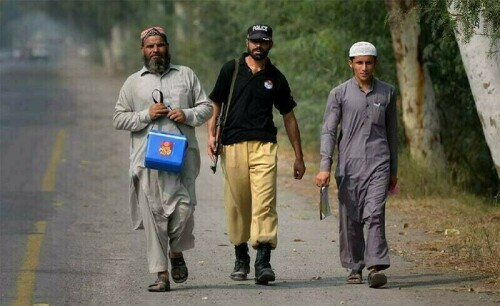
It recommended deployment of mobile vaccination units in high-refusal areas, introduction of workplace vaccination programmes to accommodate working parents, and involvement of religious and political leaders to promote vaccine acceptance, and strengthening of public awareness campaigns to counter misinformation and reassure parents about vaccine safety and effectiveness.
The study also advocated for extending clinic hours and providing flexible vaccination services to mitigate logistical barriers faced by many families.
It highlighted the urgent need for a comprehensive approach to tackle vaccine hesitancy, saying authorities strive and face challenges to eradicate the poliovirus, enhance routine immunisation coverage of children, and address vaccine-preventable diseases.
The researchers said the implementation of targeted vaccination policies and robust community engagement strategies would be vital to guarantee that every child has access to lifesaving vaccines in the country.
Published in Dawn, February 20th, 2025