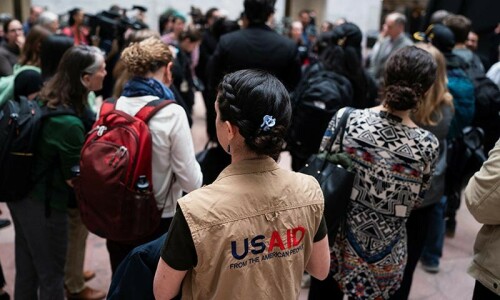
WITH Donald Trump and Elon Musk effectively dismantling the US Agency for International Development, and no guarantee that America’s humanitarian arm will emerge intact after the ongoing ‘restructuring’, developing states, including the CSOs working in these countries, must come up with contingency plans. The changes USAID is undergoing will have a global impact, with the developing world — including Pakistan — particularly affected.
Although the aid agency has been known to participate in dubious overseas missions, for example regime change, its funds were helping crucial sectors in developing states, such as health, education and climate. It disbursed billions of dollars in assistance, helping fund projects to save lives, prevent disease and promote educational activities, among other initiatives. Now, for the most part, all of this will come to an end. Media reports say that some 39 projects in Pakistan, costing hundreds of millions of dollars, have been axed. It is also true that thousands of workers associated with USAID in America, as well as those working in the development sector worldwide, are now jobless due to the purge.
Two important points need to be made with regard to foreign aid. Firstly, Western states, particularly the US, have a duty to support humanitarian endeavours, specifically in states they have bombed and invaded. Hence, it is morally unacceptable that the US spent billions on destroying states like Iraq, Afghanistan and Syria, but now feels the need to tighten its purse strings where the reconstruction of these countries is concerned.
Yet it is also true that the ‘dependency syndrome’ stemming from an addiction to foreign aid that ails many developing states, Pakistan included, plays a key role in allowing the governments of these countries to shirk their duties in the social sector. It is laudable when rich states offer a helping hand, but it is the primary responsibility of the governments of developing nations to provide their citizens with health, education, security, etc. While the USAID closure has come as a jolt, it might offer an opportunity to the developing world to take responsibility for the well-being of its own people.
The fact is that governments, including ours, need to increase funding in critical areas such as healthcare that have been affected by the USAID shake-up. Elsewhere, civil society groups need to adapt their policies accordingly and work to secure funding from other sources to ensure that important programmes continue. These include projects working for human rights, including marginalised minorities. It is no use shedding tears over the lost billions that will no more be making their way from Washington to developing countries. The time has come to take responsibility for our own development.
Published in Dawn, March 3rd, 2025