Top-level huddle seeks consensus to fight terrorism


• Army chief points to governance failures for spike in terrorism; wants to make Pakistan ‘a hard state’
• Parliamentary moot calls for implementation of National Action Plan, Azm-i-Istehkam
• Regrets opposition’s absence, says consultations on national security matters will continue
ISLAMABAD: The Parliamentary Committee on National Security (PCNS) on Monday emphasised the urgent need to implement counterterrorism frameworks — the National Action Plan (NAP) and Vision Azm-i-Istehkam — to curb terrorism, as Army Chief Gen Asim Munir pointed to governance gaps as a key reason behind the spike in terrorism and called for making Pakistan a “hard state”.
“The committee emphasised the immediate implementation of the National Action Plan and the ‘Azm-i-Istehkam’ strategy to dismantle terrorist networks, disrupt logistical support, and eliminate the nexus between terrorism and crime,” the PCNS said in a communique issued after the meeting.
The communique also emphasised the need for unity and political resolve to face the threat of terrorism with the full strength of the state, calling for a national consensus in the fight against terrorism.
Expressing concern over the increasing misuse of social media platforms by terrorist groups, the committee also called for a framework to target the digital networks of militant organisations.
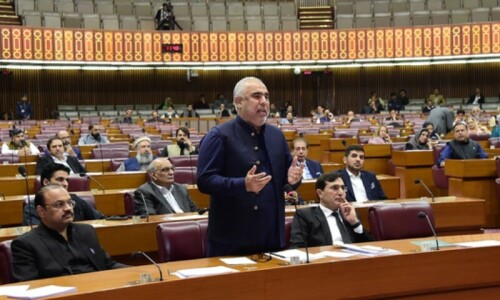
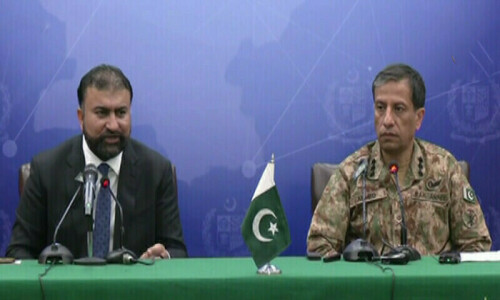
The meeting of the parliamentary committee, chaired by National Assembly Speaker Ayaz Sadiq and attended by Prime Minister Shehbaz Sharif, Army Chief Gen Asim Munir, senior political leaders, military officials and intelligence representatives, was convened in the wake of escalating terrorist incidents in Khyber Pakhtunkhwa and Balochistan. Last week’s hijacking of the Jaffar Express further underscored the worsening security situation.
Gen Munir underscored the necessity of a holistic counterterrorism approach beyond military operations. “For sustainable stability, all elements of national power must work in harmony,” he said. “This is a war for our survival and that of our future generations.”
The army chief stressed that governance failures were hampering Pakistan’s ability to effectively counter militancy. “How long will we continue to fill governance gaps with the sacrifices of the Pakistan Army and the blood of martyrs?” he questioned.
“We need better governance to make Pakistan a hard state,” he asserted. “How long will we continue to sacrifice countless lives under the model of a soft state?”
Pakistan’s counterterrorism policies have evolved through structured frameworks, beginning with the National Action Plan (NAP) in 2014 following the Army Public School attack. NAP was designed to combat terrorism through judicial reforms, strengthened law enforcement and measures against terror financing. The plan was revised in 2021 in response to shifting regional security dynamics after the withdrawal of coalition forces from Afghanistan and the return of the Taliban.
Building upon NAP, Operation Azm-i-Istehkam was launched in June 2024 under Prime Minister Shehbaz Sharif’s administration amid an aggravating security situation.
The military has long maintained that while it continues to carry out kinetic operations, the civilian governments were failing in the full implementation of counterterrorism frameworks.
But neither the PCNS communique nor the army chief, whose comments were shared with the media by ISPR, mentioned the role of Afghan Taliban in sheltering TTP on Afghanistan soil, although much of the recent official narrative on the surge in terrorism has blamed the Taliban for the ongoing violence.
The PCNS underscored the importance of a unified national approach to combating terrorism. “Stressing the need for strategic and unified political resolve, the committee underscored the importance of a national consensus on counterterrorism efforts to combat this threat with the full strength of the state,” the communique stated.
Echoing this sentiment, Gen Munir emphasised, “To safeguard Pakistan, we must speak with one voice, rising above political and personal interests, and adopt a unified narrative.”
The meeting was boycotted by the PTI and its allies from the Tehreek-i-Tahaffuz-i-Ayeen-i-Pakistan, who were demanded permission to meet jailed founder Imran Khan. But their request was not honoured, leading to the opposition’s absence from the sitting.
Gen Munir took a veiled swipe at the opposition’s decision to skip the meeting. “There is no agenda greater than the security of the country — no movement, no individual,” he said. “If this country exists, then we exist. Therefore, nothing is more important to us than th e security of the country.”
Despite the opposition’s boycott, the army reiterated that political forces remained committed to national security. “Those who think they can weaken Pakistan through these terrorists should take today’s message: We stand united and will not only defeat them but also their facilitators,” Gen Munir stated.
The PCNS echoed this stance, emphasising, “The committee reiterated that no institution, individual, or group colluding with enemy forces would be allowed to harm Pakistan’s peace and stability. Expressing regret over the absence of some opposition members, the committee emphasised that consultations on national security matters would continue.”
The committee also expressed concern over the growing misuse of social media by terrorist networks for propaganda, recruitment and coordination of attacks. Members called for urgent measures to counter the digital threat and stressed the need for a comprehensive framework to dismantle online terrorist operations.
Published in Dawn, March 19th, 2025