“WHEN the well is dry, we know the worth of water.” These words by Benjamin Franklin ring especially true for Pakistan today, as the country inches closer to a full-blown water emergency.
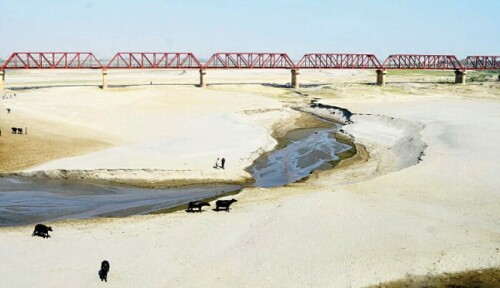
Marked each year on March 22, World Water Day should serve to remind the country’s rulers that the water crisis confronting us threatens not only our food security and public health, but the very survival of our future generations. The signs are all around us: near-drought conditions across large swathes of the country, shrinking reservoirs, erratic rainfall patterns, and mounting pressure on an already fragile water management system.
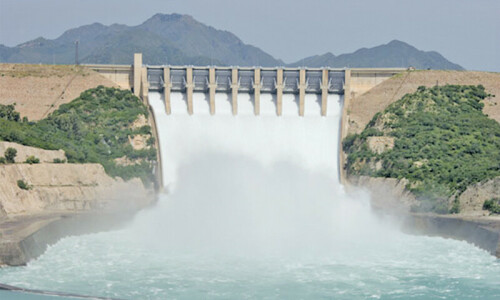
As of mid-March, water levels in Mangla stood at 320m — its minimum operating level — with Tarbela not even 2m above its own dead level. Chashma reservoir too is near depletion. According to Irsa, Sindh is facing a 50pc water shortage, while Punjab is not far behind. The impact on agriculture is already visible. Wheat crops, currently at their final watering stage, are at risk of under-yielding. Sugarcane, vegetables, and fruit orchards — especially mango groves in Sindh’s Nara Canal zone — are parched. Cotton sowing is also being delayed or compromised, jeopardising one of Pakistan’s most vital cash crops. Experts warn that crop shedding, stunted yields, and economic losses are now inevitable unless water becomes available in the coming weeks.
Add to this the accelerating glacier melt in the north and erratic rainfall in the catchment areas, and Pakistan’s future water outlook grows even more precarious. Yet, despite these alarming signals, we continue to squander what little water we have. Outdated irrigation techniques, wasteful crop choices in arid regions, unregulated groundwater extraction, and urban leakage all contribute to the crisis.
Our per capita water availability level, at sub-900 cubic metres, is dangerously close to the threshold of absolute water scarcity. Yet, our water policy remains largely reactive and politically neglected. This situation is no longer just an environmental concern — it is a full-blown national emergency and must be declared as such.
Serious investment needs to be made in modern irrigation systems such as drip sprinkler technologies. Crop zoning must be enforced to curb the cultivation of high water-consuming crops in low-yield regions. The 1991 Water Accord must be fully implemented in both spirit and detail — including new reservoirs, equitable distribution mechanisms, and environmental protections. At the urban level, water metering, leak detection, and wastewater recycling should be mandatory components of municipal planning. Groundwater extraction must be regulated through permits and pricing to prevent aquifer depletion. On this World Water Day, Pakistan must recognise that its survival depends on how it chooses to manage — or mismanage — what remains of this resource.
Published in Dawn, March 22nd, 2025