US judges halt deportation of Venezuelans


WASHINGTON: Federal judges in New York and Texas temporarily blocked the Trump administration on Wednesday from deporting alleged Venezuelan gang members without a court hearing.
The US Supreme Court on Monday lifted a lower court order barring the deportation of undocumented Venezuelan migrants using the 1798 Alien Enemies Act (AEA), but said they must first be given an opportunity to legally challenge their removal.
The New York and Texas cases were the first to appear before the federal courts since the ruling by the Supreme Court on the use of the AEA to deport alleged members of the Venezuelan gang Tren de Aragua.
President Donald Trump invoked the AEA, which has only previously been used during the War of 1812, World War I and World War II, to round up alleged Tren de Aragua members and summarily expel them last month to a maximum security prison in El Salvador.
The White House alleges that Tren de Aragua is closely linked to the government of Venezuelan President Nicolas Maduro and is “perpetrating an invasion” of the United States.
Attorneys for several of the deported Venezuelans have said their clients were not members of Tren de Aragua, had committed no crimes and were targeted largely on the basis of their tattoos.
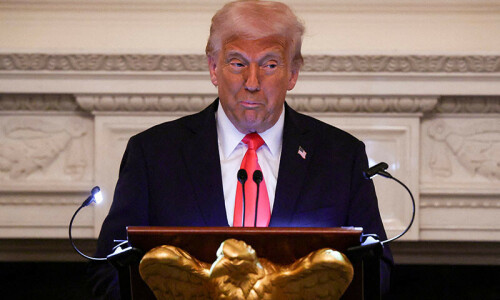
President Trump had ordered expulsions under the 1798 Alien Enemies Act
In New York, District Judge Alvin Hellerstein, an appointee of president Bill Clinton, issued a temporary restraining order barring the deportation of two Venezuelan men, identified only by their initials, until they receive a court hearing.
In Texas, District Judge Fernando Rodriguez, a Trump appointee, issued a similar temporary restraining order in a case brought by three Venezuelans also identified only by their initials.
‘Irreparable injury’
In his order, Rodriguez noted that the Supreme Court had ruled that anyone subject to removal under the AEA must first receive notice and an opportunity to appear in court.

The immediate removal of the three individuals would cause them “irreparable injury,” the judge said, and if they were “erroneously removed” it was unlikely they could be returned to the United States.
The US Supreme Court is currently considering the case of a Salvadoran man who was wrongfully deported last month on the same day as the alleged Tren de Aragua members.
A district court has ordered that Kilmar Abrego Garcia, 29, be returned to the United States and an appeals court has upheld the decision. The Trump administration, in asking the Supreme Court to overturn the lower court’s order, called it a “demand that the United States let a member of a foreign terrorist organisation into America.”
The White House insists that Abrego Garcia, who is married to a US citizen, is a member of the Salvadoran gang MS-13 but has not produced any credible evidence in court. Abrego Garcia had been living in the United States under protected legal status since 2019, when a judge ruled he should not be deported because he could be harmed in El Salvador.
Published in Dawn, April 10th, 2025