THESE are dangerous times in the subcontinent, and there is a need for both Pakistan and India to show restraint, and handle the post-Pahalgam developments with sense. Sadly, India has upped the ante by blaming Pakistan for the tragedy, without providing credible evidence of this country’s alleged involvement in the brutal slaying of tourists.
Moreover, there have been shrill calls — particularly in the Indian media — for ‘revenge’ against Pakistan. This, along with New Delhi’s condemnable measures against Pakistan, such as holding the Indus Waters Treaty ‘in abeyance’ and further downgrading ties, has created an incendiary atmosphere.
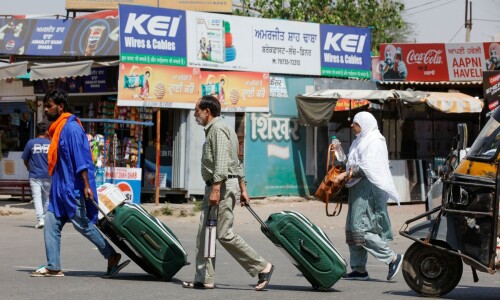
Pakistan understandably announced countermeasures, though perhaps it should have refrained from cancelling the visas of visiting Indians. On Friday, there were reports of gunfire across the LoC — fortunately, the exchange did not develop into a larger confrontation. But in such circumstances, when mutual trust is low and emotions, fuelled by irresponsible rhetoric, are high, chances of miscalculations increase significantly. It is because of this volatile situation that the UN chief has asked both governments to “exercise maximum restraint”.
Neither country can afford another war. Since independence, Pakistan and India have fought three major and several minor wars. It is time again to give diplomacy a chance. Unfortunately, many in New Delhi do not see peace with Pakistan as an endeavour worth pursuing, while the BJP-led regime’s deplorable actions in held Kashmir have contributed to the stifling atmosphere in the disputed region. Unless India realises that force and threats will not bring peace, the cycle of bloodshed will continue.
Foreign Minister Ishaq Dar has rightly asked India to share any evidence it may have of Pakistan’s alleged involvement in the Pahalgam atrocity “with us and the world”. Unless India does so, the opinion that the Modi government is using this country as a scapegoat for its own security failures will only be strengthened. Even voices within India are calling upon the government to probe the intelligence failure. And if any reliable leads are provided linking rogue militant elements to the incident, Pakistan should follow up with its own investigations.
The Indian media should also reconsider its jarring approach to all things Pakistan. The media plays a central role in framing public discourse. Sadly, most mainstream outlets in India have displayed an aversion to journalistic ethics, outdoing each other in hyper-nationalistic rhetoric. These hijinks can have detrimental real-world effects on regional peace.
Instead of fanning the flames, both sides, particularly India, need to bring down the temperature. Once the nationalistic din dies down, India must accept the fact that without a just solution to the Kashmir issue, peace is impossible.
Published in Dawn, April 26th, 2025