KARACHI: While anticipating an improvement in the overall outlook with economic activities picking up momentum in the second half, the State Bank of Pakistan (SBP) maintained its real GDP growth forecast on Monday at 2.5-3.5 per cent for FY25.
The International Monetary Fund (IMF) has revised the growth to 2.6pc from 3pc, and the World Bank to 2.7pc for the current fiscal year.
“One of the prominent challenges long undermining the sustainability of growth is low and falling productivity that has adversely affected the country’s economic competitiveness,” the central bank noted in its half-yearly report, ‘The State of Pakistan’s Economy’.
It added that this is particularly evidenced by Pakistan’s lowest GDP per worker among the peer countries. The country’s weak productivity growth has contributed to the frequent balance of payments crises, with the economy stuck in a recurring boom-bust cycle.
SBP eyes economy expanding by 2.5-3.5pc in FY25
“Risks to growth projection are, nonetheless, tilted on the downside,” said the report.
Moreover, any further shortfall in tax revenue remains a major upside risk. These projections incorporate the expected increase in inflation in the last few months of FY25 due to the fading high base effect, the report said.
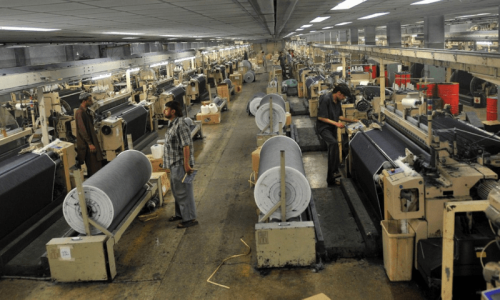
The Large-Scale Manufacturing (LSM) also declined by 1.9pc during July-February FY25. The slight uptick in services sector growth was largely supported by general government, information and communication, and other private services.
This, along with lower contraction in industry, was also reflected in a marginal increase in employment and employment sentiments, said the report.
The resulting steady momentum in exports and robust workers’ remittances outweighed the volume-driven increase in imports and helped comfortably finance higher repatriation of profits and dividends.
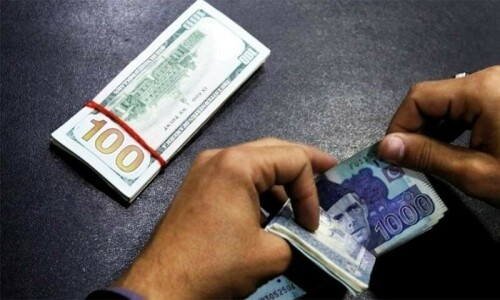
These developments collectively resulted in a surplus in the current account balance and stability in the exchange rate, enabling the SBP to build external buffers through FX purchases.
Accordingly, the government contained non-interest spending, especially development expenditures and subsidies, to achieve the envisaged fiscal consolidation in 1HFY25.
These trends highlight the need for structural reforms to broaden the tax base that would not only support investment and development needs of the economy, but would also help reduce burden on existing taxpayers such as salaried individuals, corporates and other documented sectors, said the report.
Published in Dawn, April 29th, 2025