EXHIBITION: THE UNAPOLOGETIC MUSLIM

Surveillance, traditionally understood as the systematic observation of individuals or groups, often intersects with contemporary discourses on race, religion, and state power — particularly in post-9/11 Western societies.
Mahtab Hussain’s solo exhibition, ‘What Did You Want to See?’ at Ikon Gallery in Birmingham, offers a poignant intervention into these themes by foregrounding the British Muslim experience through visual and spatial practices that resist marginalisation.
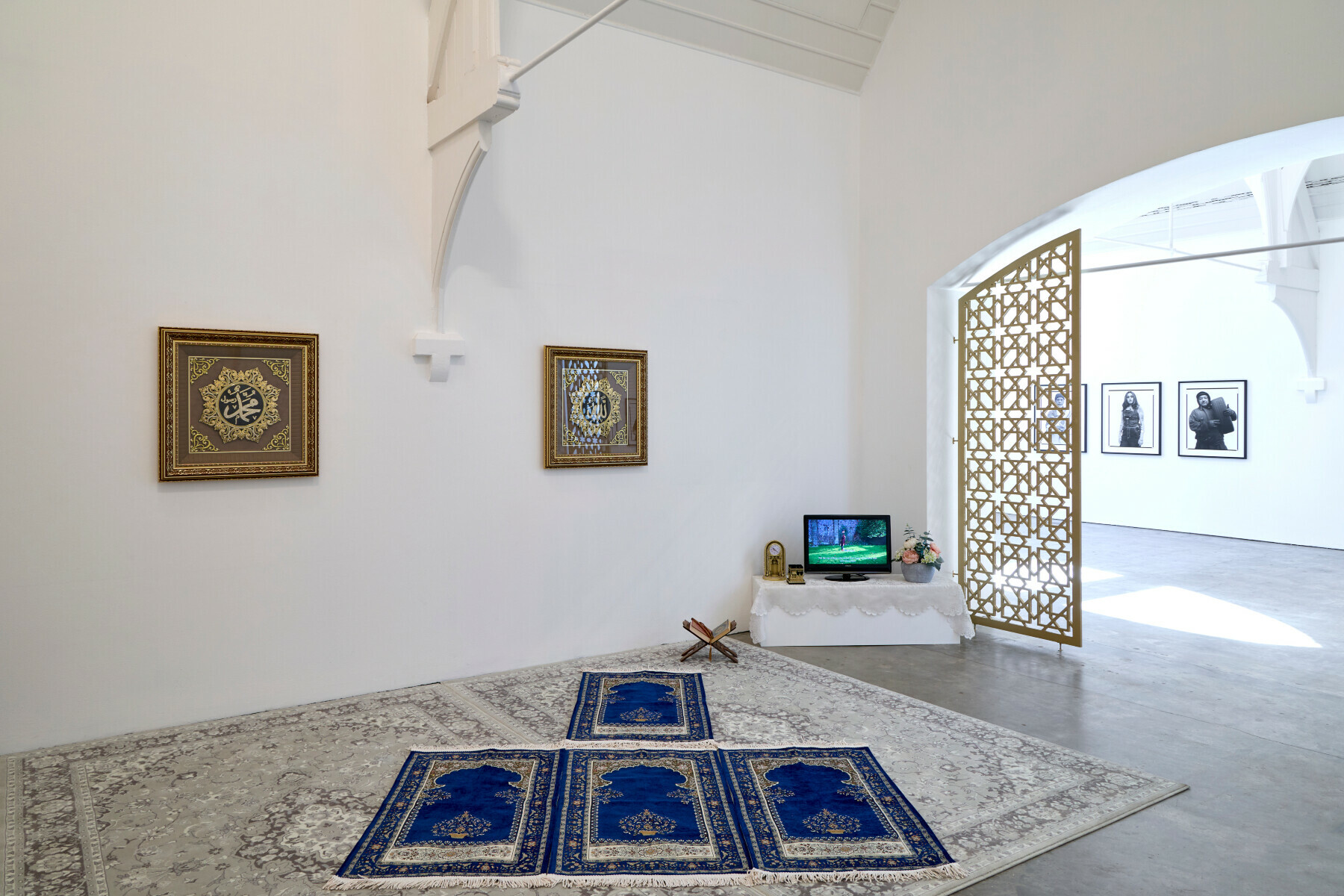
The exhibition’s opening with communal Muslim prayer and Iftar within the seemingly neutral white cube gallery subverts dominant viewing modes that often cast Muslim identities as politicised or suspect, especially within the securitised landscapes of the Global North.
Emerging amid growing scrutiny of Muslim bodies, through policies such as the UK’s Prevent strategy, and debates on multiculturalism and national identity, Hussain’s work becomes a potent act of aesthetic and political reclamation, centring faith not as exotic or controlled, but as a lived, dynamic and an unapologetically present form of existence.
Hussain’s prayer performance reframes Islamic devotion as an embodied, affective practice rooted in personal sincerity and collective resistance. Religious artefacts — prayer rugs, ornate calligraphic inscriptions of “Allah” and “Muhammad” (PBUH), a small replica of the Kaaba as a souvenir, a gold clock on a lace-draped table beside a carved Quran stand — transform the gallery into a space of re-inscription, evoking mosque-like sanctity.
Themes of faith, surveillance and belonging dominate Mahtab Hussain’s latest exhibition, providing a window into the UK’s ‘Muslim experience’
These familiar aesthetics challenge viewers to reconsider the role of faith in public life, particularly within contexts marked by racialised surveillance and Islamophobia.
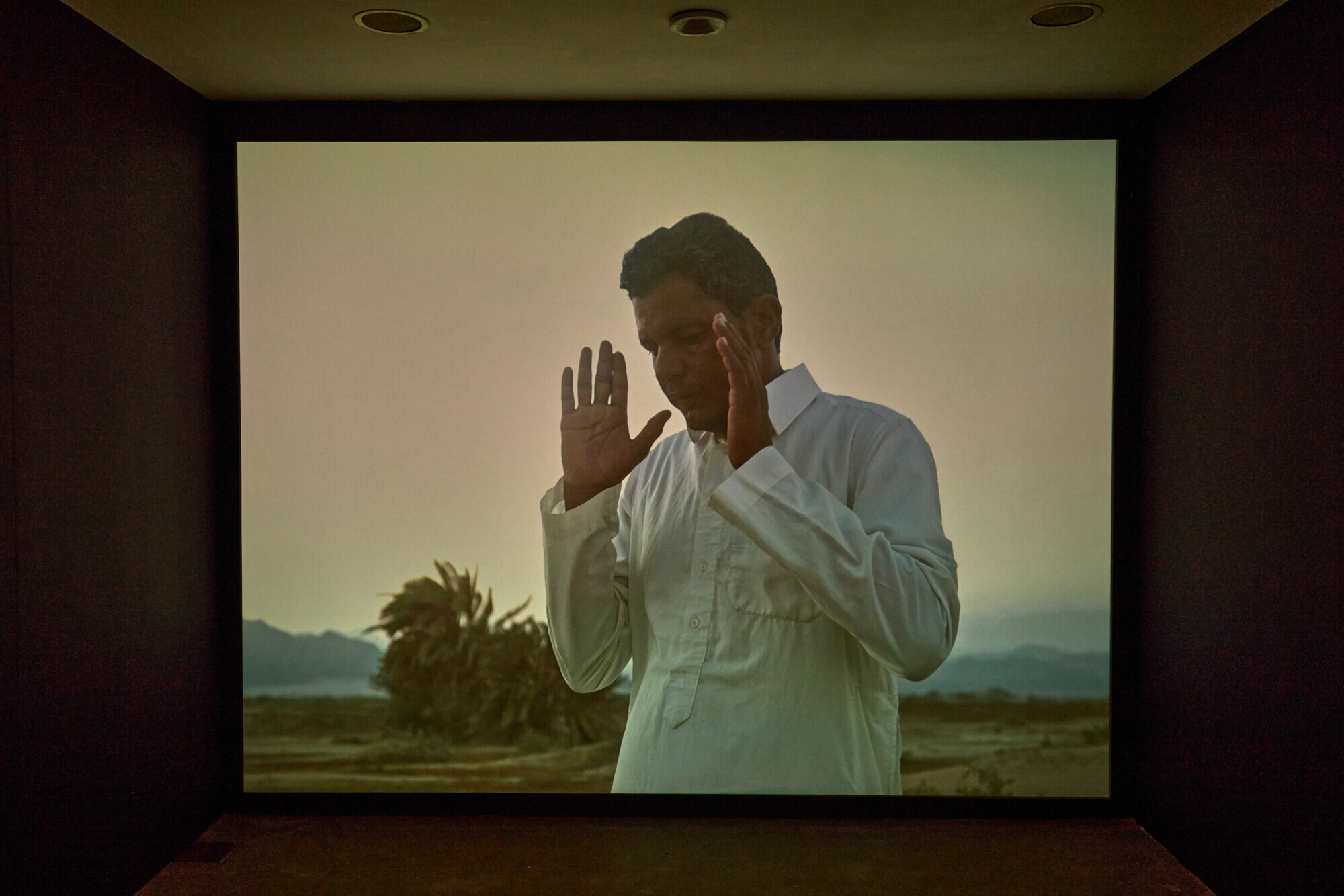
A video component featuring Hussain in prayer within a bucolic English landscape extends the work’s themes of displacement, belonging and gentle defiance. By situating Muslim prayer in a pastoral setting, Hussain asserts Muslim presence within the national imaginary while disrupting the boundaries between public and private worship, visibility and invisibility. The work aligns with broader currents in contemporary art and critical Muslim studies, engaging with spatial politics, de-colonial aesthetics and reclaiming narrative agency amid systemic erasure.
One central piece in the exhibition explores the visual and material subcultures that define the Muslim presence and resilience in the UK, focusing on the evolution of mosques. These sacred spaces tell stories of migration, adaptation and belonging, ranging from early improvised prayer hubs to purpose-built structures featuring Islamic architectural elements.
Hussain’s systematic documentation of 160 Birmingham mosques over two summers, presented in a 16x10 grid, echoes Bernd and Hilla Becher’s typological studies of industrial architecture.
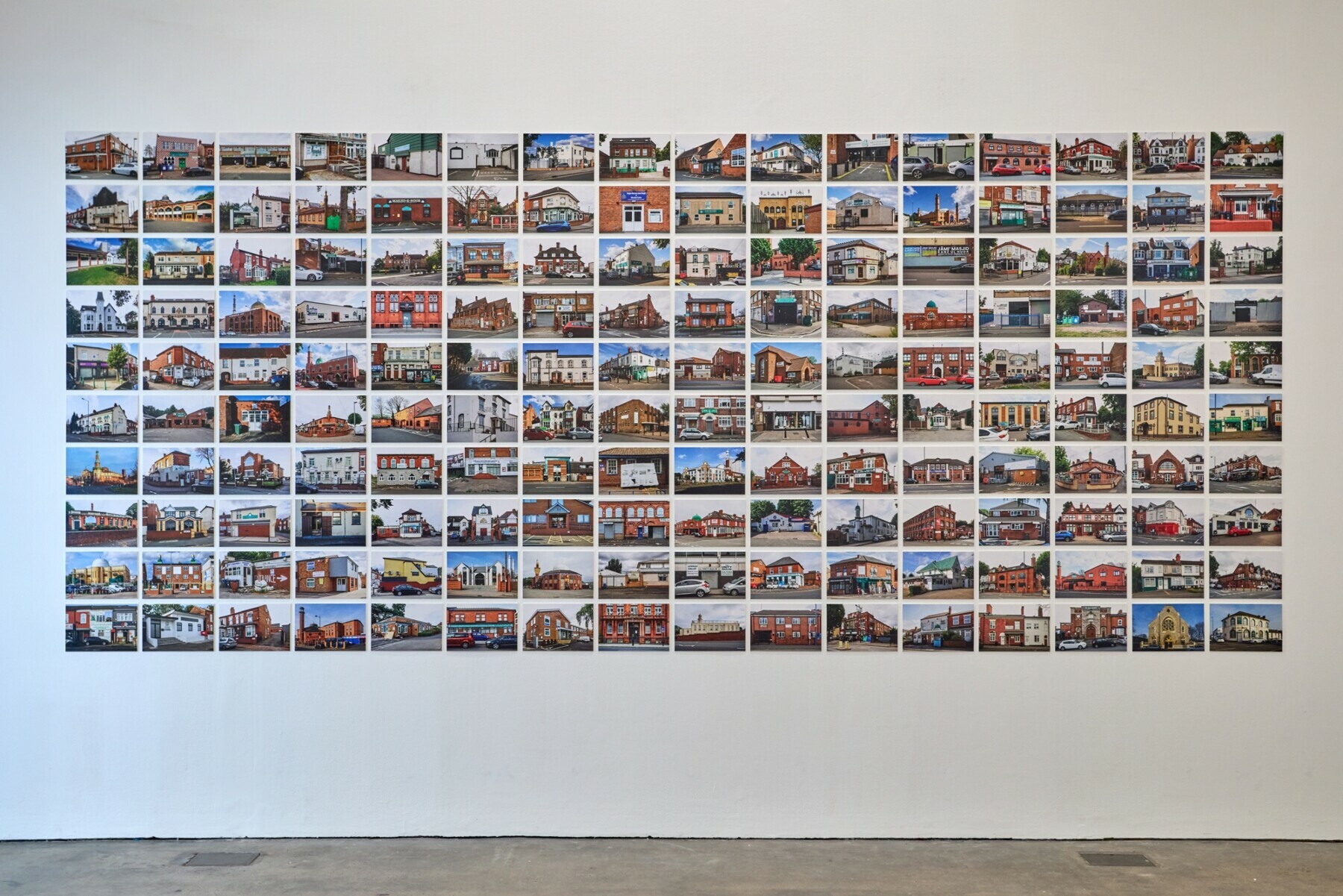
However, unlike the Bechers, Hussain reveals a rich architectural diversity, resisting the homogenising gaze of surveillance and offering a multifaceted portrayal of Muslim identity.
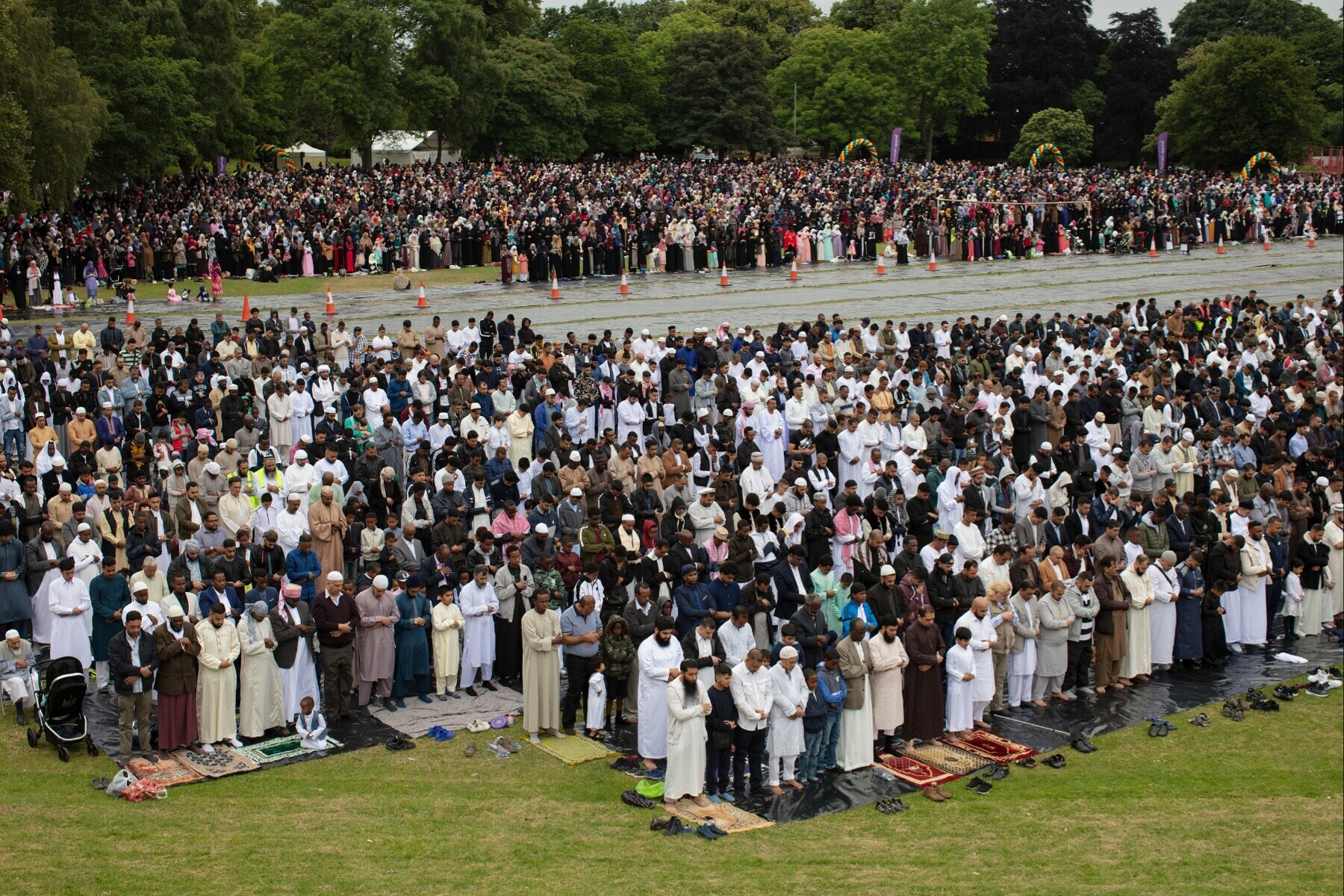
Adjacent to the grid, a large photograph of an Eid Prayer gathering — shot from an elevated, distant angle reminiscent of surveillance footage — underscores themes of observation, openness, and public faith.
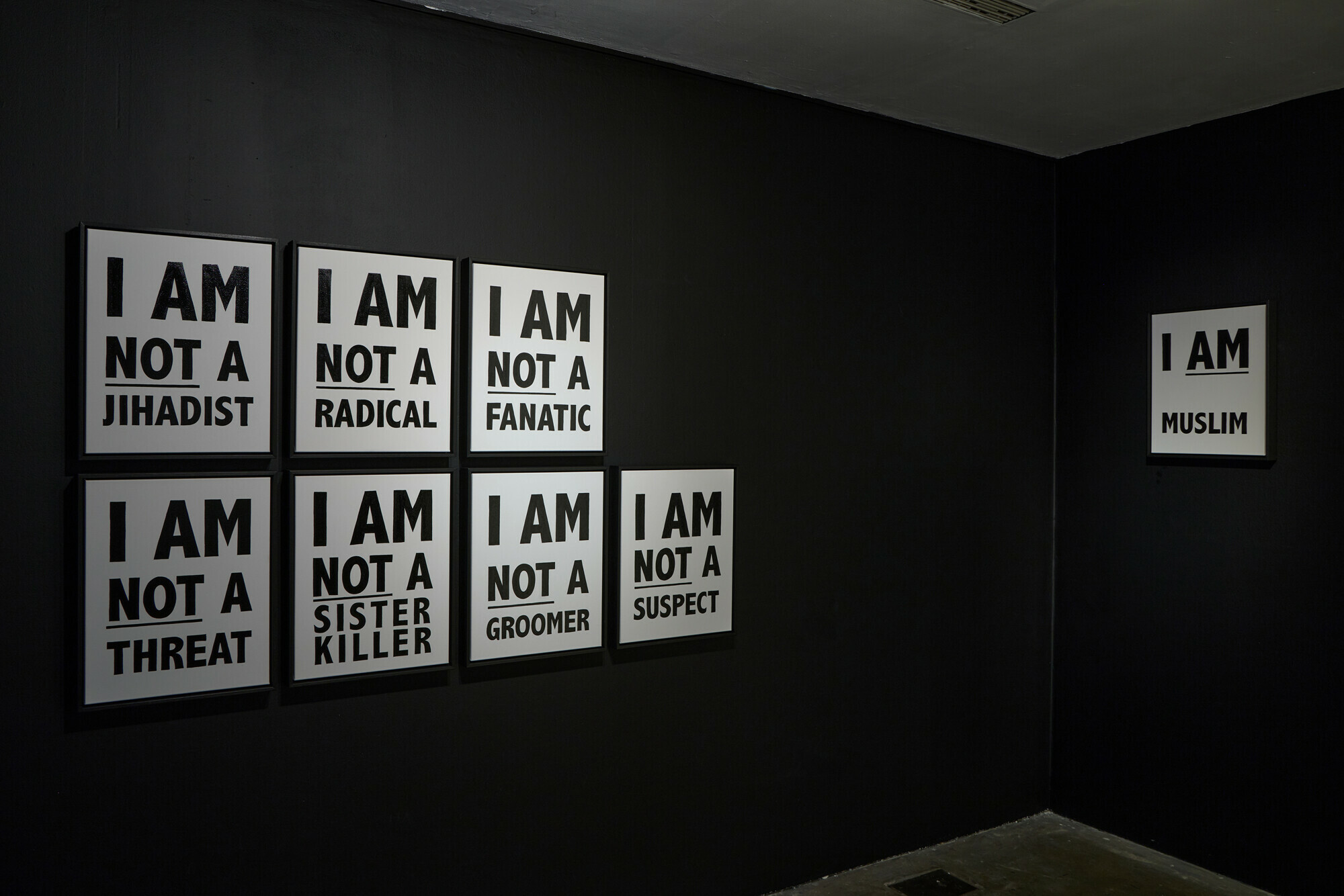
Two videos are displayed as a single-channel projection in an adjacent darkroom. One celebrates British Muslims’ everyday lives and community rituals in collaboration with the writer Guy Gunaratne. In contrast, another video features actor Azan Ahmed discussing the meaning of daily prayer. Next to the video projection, a missing plaque from a grid of eight panels with stereotypical labels is subverted, as it is displayed alone on the next wall, bearing the simple but defiant declaration: “I am Muslim.”
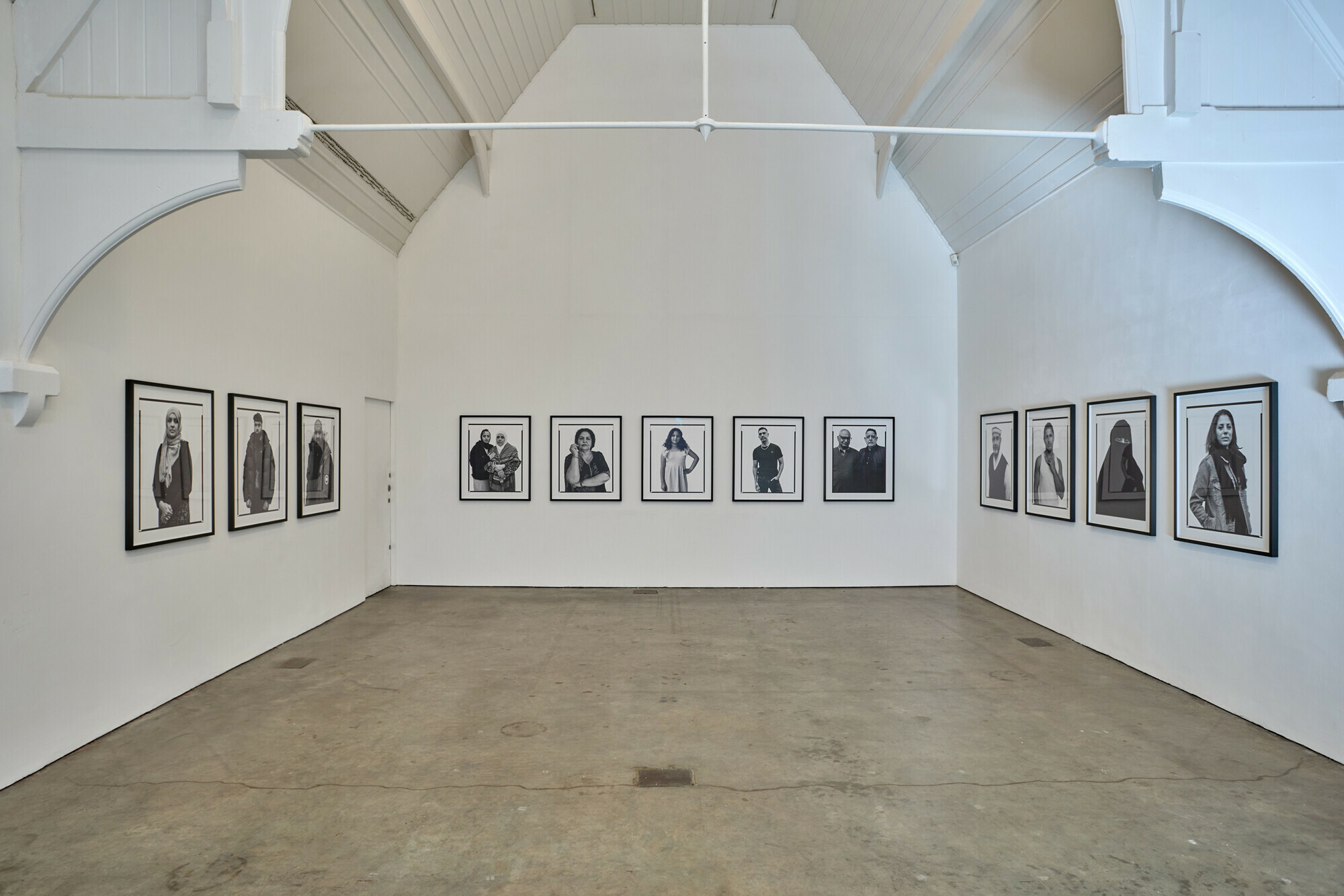
The photographic series features black-and-white portraits displayed on the gallery’s white walls, highlighting the diversity within Birmingham’s Muslim community.
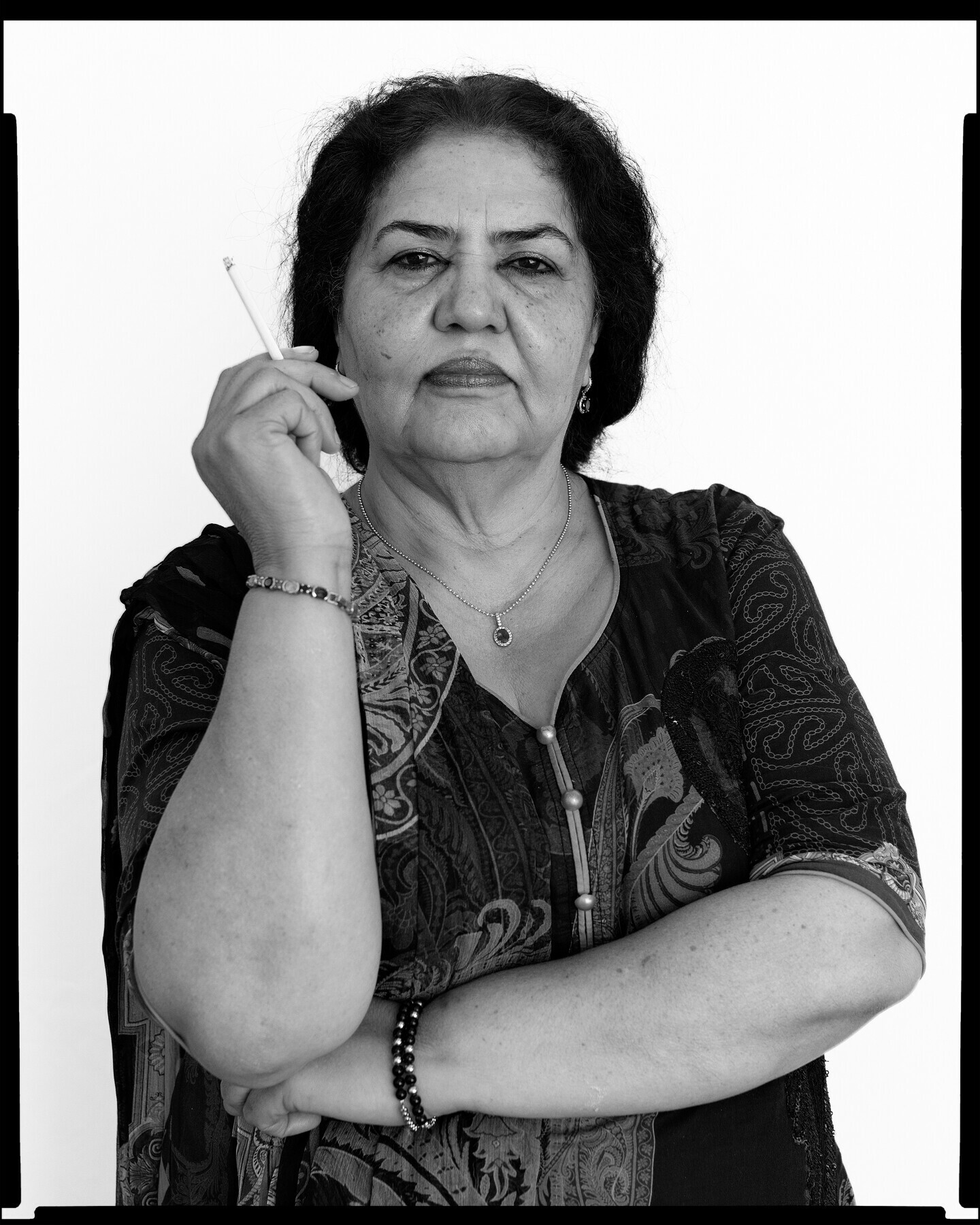
One striking image depicts the artist’s mother, Imtiaz, holding a cigarette, her crossed arms conveying a sense of composure and strength.
Another portrait shows Daddy Shaf, a mechanic carrying a tire, evoking August Sander’s sociological documentation of working-class individuals.
A touching image of Shazana and Kaniz, a mother-and-daughter duo wearing headscarves, beautifully showcases the generational connection within the community.
The series also includes portraits of two friends: a modern, middle-aged man wearing a thick silver chain, exuding confidence, and a woman covered in a black burqa, representing a different yet equally valid facet of Muslim identity.
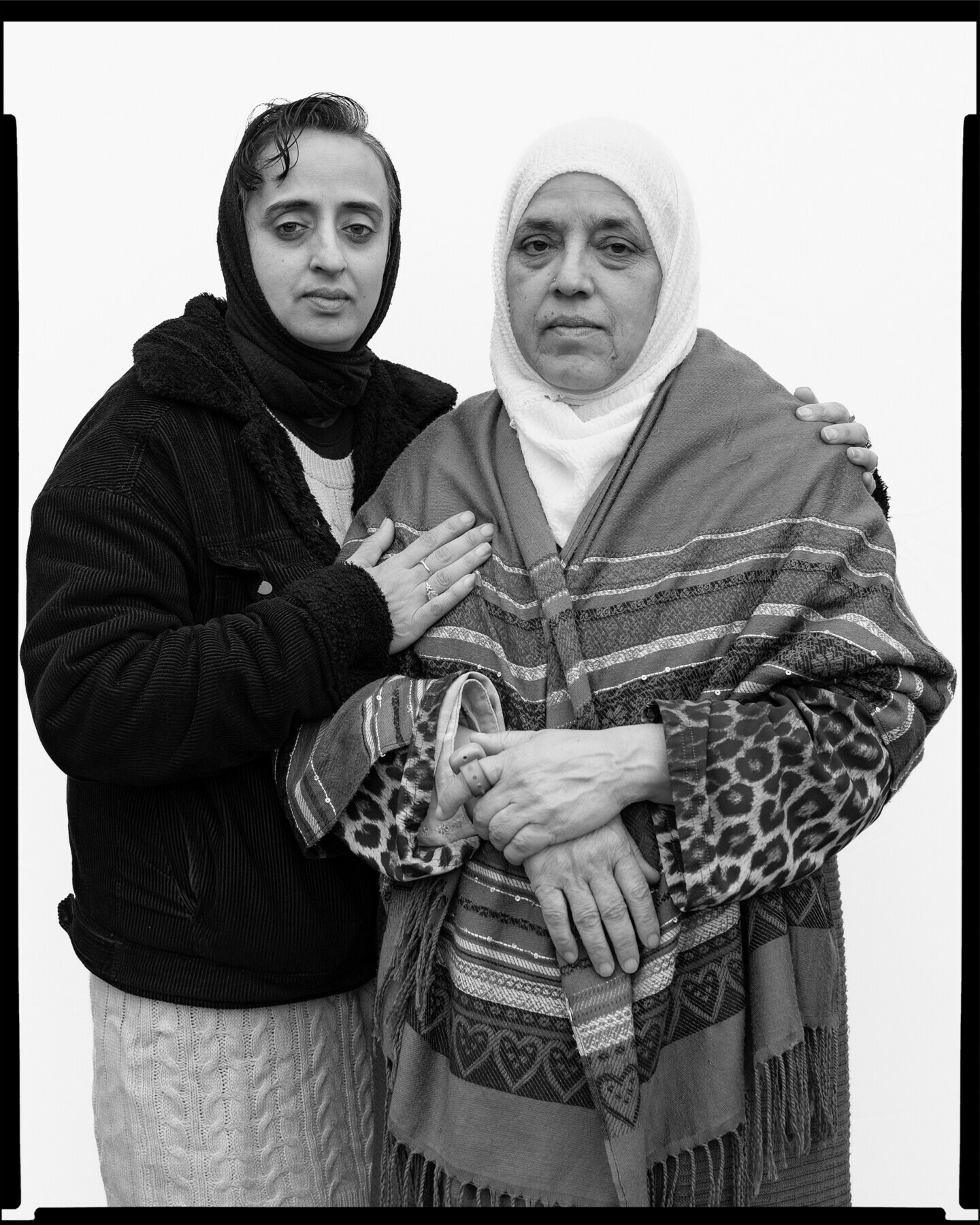
These portraits emphasise the diverse experiences within the Muslim community, mirroring the variety found in any global community. Hussain’s work weaves personal stories into his subjects’ identities, exploring themes of respect, identity and multiculturalism.
Drawing on British-Australian writer Sara Ahmed’s book The Cultural Politics of Emotion, which explores how emotions move between people, objects and spaces — often through technology — it becomes possible to see Hussain’s use of video and installation as a way to invite emotional connections that counter fear by presenting Muslim presence in today’s Britain through care and devotion.
‘What Did You Want to See?’ is on display at Ikon Gallery in Birmingham from March 20-June 1, 2025
The writer is an art critic, curator and an associate professor (currently on sabbatical) at the Department of Visual Communication Design at Beaconhouse National University, Lahore. He spends his time in-between Birmingham and Lahore. He can be reached at aarish.sardar@gmail.com
Published in Dawn, EOS, May 11th, 2025