Iran says nuclear talks ‘difficult but useful’, US ‘encouraged’


Iran and the United States wrapped up nuclear talks in Oman on Sunday with no apparent breakthrough in a public standoff over enrichment, but with both sides confirming plans for future negotiations.
This was the fourth round of talks that began nearly a month ago, marking the highest-level contact between the two foes since Washington withdrew in 2018 from a landmark nuclear deal, during President Donald Trump’s first term.
Both sides had reported progress in the previous three rounds, and on Sunday Iran said the meeting was “difficult but useful” while a senior US official said Washington was “encouraged”.
In a post on X, Iran’s foreign ministry spokesperson Esmaeil Baqaei said the talks could help “better understand each other’s positions and to find reasonable and realistic ways to address the differences”.
Baqaei earlier said negotiators would push for relief from US sanctions.
The US official, speaking on condition of anonymity, said Washington was “encouraged by today’s outcome and look forward to our next meeting, which will happen in the near future”, without specifying when.
Baqaei said that the “next round will be coordinated and announced by Oman”.
According to the US official, the talks were “both direct and indirect, and lasted over three hours”.
An “agreement was reached to move forward” and “continue working through technical elements”, the official added.
Iran entered the talks saying that its right to maintain uranium enrichment was “non-negotiable”, while Washington’s chief negotiator Steve Witkoff has called it a “red line”.
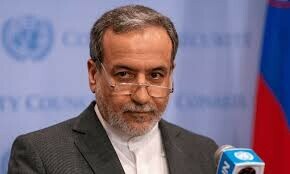
Foreign Minister Abbas Araghchi, who led Tehran’s delegation, said in a video before departing for the Omani capital Muscat that “enrichment capability is one of the honours” of Iran, which has consistently denied seeking nuclear weapons.
After the meeting, Araghchi said that Tehran would not compromise its right to enrich uranium.
“Enrichment […] must continue and there is no room for compromise on it,” Araghchi told Iranian state TV in Muscat, where the talks were held, adding that Iran may be open to limiting the rate of enrichment “to help build trust”.
The Foreign Minister also said that the talks were “more serious” and “more detailed” than previous meetings.
“The negotiations were much more serious and explicit than the previous three rounds,” Araghchi told Iranian state TV from Oman, adding that “more detailed issues” were discussed and that the negotiations were “moving forward”.
Separately, Oman’s top diplomat said talks he was mediating in Muscat between Washington and Tehran included “useful and original ideas” that reflected a shared desire to reach a deal between the two arch-foes.
“We completed another round of talks between Iran and the United States in Muscat today. The discussions included useful and original ideas reflecting a shared wish to reach an honourable agreement. The fifth round of talks will take place once both parties […] consult their leaderships”, Omani Foreign Minister Badr Albusaidi said in a post on X.
‘Pressure’
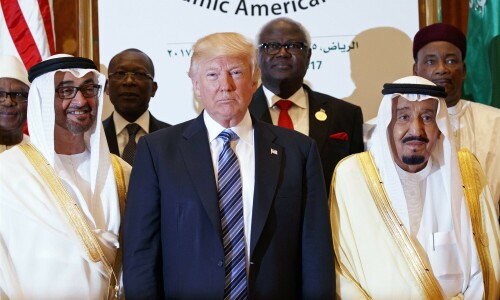
The talks come amid a flurry of diplomatic activity in the region, with US President Trump heading to the Gulf for his first major foreign tour next week, and Araghchi just back from Saudi Arabia and Qatar.
The fourth round that took place on Sunday was initially scheduled for May 3 but has been delayed, with mediator Oman citing “logistical reasons”.
Yousuf Al Bulushi, chairman of the Muscat Policy Council think tank, said that a breakthrough “will take quite some time, but I’m optimistic”.
He warned, however, that both sides had lost precious time during past negotiations trying to clarify public statements, “instead of focusing solely on talks”.
Public “pressure is a tactic in negotiations […] but this is really impacting the atmosphere” at the table, said Bulushi.
Western countries, including the United States, have long accused Iran of seeking to acquire nuclear weapons, while Tehran insists that its nuclear programme is for peaceful purposes.
Iran currently enriches uranium to 60 per cent purity — far above the 3.67pc limit set in the 2015 deal with Washington and other world powers, but below the 90pc needed for weapons-grade material.
Witkoff, Trump’s Middle East envoy, said in a Friday interview that Iran’s “enrichment facilities have to be dismantled”.
“That’s our red line. No enrichment,” he told US right-wing outlet Breitbart News, after initially suggesting flexibility on Tehran maintaining low-level enrichment of uranium for civilian purposes.
Araghchi has repeatedly defended Iran’s right to enrich uranium.
‘World’s most dangerous weapon’
Iran adhered to the 2015 nuclear agreement with world powers for a year after Washington’s withdrawal, before beginning to roll back its compliance.
Since returning to the office in January, Trump has revived his “maximum pressure” approach against Tehran, while backing nuclear diplomacy but warning of potential military action if it fails.
The talks are taking place amid renewed scrutiny of key aspects of Tehran’s nuclear programme, particularly its stockpile of enriched uranium and the pace of its enrichment activities.
European governments are weighing whether to trigger the “snapback” mechanism under the 2015 deal, which would reinstate UN sanctions in response to Iranian non-compliance — an option that expires in October.
Araghchi, in an article published on Sunday by French weekly Le Point, warned against a “strategy of confrontation”.
Israel, which opposes the negotiations, its close ally the United States has conducted with regional foe Iran, said Tehran must not be allowed to obtain nuclear weapons.
“Iran is the most dangerous state in the world […] the most dangerous regime must not be allowed to obtain the world’s most dangerous weapon,” said Israeli Foreign Minister Gideon Saar.
Israel is the Middle East’s only — if undeclared — nuclear-armed state.